If your garden center runs NCR Counterpoint, has someone on staff who knows it cold, and gets a quick answer from its reseller, staying is a sound decision and there is no prize for leaving. The garden centers that go looking usually have a different week: every spring they train a new crew on a system the veterans took years to learn, support arrives through a reseller and is billed by the hour, and a server in the back office needs looking after. This guide starts with who should stay, explains how Counterpoint reaches garden centers and what that means for support, lays out the garden-specific tests any replacement has to pass, sorts the alternatives by type of store, and describes what a move involves, including the trade-offs of going to the cloud.
Should your garden center stay on Counterpoint?
Counterpoint is a mature retail system with deep inventory, purchasing, and reporting, and a long list of garden centers have run it for decades. Stay if most of these are true:
- One or two people on your staff know the system thoroughly, and they are not planning to retire.
- Your reseller picks up the phone, and what you pay for support feels fair for what you get.
- The server is recent, backed up, and somebody is responsible for it.
- Your seasonal hires only need to ring sales, and the veterans handle everything else.
- You have built reports, labels, or integrations over the years that the business depends on.
Look around if most of these are true instead:
- Training a new hire takes weeks, and the knowledge of how things work lives in one person's head.
- A support call costs money, takes a callback, or both.
- You pay separately for the licence, support, hosting or backups, and upgrades, and an upgrade is a project.
- Working from home means a remote desktop session into the store.
- Online sales, loyalty, or a customer portal each mean another add-on.
Neither list is a verdict on the software. Counterpoint was built for a time when the server sat in the store and the dealer down the road installed it, and plenty of garden centers are still well served by that arrangement.
How Counterpoint reaches garden centers
Counterpoint has had several owners, and since NCR split into two companies in October 2023 it has been sold as NCR Voyix Counterpoint. The product is the same one garden centers have known for years.
What matters more to a store owner is the layer in between. Most garden centers buy Counterpoint, and get it installed and supported, through a regional reseller. That has real benefits: a good reseller knows garden retail, has set up plant tags and seasonal pricing for stores like yours, and may be a short drive away. It also means your support experience depends on which reseller you have, support is commonly sold as a contract or in blocks of hours, and a hard question may travel from you to the reseller to the vendor and back before it is answered. If you are being quoted Counterpoint today, interview the reseller as carefully as you evaluate the software, and ask to speak with two garden centers they support.
The garden tests any replacement has to pass
A garden center is not a general retailer with plants in it, so judge every alternative, and Counterpoint itself, on the five places a garden center is different.
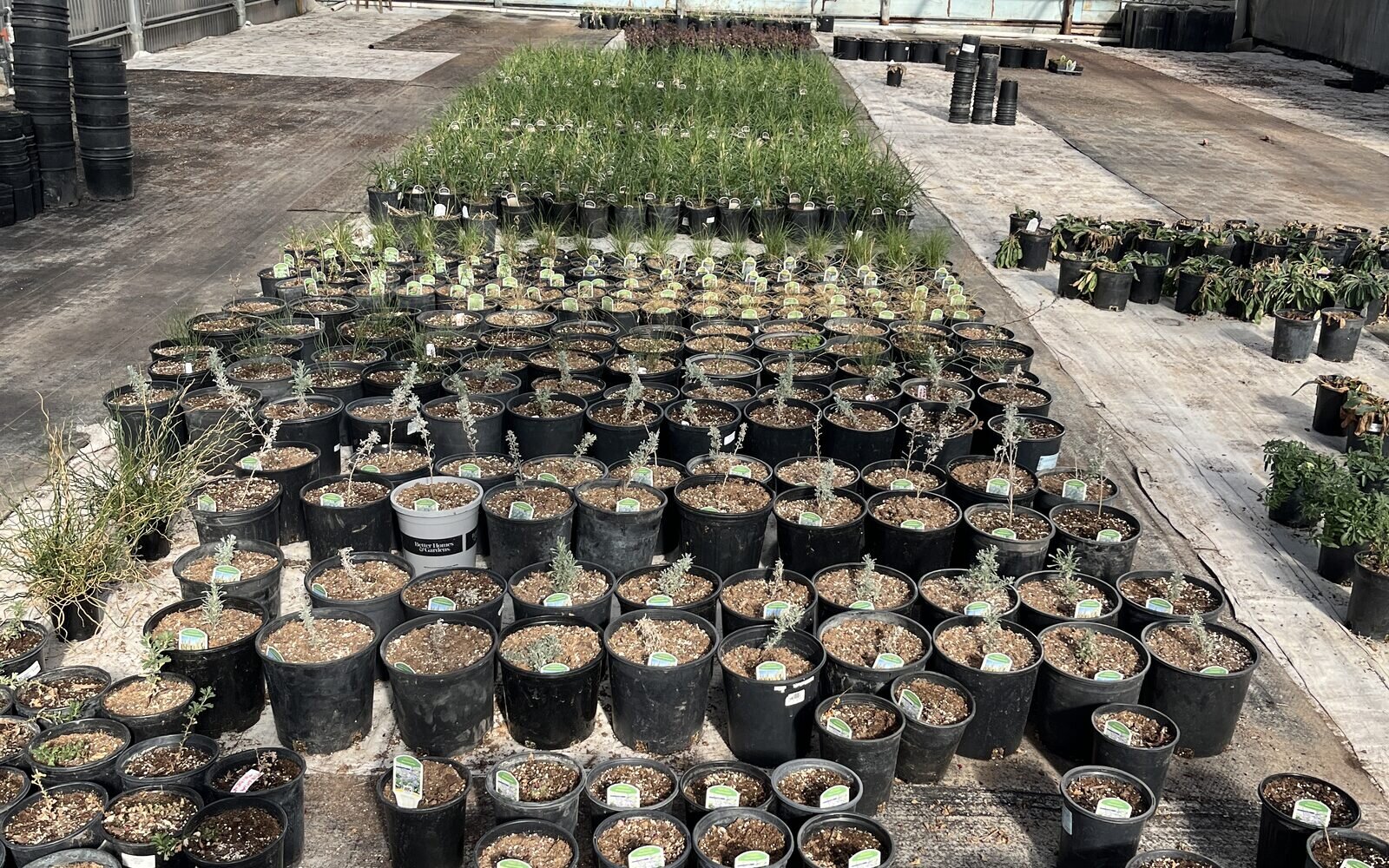
- Sizes and plant search. One variety in a quart, a one-gallon, and a three-gallon should be three products with three prices and three counts, found by common name, botanical name, or grower tag. See our walkthrough of plant inventory by variety and size.
- Repots and planters. When a one-gallon moves up to a three-gallon, the cost of the plant, the pot, and the soil should move with it. Our guide to grower software versus a garden center POS works that example.
- Landscaper accounts. Charge accounts with limits, statements, and aging, a trade price that applies without anyone remembering it, and jobs billed separately, covered in our guide to landscaper accounts at garden centers.
- The bulk yard. The same mulch sold by the bag, the pallet, and the yard from one count, as in our guide to selling by the flat, the yard, and the ton.
- Checkout at the bench and in the yard. A phone or tablet that rings a real sale outdoors, and a plan for the first warm Saturday, mapped in our greenhouse retail POS guide.
Counterpoint, set up well by a reseller who knows garden centers, can pass several of these. The reason to run the tests anyway is that "it can do that" and "your staff can do that in May" are different claims.
The offline question
This is the trade-off to look at squarely, because it runs in Counterpoint's favor. A system with a server in the store keeps ringing sales on the local network when the internet goes down, as long as the power, the network, and the server hold. A cloud POS needs a connection.
Some cloud systems, including Square and Clover, document offline card modes that queue payments and settle them later, within limits worth reading closely, since a card that declines after the connection returns is the store's loss. Others, Rundoo included, have no offline mode: when the line drops, stores connect to a phone's hotspot or a hotspot box and keep ringing, as we explain in where is the offline mode. For a garden center the practical work is Wi-Fi that reaches the greenhouse and the yard, plus a tested cellular backup, and our guide to what a cloud POS needs from your internet covers both.
What you get in exchange for depending on the connection is no server to host, patch, or back up, every register on the current version, and the ability to check the store from home on a phone. Whether that trade is worth it depends on how good your internet is and how much the server costs you in money and worry.
The alternatives, by type of store
| If your garden center is | Look at | Why |
|---|---|---|
| Small, mostly homeowners paying and leaving | Square or Clover | Fast to learn and handles sizes; strains on landscaper accounts and trade pricing |
| Plant-first, wanting a system built only for garden centers | Rapid Garden POS and other garden-specific systems | Built around green goods; ask about accounts, purchasing, and reporting depth |
| Multi-store, with staff to run a large system | Staying on Counterpoint, or Epicor's retail systems | Depth and maturity, with the administration that comes with it |
| A general retailer with a garden department | Lightspeed and similar cloud retail systems | Strong general retail; test plant sizes and the bulk yard |
| Garden center with landscapers, a bulk yard, and repotting | Rundoo | Charge accounts, pricing tiers, units of measure, and builds in one cloud system |
Our garden center POS buyer's guide judges these systems one at a time at the bench, in the yard, and on the landscaper's account, and our guide on Square or Clover for a garden center covers the small-store end. Whichever you shortlist, make each vendor run your own hardest transactions live, using our demo script of transactions to test.
What moving off Counterpoint involves
A switch is a month-long project that should not close the store, because nearly all the work happens while Counterpoint keeps ringing sales. The pieces are the same wherever you go.
- Data. Products and pricing, customers and contacts, sales history, vendors and vendor catalogs, inventory and costs, special pricing tiers, account balances, statement settings, and tax-exempt IDs all come across in a move to Rundoo, and you see the result before go-live. Our guide to what transfers in a POS data migration explains how each is checked.
- Receivables. Landscaper balances are the part owners worry about most. They are usually cut over at a month boundary so the last statement from the old system and the first from the new one meet cleanly.
- Timing. Pick a go-live date well clear of spring. Our guide to switching POS downtime and timeline lays out the weeks.
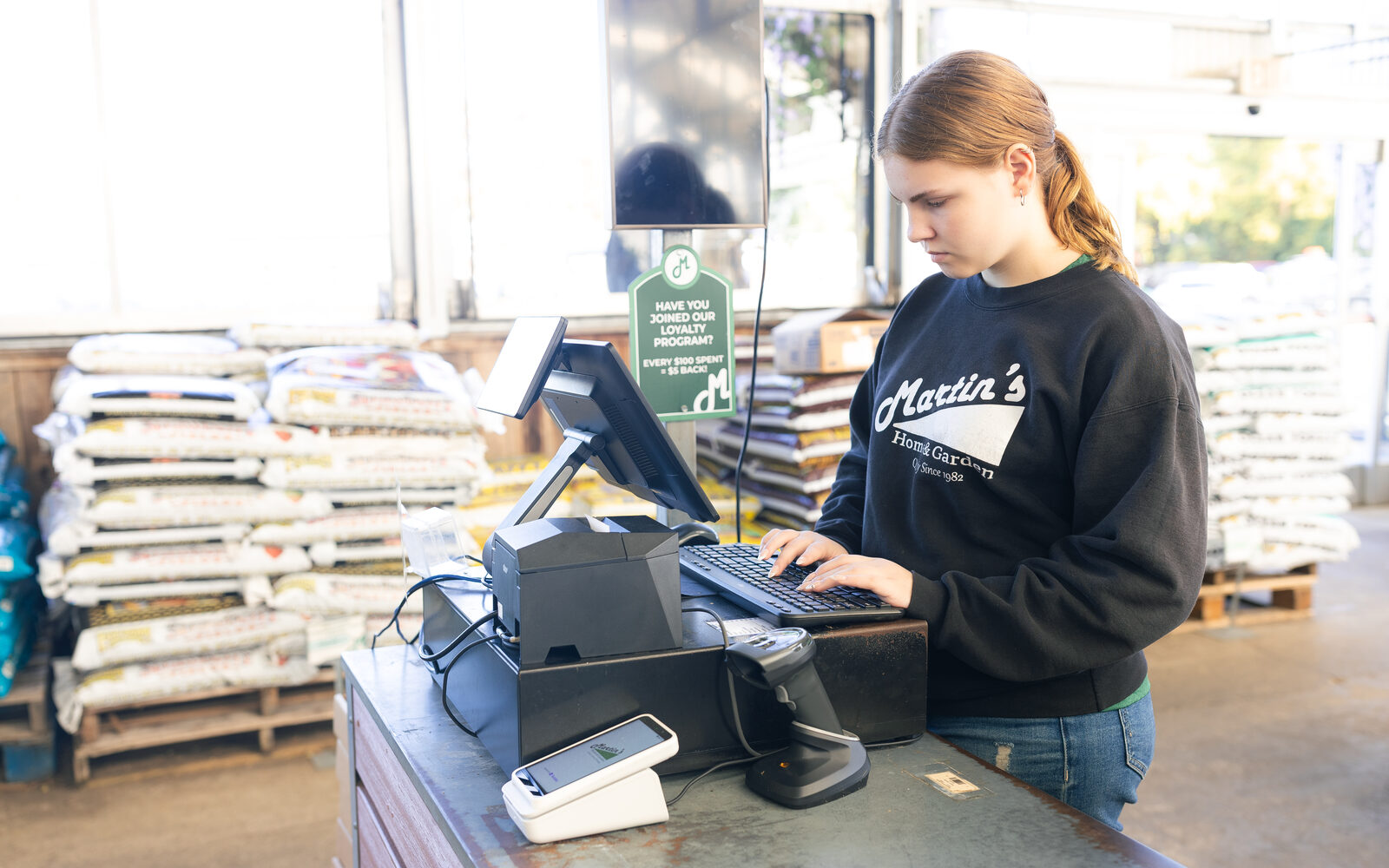
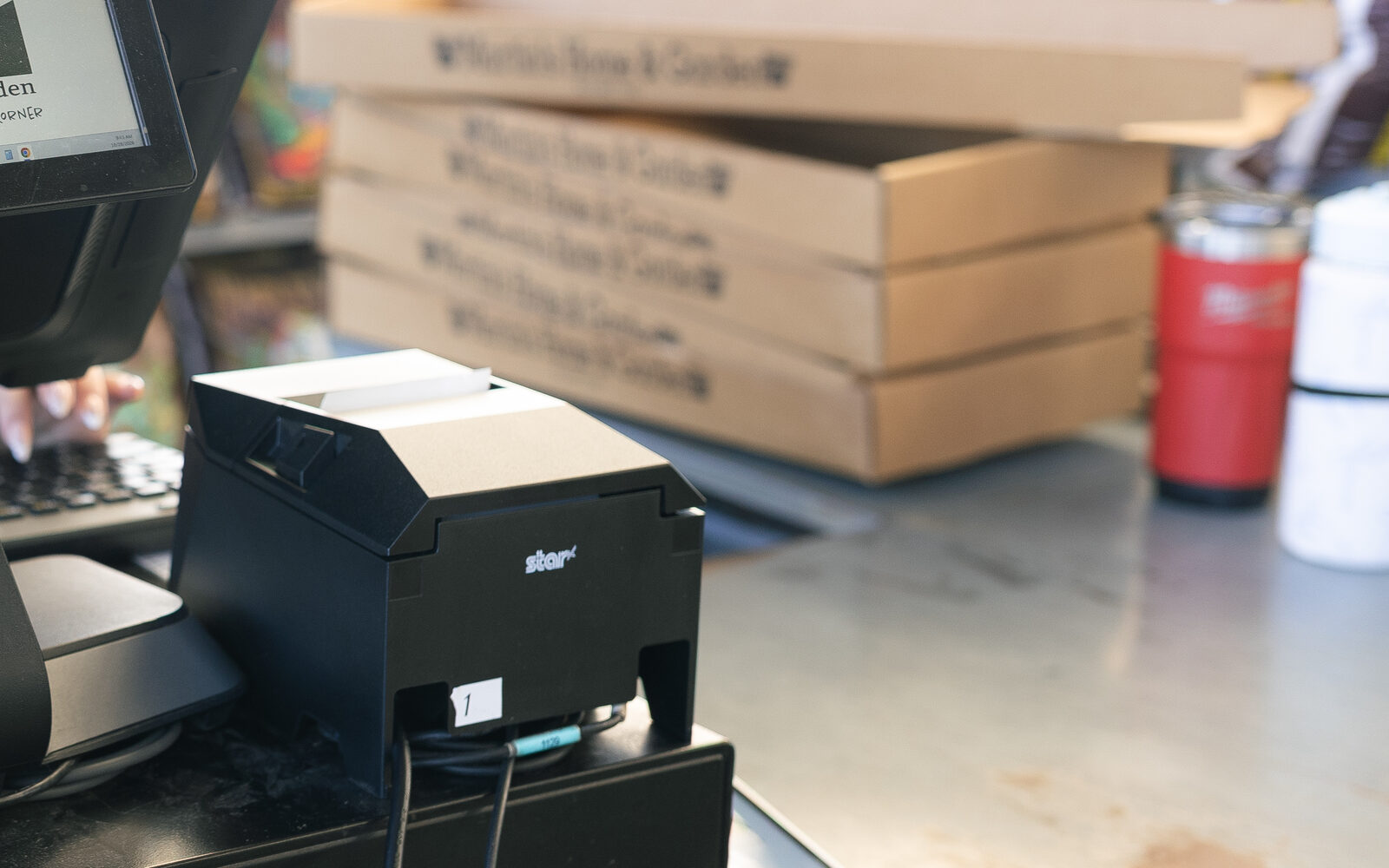
- Hardware. A cloud system needs a computer or tablet with a browser at each register, card readers, and receipt printers that work over the network, described in our guide to receipt printers for a cloud POS. The server retires.
- Day one. Bring everything over as it was and change nothing on day one, then improve one thing at a time once the counter is comfortable.
Where Rundoo fits
Rundoo is the AI-first POS for independent supply stores, garden centers among them, and it runs in a browser with nothing installed and no server. The reasons garden centers give for moving from Counterpoint map to three things on our switch from Counterpoint page. A new hire learns ringing a sale, printing tags, and receiving an order on one screen each. Support is included in the subscription and comes from Rundoo directly, with no block time to buy and no reseller in between. And one subscription covers the software, support, updates, and hosting, with an online store and loyalty points included.
For the garden tests above, each container size is its own product with per-location inventory, landscaper accounts carry credit limits, terms, statements, and finance charges, a pricing tier set on the customer applies on every line, mulch and soil sell by the yard, and repotting runs as a build that carries the cost across. Anything a built-in report does not answer you can ask Dooey in plain English.
The limits are the ones above, stated plainly: Rundoo is cloud-only with no offline mode, it is not grower or production software, and it has no shrink reason codes today, so bench losses are recorded with a note. A garden center whose internet is unreliable and cannot be fixed should weigh that before anything else.
Questions to ask before you renew or switch
- What did we pay last year, in total, for licence, support, hosting, backups, and upgrades?
- How long did it take our newest hire to ring a sale alone, and to do a return?
- Who do we call when something breaks, and how long until a person who can fix it answers?
- How old is the server, when was the backup last tested, and who is responsible for it?
- Can the system we are considering pass all five garden tests in a live demo with our own items?
- If we move, what data comes across, and when do we see it?
- If we stay, what would we change about how we use Counterpoint this winter?
The last question matters as much as the others. A garden center that works through this list and decides to stay has still done itself a favor, because the answers usually turn up a report nobody runs, a backup nobody tested, or a training gap that a slow January can fix.