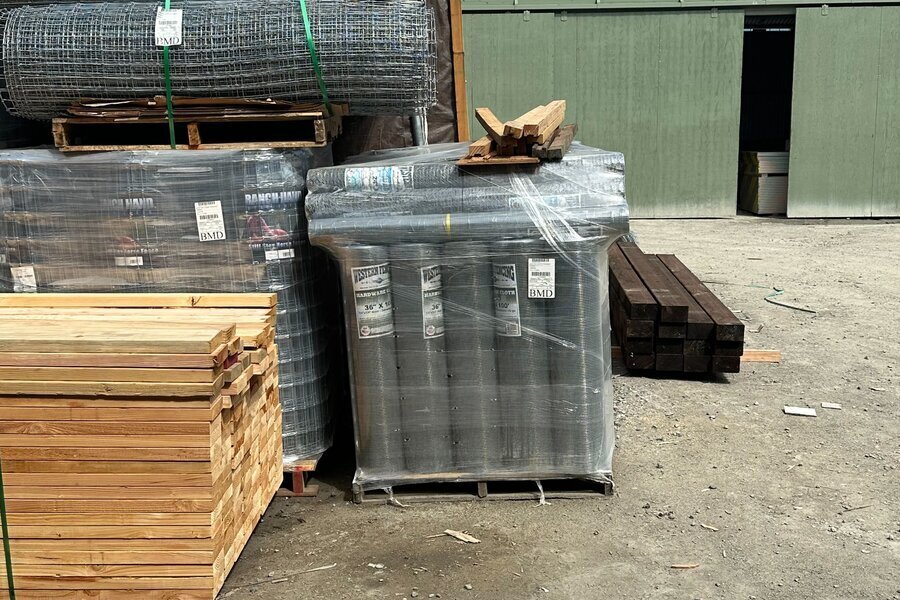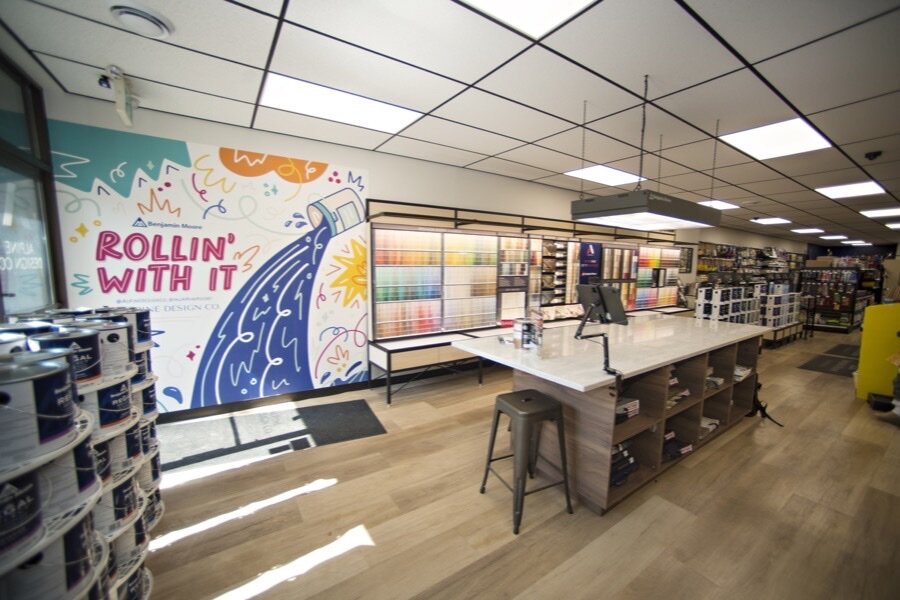
The best POS for a lumber yard depends on what kind of yard you run, so here is the straight answer up front: if you are an independent lumber yard with a retail counter, contractor charge accounts, quotes, and deliveries, Rundoo is the best fit we know of, and we built it for exactly that store. If you are a large multi-branch dealer, or your yard manufactures trusses, millwork, or configured window and door packages, you want an LBM-specific ERP such as Epicor BisTrack, ECI Spruce, or DMSi Agility, with newer cloud entrants like Flitch and GenetiQ worth a look. A generalist tool like Shopify or Square only makes sense if you have no contractor accounts at all, and most yards do. Whichever direction you lean, test each system against your own messiest quote before you sign anything.
Consider McKinnon Lumber Co. in Hollister, California, a yard that has been selling wood since 1869 and, until recently, kept track of what went out the gate with hand-written tags. GM Logan Kowalk heard about Rundoo from the neighbors at Hollister Paint, and after switching, the feedback that stuck with him came from the pro side of the counter: "We've received a lot of positive feedback, particularly from contractors who can quote jobs at 10:30 p.m. and check prices in real-time from their phones." A yard that predates the telephone now takes quotes after bedtime. The right system is not the one with the longest feature list; it is the one that fits how your yard sells.
What a lumber yard needs from a POS
A lumber yard is not a boutique, and the software has to speak board feet before anything else matters. Here is what to put on your checklist:
- Board-foot and linear-foot units. You buy by the MBF and sell by the piece or the foot, so the system needs decimal quantities and clean conversions on every line, and a demo that fumbles a units question has told you what you need to know. (Our board foot calculator is a handy companion while you test.)
- Quotes and estimates. Stock and special-order lines belong on one quote, a job sells in phases as the framing crew calls for each drop, and deposits need to apply cleanly along the way.
- Contractor accounts. Tiered contractor pricing on every line, credit limits the register enforces, monthly statements, and a way for the contractor to see and pay a balance from a phone.
- Delivery and dispatch. Scheduling from the counter, pick tickets that tell the yard what to pull, and proof of delivery with a signature or photo that comes back to the office on its own.
- Yard and millwork special orders. When a customer wants something you have never stocked, that special order should ride on the same ticket as everything else. Note that engineered and manufactured items, trusses and configured window and door packages, are a different, bill-of-materials job, and we will come back to that.
- Multi-location. If you run two or three yards, you want one inventory and one customer ledger across all of them, not three databases and a prayer.
The systems lumber yards run today
Here is the field, described the way each company's own customers would describe it, strengths first.
Epicor BisTrack
Epicor describes BisTrack as a "browser based ERP that unifies your entire business on a single platform," purpose built for building material dealers, with analytics, eCommerce, delivery and dispatch, and a mobile proof-of-delivery app, plus a cloud option hosted on Microsoft Azure. A buying-group contact described it to us as "the one that most larger lumber yards are using," and that tracks with what we see: in the past year BisTrack did not come up as a yard's current system in any of our sales call summaries. If you are a larger, multi-branch dealer on BisTrack, it is built for you, and we are probably not your replacement.
ECI Spruce
ECI Spruce is ERP software for lumber and building materials supply: inventory, financials, work orders for custom manufacturing, multi-location support, drag-and-drop load scheduling, proof of delivery, and quotes that convert to work orders with partial release. ECI also sells RockSolid MAX, a separate product positioned for small and convenience lumberyards, and we keep a list of RockSolid MAX alternatives for stores weighing that move. Yards on RockSolid tell us about slow checkout, character limits on item descriptions, statements that cannot be emailed, and weak contractor quoting (our RockSolid switch guide covers the move). On Spruce itself, the yards that call us wanting out describe slow support, high costs, and restrictive licensing. Others are content: one Spruce dealer told us Rundoo did not offer enough to justify the effort of switching, and he was not looking to fix what isn't broken. Both things are true, and which one describes you is the question.
DMSi Agility
DMSi calls itself "an independent niche software company" that has been partnering with companies in the industry for 50 years, and Agility serves LBM dealers, contractor yards, pro dealers, home centers, millwork shops, hardwood dealers, and building materials distributors. The capability list runs deep: real-time inventory and warehouse management, purchasing with demand forecasting and suggested purchasing, production scheduling with bills of materials, a fully integrated General Ledger (GL), and units that include PC, UNIT, BF, MBF, LF, and M3. If your operation includes manufacturing or distribution at scale, Agility is built with you in mind.
Flitch
Flitch describes itself as "Modern Software for Lumber and Building Supply" and "cloud software built for suppliers, by suppliers." Its feature list covers point of sale and order processing, a customer portal for invoices and payments, AR with automated reminders, inventory with AI-driven reordering, vendor catalog integrations, delivery management with GPS tracking and a driver app, and reporting dashboards. It is a newer company, so a yard should ask for references from yards its size before committing.
GenetiQ
GenetiQ is an LBM ERP that is 100% browser-based, with 30-plus years of experience in the sector, serving wholesale distributors, independent lumberyards, hardware stores, and home centers, and it says every workflow is designed for lumber and building material dealers. The company expanded into the US market in 2024, so it is long-established outside the US and newer here, which means asking for US references is a fair request.
Epicor Eagle
Epicor Eagle is common in hardware-and-lumber stores, the kind of place that sells a framing package and a gallon of paint off the same counter. Vetter Lumber, with two yards in Bluffton and Fort Jennings, Ohio, left Eagle after years on an on-premise server that, as their story puts it, never quite earned its keep, and the Kinsingers put a finer point on it: "They like to charge you for every little thing. They were going to charge us two grand just to turn an option on." You can read Vetter's story and our Epicor Eagle switch guide if that sounds familiar.
Generalist tools (Shopify, QuickBooks, Square)
General retail tools can check out a consumer, but a lumber yard is where they run out of road. Missouri River Lumber in Fort Benton, Montana, a yard selling since 1910, ran Shopify under owner Philip Fondale, and it could not handle decimal quantities or charge accounts, so he ran two systems side by side to cover the gap. On Rundoo since December 2025, he told us, "You guys save anywhere between ten to twenty hours a week not having to do dual systems." Read Missouri River's story, and if you are on one of these tools now, our switch guides for Shopify, QuickBooks POS, and Square lay out what moving looks like.
Rundoo
Rundoo is the AI-first POS built only for independent supply stores: Paint, Hardware, Farm & Feed, Lawn & Garden, and Lumber. It is one cloud system in a browser with no server in the back room, and Dooey, our AI, answers questions in plain English on any screen, so "pull yesterday's sales report" is a sentence, not a training session. On the lumber specifics: Unit, Each, Board Foot, MBF, Linear Foot, and Pallet can live on the same item with conversions on every line, precise to 0.0001, so you buy by one unit and sell by another. Stock and special-order products share one quote, jobs sell in as many sales as they need with multiple deposits, deliveries get scheduled and routed in the POS with pick tickets and driver signatures or photos that sync back, and contractor accounts carry tiered pricing, enforced credit limits, statements, finance charges, autopay, and balance payment by card or ACH in the Customer app. Vetter Lumber runs both of its yards on one Rundoo system, with inventory, accounts, and reporting shared across the two, electronic purchase orders to Orgill, and transactions landing in QuickBooks Online. The full picture is on our lumber yard POS page.
Lumber yard POS systems compared
| System | Built for | Trade-off for an independent yard |
|---|---|---|
| Epicor BisTrack | Larger multi-branch LBM dealers | More ERP than a one-to-three-yard retail operation needs |
| ECI Spruce | Lumber and building materials supply, including custom manufacturing | Yards leaving it cite support speed, cost, and licensing, while happy yards see no reason to move |
| DMSi Agility | LBM dealers, pro dealers, millwork shops, and distributors | Depth aimed at manufacturing and distribution, not a retail counter |
| Flitch | Cloud-forward lumber and building supply operations | Newer company, so reference-check yards your size |
| GenetiQ | LBM distributors, lumberyards, hardware stores, home centers | Established overseas, newer in the US, so ask for US references |
| Epicor Eagle | Hardware-and-lumber stores | On-premise server, and add-on charges for turning options on |
| Generalist tools (Shopify, QuickBooks, Square) | Retail without contractor accounts | Built for checkout-and-done retail, so charge accounts, decimal quantities, and dispatch become workarounds |
| Rundoo | Independent yards with a retail counter, contractor accounts, quotes, and deliveries | No bill-of-materials manufacturing, trusses, or configured window and door packages |
Who Rundoo is not for
We put ourselves first in this guide, so we owe you the paragraph where we talk ourselves out of a sale. Rundoo is retail-first. It fits independent yards with a retail counter, contractor accounts, quotes, and deliveries, from one yard to a few, and it fits yards that also sell hardware, paint, and building materials across that counter.
It is not built for truss and component manufacturing, where cost is built from board feet, plates, and labor per custom design. It is not built for remanufacturing and milling, or for configured window and door packages that need bill-of-materials kits. And it is not built for large enterprise dealers running many branches and a distribution center. For those operations, BisTrack, Spruce, or Agility are built for the job, and we say so on calls: when a yard's business is manufacturing and project sales orders, our own rep has told them we were not the right fit. We would rather lose the deal than have you find out in month three.
One more candor item, on buying groups. Rundoo partners with LBM Advantage and LMC, and integrations with their programs are on the roadmap, not live today. Our lumber clients order through distributors like Horizon and Orgill today, but if a buying-group integration is a must-have for you, ask every vendor on your list which integrations are live today, and get the answer in writing.
Where to check our homework
We wrote this guide and we sell one of the products in it, so do not take our word as the last word. SoftwareConnect keeps an independent Best Building Materials Software roundup that is worth a read. Ask your buying group what they are seeing across their members, because they hear the complaints and the praise in equal measure. And call a peer yard, one that looks like yours in size and mix, and ask what they would buy again. Yard owners are generous with the truth when a fellow owner is asking.
How to choose
Demos are theater, so bring your own script. These tests separate a system that fits your yard from one that fits a slide deck:
- Run your messiest quote through the demo. The one with stock lines, a special order, three delivery phases, and a deposit. If it takes forty minutes, that is your answer.
- Have them convert an MBF cost into a per-piece price, live. No prep, no "we'll follow up." Units are where lumber software lives or dies.
- Get the migration list in writing. Which data moves, items, customers, charge account balances, open quotes, and what it costs.
- Test a delivery end to end. Schedule it at the counter, print the pick ticket, complete it on a phone with a signature, and watch it land back in the system.
- Call support before you buy. Phone the support line as a prospect and see who answers and how fast. That is the team you will live with.
- Ask which integrations are live today, in writing. Roadmap means "not yet," from us and from everyone else.
Do those six things and the right answer usually announces itself. The wrong system will cost you years of workarounds, and the right one will feel boring within a month, which is the highest compliment software can earn. Whatever you pick, make sure it is on the level, cut to length for the yard you run, and square with how your contractors buy.
Best lumber yard POS, by need
- Best for an independent yard with a retail counter: Rundoo. Board-foot, MBF, and linear-foot units on one item, quotes that sell in phases with deposits, deliveries scheduled from the counter, and contractor accounts contractors can pay from their phones, all in one browser-based system with Dooey on every screen. It is retail-first, so it is not built for truss manufacturing or configured window and door packages.
- Best for a large, multi-branch dealer: Epicor BisTrack. A browser-based ERP purpose built for building material dealers, with delivery and dispatch, eCommerce, warehouse management, and a cloud option on Microsoft Azure, sized for the larger dealers that run it.
- Best full LBM ERP with custom manufacturing: ECI Spruce. Inventory, financials, work orders for custom manufacturing, load scheduling, and multi-location support in one system, with plenty of contented yards, though the yards that call us wanting out cite support speed, cost, and licensing.
- Best for dealers and distributors with production: DMSi Agility. Deep LBM coverage from a company in the industry for 50 years, including production scheduling with bills of materials, demand forecasting, and native BF, MBF, and LF units.
- Newer cloud LBM options worth a look: Flitch or GenetiQ. Browser-based software built only for lumber and building supply, one a newer company and the other established outside the US and newer here, so ask each for references from yards your size.