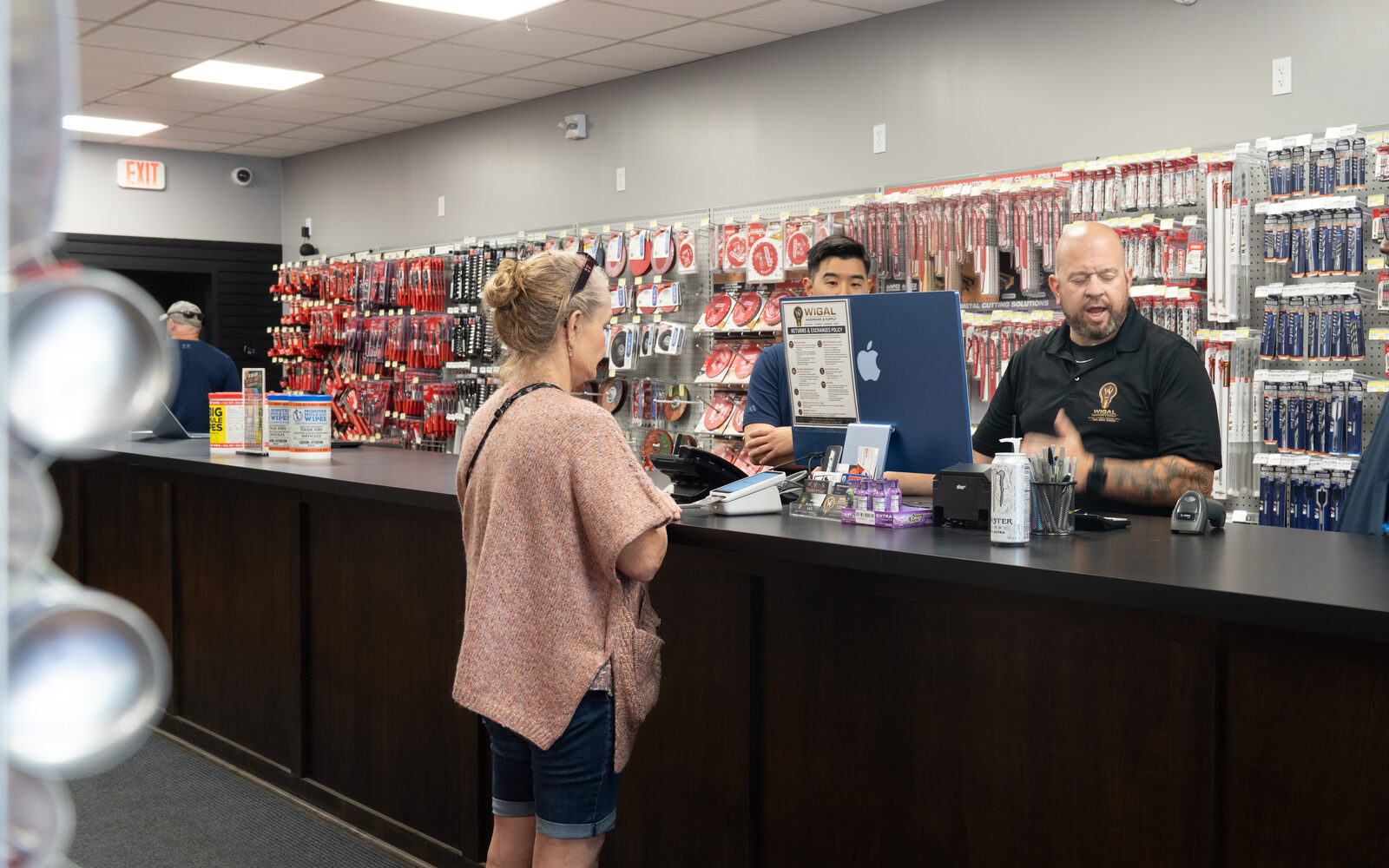
At Clements Paint in Austin, a painting crew can roll up to the counter at 6:45, load twelve gallons and a fistful of brushes, sign nothing but a name, and be back on the job before the coffee cools, because the store carries them on account and squares up at month-end. That handshake predates any point of sale on the market, and it is also the most important thing a paint store does with money, since the contractor who never reaches for a card is the one who keeps coming back. Most software, though, treats the charge account as an afterthought bolted onto a system built for people who pay on the spot, and that mismatch is where the headaches start.
Why charge accounts are the backbone
Walk into any paint store that sells to the trade and the counter tells you who pays the bills. The weekend homeowner buying a gallon of eggshell is welcome, but the contractor with six crews and a standing account is the reason the lights stay on, and that relationship runs on terms, not swipes. Net-30 is the industry's rhythm: the painter takes the material now, bills the job, gets paid, and squares up on a monthly statement, so when the cycle snags, the store floats the cash. Done properly, a charge account is not one feature but a stack of them.
- House accounts with real records. Every contractor should be a named account with their crews, jobs, and purchase history together, so an unfamiliar foreman is confirmed as buying for a company you know in seconds, not with a phone call to the owner.
- Per-customer pricing that follows the account. Your best painters do not pay shelf price, so the discount you negotiated should apply automatically at the register, not live in someone's memory or on a card taped under the counter.
- Credit limits and aging you can see. A charge account without a credit limit is a loan without a ceiling, and a store that cannot see which accounts are 30, 60, or 90 days past due is extending credit blind.
- Statements that go out on time. If producing them means stuffing envelopes for two days at month-end, they go out late, and late statements get paid late.
Generic retail software handles some of these and forces workarounds for the rest, which is how paint stores end up running the business out of a spreadsheet, a folder of paper tickets, and the owner's head. Several stores now on Rundoo came to us doing exactly that, off QuickBooks POS and off Square, systems that treat a net-30 painter like an edge case.
Statements, pricing, and aging done right
On a system that treats accounts as first-class, the month-end statement run is a batch job, because activity is captured at the register, pricing is baked into each line, and aging is already calculated, so a month of statements goes out in minutes, not days. Per-customer pricing matters because it survives the person who remembers it: when a longtime counter hand retires, the discounts in their head walk out with them, so pricing tiers attached to the account keep margins honest no matter who is checking out the customer, which is what lets stores like Colors Inc. in Durango and Drake's Paint in Medford treat trade pricing as data rather than folklore. Clean aging is the other half, telling you which accounts are drifting past terms while there is time for a friendly call, so the store that spots the three creeping toward 90 days rarely writes anything off.
Getting paid faster
Carrying contractors on account is generous, but generosity that turns into a month-end phone chase is just unpaid collections work. A balance that is easy to settle gets settled while a check or a store trip waits, which is the point of a connected point of sale: the accounts at the register show up in the painter's pocket through the Customer App, where a contractor can review open invoices and statements, pay one invoice or the whole balance from the jobsite, and turn on automatic payments so the responsible accounts settle themselves before anyone asks. This is also where tighter accounts turn into recovered cash: comparing the year before switching to Rundoo against the year after, stores saw a 25% reduction in accounts receivable, the number we drive most consistently, because it comes straight from statements that go out on time and a pay-from-your-phone flow that removes the friction between owing and paying.
How Rundoo handles it
Rundoo is the AI-first POS built only for independent supply stores, so contractor charge accounts are not a module we grafted on but a core part of the system, with house accounts, pricing tiers, credit limits, statements, and aging all living at the register where the owner and the painter see the same thing. Payments run with ACH for large trade invoices, autopay clears the responsible balances without the chase, and Dooey on every screen flags an account creeping past terms before it becomes a write-off. As a Benjamin Moore preferred system with AllPro ordering built in, Rundoo keeps the charge account, the tint machine, and the vendor order in one place, the shape a paint store POS should take, and stores that switched from Decor Fusion and Epicor Eagle keep their balances, pricing, and aging in the move.
Put every vendor's charge-account handling through the questions below with the same scrutiny you would give a primer before topcoat, since the prep determines the finish. Then bring us your messiest charge account, the painter with three companies and a pricing deal nobody wrote down, and we will demo the whole cycle on your own data, from the truck run to the payment that clears itself. Stores from Hollister Paint in California to Westerly-Mystic Paints in Connecticut run their trade on Rundoo, and the fastest way to see whether it fits is to watch it handle the account that gives you the most grief. Net-30 does not have to come with a headache; it just needs software that treats the backbone like a backbone.