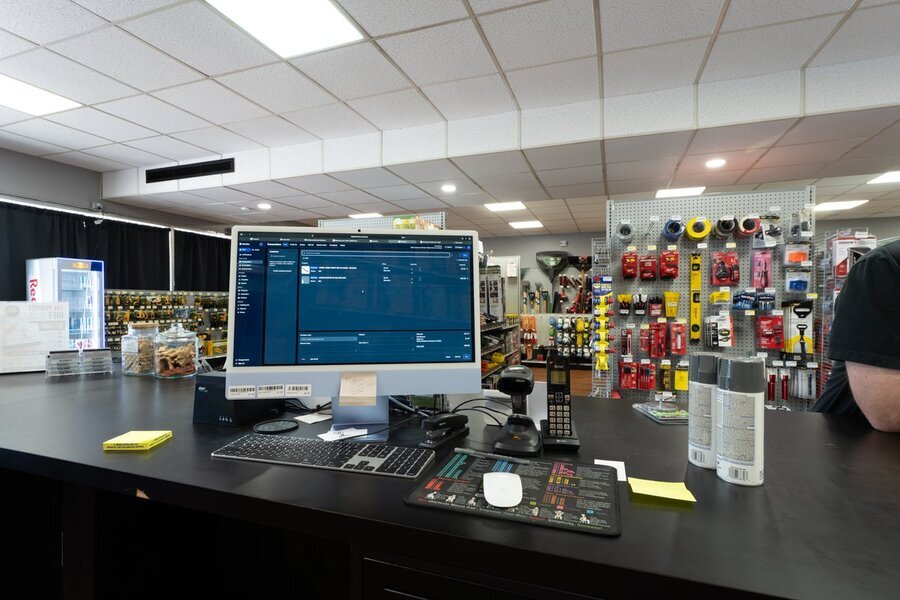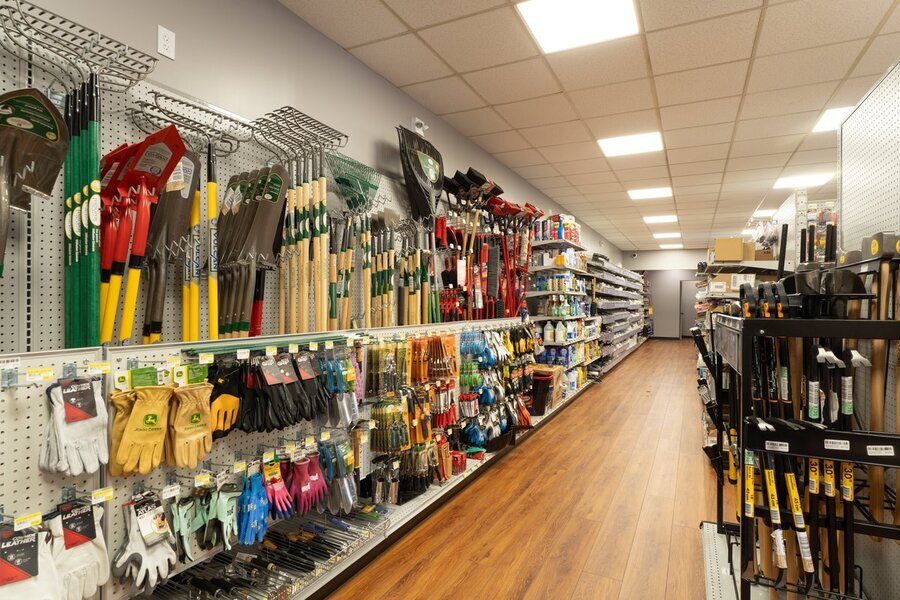
Most nurseries run one of a handful of systems, and the gaps between them rarely show up in a demo, because a demo happens indoors, on a quiet day, with a product list of twelve items. They show up at the bench when a seasonal hire cannot find a plant whose tag faded, in the bulk yard when a customer wants 1.75 yards of mulch, on the landscaper's account when the monthly statement goes out, and in the April surge when the line triples and the Wi-Fi in the back hoop house gives up. This guide judges each system in those places.
How we chose: the garden-specific tests every system had to pass
We are a POS vendor, and Rundoo is on this list, so it is fair to say how we built it. We started from the systems garden centers tell us they are running when they talk to us and the systems that rank when an owner searches for one, and then judged each one on the five jobs that separate a garden center from general retail. For competitors, we relied on what each vendor publishes about its own product, and where a vendor does not say, we say so rather than guess. For Rundoo, every claim was checked against our support records and product documentation, including the things it does not do.
- Plants. Can it track one variety in several container sizes, find a plant by botanical or common name, and handle stock that shrinks on the bench and arrives in grower waves?
- Units of measure. Can it sell mulch, soil, and stone by the partial yard or ton, and plants by the flat, from one product record?
- Charge accounts. Can landscapers run a house account with credit limits, terms, and monthly statements, right at the register?
- Yard selling. Can staff ring a sale at the bench or in the bulk yard, and what happens when the connection drops?
- The spring rush. Can it help you buy for spring from last season's numbers, and will the vendor answer the phone in April?
Side-by-side comparison
Here is how the systems garden centers run stack up at a glance. "Ask" means the vendor's own materials do not answer the question clearly enough for us to state it, so put it on your demo list.
| System | Best for | Plants | Units of measure | Charge accounts | Yard selling and offline |
|---|---|---|---|---|---|
| Rundoo | Independents wanting plants, bulk, accounts, and the books in one system | Each size its own item; search by any name in the product name; scheduled promotions for markdowns | Your own units of measure, flats and yards on one item, partial amounts | Built in, with statements, aging, and a customer app for paying balances | Web POS on a tablet with a Wi-Fi card reader; no offline mode, hotspot or 5G backup |
| Rapid Garden POS | Nurseries and landscape yards wanting a garden-specific system | Garden-built; publishes plant search by botanical, common, and Spanish names | Publishes selling by the bag, cubic yard, flat, or truckload | Ask | Publishes named yard and greenhouse handhelds; ask about offline |
| Epicor Eagle | Larger, multi-store operations with administrative staff | Offers garden center configurations; ask how sizes and plant search work | Ask | Established | Ask |
| NCR Counterpoint | Established multi-store retailers already on it | General retail with garden installs; ask | Ask | Established | Ask about offline ticket entry and mobile |
| Lightspeed | Generalist retail with garden add-ons | Partner apps for plant tags | Publishes fractional quantities | Ask | Ask |
| KORONA | Generalist retail with flexible setup | Ask | Ask | Ask | Ask |
| Square | Seasonal stands and small centers without accounts | General | General units | Limited for landscaper statements | Mobile readers; offline card mode with limits |
| Shopify POS | Centers whose online store comes first | General | Ask | Ask | Ask |
| Clover | Small stores wanting simple hardware | General | Ask | Ask | Offline card mode with limits |
| Comcash | Centers already running it well | Used by garden centers for years | Ask | Ask | Ask |
| Rain | Specialty retail spanning many verticals | General specialty retail | Ask | Ask | Ask |
The garden-specific systems
Rapid Garden POS
Rapid Garden POS is the system most clearly built for this category, and it shows in what it publishes: selling by the bag, cubic yard, flat, or truckload, plant search by botanical, common, and Spanish names, named handhelds for the yard and greenhouse, and a long list of integrations that includes plant care and culture content. For a nursery or landscape yard that wants a system that speaks its language out of the box, it deserves a serious look. The questions worth asking are about the whole business rather than the counter: how cleanly it connects inventory, charge accounts, and accounting, and how modern the day-to-day feels for a seasonal hire on a busy weekend. Our Rapid Garden POS switch guide covers what moves over and how the change goes for a nursery that outgrows it.
Epicor's garden offerings and NCR Counterpoint
Epicor Eagle and NCR Counterpoint are established retail systems with long histories in hardware and garden, and both suit larger operations that have the staff to administer them and the budget for the implementation. Their strength is depth and maturity, and the trade-off is the weight that comes with it, along with a server in the back office or a hosted setup, which keep running on the local network but need someone to look after the server. If you run one today and it fits, there is no prize for leaving, and if you are considering one, ask to see a garden center like yours running it, including the bulk yard and the plant list. Stores moving off either system can see what migrates on our Epicor Eagle and Counterpoint pages.
The generalists dressed for spring
Lightspeed, KORONA, Square, Shopify, and Clover are general retail systems, and several publish garden center landing pages. Lightspeed's is the most specific, with sections for wholesale and retail garden centers, landscape material suppliers, and nurseries, plus fractional quantities for bulk goods and partner apps for plant tags and loyalty. KORONA leads at least one third-party list of garden center software, and Square, Shopify, and Clover are what many seasonal stands start on because the hardware is simple and the setup is fast. Shopify makes the most sense for a center whose online store comes first.
The ceiling on a generalist shows up where a garden center lives. A landscaper wants a monthly statement, bulk material needs to sell by the partial yard, the buyer wants last season's sales by variety and size, and a dead plant needs to come off the books with a reason. Each of those can be handled with an add-on, an app, or a spreadsheet, and each add-on is one more place for the numbers to disagree. If pro accounts and bulk goods are not your world, a generalist may never pinch, and if they are, the pinch is annual and it lands in May. Rusty Gate Nursery in Forks, Washington, where the rain that feeds the rainforest also feeds the business, came to Rundoo from Square for that reason, and stores weighing the same move can compare on our Square, Lightspeed, Shopify, and Clover pages.
Older garden installs: Comcash and Rain, and when it is time to move
Comcash has sold into garden centers and general retail for years, and stores that run it know it well. The pattern we hear from owners who leave centers on age rather than intent: an interface and a back office that feel a generation behind the browser-based tools their staff use everywhere else. Country Gardens Nursery in Heber City, Utah came to Rundoo from Comcash, and if Comcash still fits your yard and the support is holding up, staying is a perfectly reasonable call. Rain is a specialty-retail system that spans many verticals from bike shops to boutiques, so a garden center on it gets solid general retail without a foundation poured for living inventory, and owners who move off Rain tend to be chasing one connected system rather than features stitched together.
The signals that it is time to move are the same for both: the bulk yard runs on a calculator next to the register, landscaper statements are assembled by hand at month end, the spring order is placed from memory rather than last season's numbers, or the support line goes quiet in April. Any one of those is a reason to start looking in the summer, so the new system is ordinary by the time the first grower truck arrives.
Rundoo
Rundoo is the AI-first POS built only for independent supply stores, and for a garden center that means plants, bulk goods, landscaper accounts, and the books in one browser-based system. Each container size of a plant is its own item with its own count and price, grouped by department, class, and product tag, and search reads the product name, so a name that carries both the common and the botanical name finds the plant either way. Bulk sells in any unit of measure you set up, with partial amounts allowed, so 1.75 yards of mulch rings as 1.75 yards and a flat converts to the pots it holds. House accounts with credit limits, terms, statements, and aging live at the register, landscapers can pay their balances from the Rundoo Customer app, repotting runs as a purchase order that balances to zero so cost follows the plant, and promotions with start and end dates can run a markdown ladder on a schedule. Dooey sits on every screen to answer questions like which varieties sold fastest last spring or which benches never moved.
Now the limits. Rundoo has no offline mode, it does not connect to a scale, it does not have a size matrix or shrink reason codes, and the Staff app on a phone searches, counts, and prints labels but does not ring sales, so checkout away from the counter runs on the web POS on a tablet with a Wi-Fi card reader. You can see the counter in the Web App and POS and the garden center view on our garden center POS page, and Rundoo is a member of AmericanHort, because the people building the software should know the people growing the plants.
Selling in the yard and greenhouse: mobile, offline, and what happens when Wi-Fi drops
Ranking pages tend to blur "mobile" and "offline", and they are two different questions. Mobile asks whether staff can ring a sale at the bench or in the bulk yard, and offline asks whether the system keeps taking sales when the internet drops. A system can be one, both, or neither, and a garden center needs an answer to each.
On offline, the systems fall into three groups. Systems with a server in the back office, which is how many Epicor and Counterpoint installs run, keep working on the local network when the internet drops, as long as the power, the network, and the server hold. Some cloud systems, including Square and Clover, document offline card modes that queue payments and settle them later, within limits the store should read carefully, because a card declined after the connection returns is the store's loss. And some cloud systems, Rundoo included, have no offline mode. Rundoo is direct about this in where is the offline mode: when Wi-Fi goes out, stores connect to a phone's mobile hotspot or a purchased hotspot box, and some have moved to 5G Wi-Fi alongside wired internet for better reliability. Whatever you run, a tested backup connection belongs in the plan, because even an offline register cannot check a landscaper's credit limit on an account it cannot reach.
On mobile, walk the property with the device before you buy it, because poly film, shade cloth, and metal benches are hard on Wi-Fi, and a dead spot in the back hoop house is cheaper to fix in February than in April.
Switching before the spring rush: timing, data, and what to ask every vendor
The right window to switch is late summer through early winter, after the fall rush and before the spring grower order, which leaves time to migrate the data, train the team, and run a few quiet weeks before the first warm weekend. Rundoo's guidance for switch day is to bring everything over exactly as it was, then change things one at a time, and any migration plan worth signing should spell out which data comes with you, how accounts receivable and tax settings are handled, and how everything is verified before go-live. Every quote breaks down into the same six budget lines, from hardware and software through processing, migration, training and support, and the cost of leaving the current system, so compare them line by line rather than by the headline number. Ask every vendor these questions and write the answers down.
- How does the system track one plant in several container sizes, and how does staff find it by botanical or common name?
- Can you sell mulch and soil by the partial yard, stone by the ton, and an annual by the flat, from one product record each?
- What do your landscapers see: credit limits, terms, statements, aging, and a way to pay without coming in?
- Can staff ring a sale at the bench and in the bulk yard, on what device, and what happens when the connection drops?
- How does a dead plant come off the books, and how does a repotted plant carry its cost?
- Exactly which data migrates, meaning products, customers, sales history, pricing, balances, and aging? Get the list in writing.
- Who answers the phone during the spring rush?
Judge whatever you pick the way you would judge a transplant, on whether it takes root once the pressure is on, not on how good it looks in the pot. Bring us your messiest landscaper account and your longest plant list, and we will demo Rundoo against them on your own data on whatever slow morning your season allows, and then put every other system on this page through the same soil test, because the one that holds up under real conditions is the one your center should run, and we are glad to win or lose on that.
Best garden center POS, by need
- Best all-in-one for an independent garden center: Rundoo. Plants by variety and size, bulk sold by the partial yard, landscaper charge accounts, and the books in one browser-based system, with no offline mode.
- Best garden-specific system with yard handhelds: Rapid Garden POS. Built for nurseries and landscape yards, with plant search by botanical and common name and named handhelds for the yard.
- Best for multi-store operations already on Epicor or Counterpoint: Epicor Eagle or NCR Counterpoint. Deep, established systems that suit larger operations with the staff to run them.
- Best generalist with garden-center add-ons: Lightspeed. A polished general retail system with fractional quantities for bulk and partner apps for plant tags.
- Best simple starter for a small stand: Square. Gets a seasonal stand onto a card reader fast, until landscaper statements and bulk by the yard arrive.
- Best to keep if it still fits: Comcash or Rain. Older installs that stores know well; worth leaving when age, support, or bulk goods start to pinch.