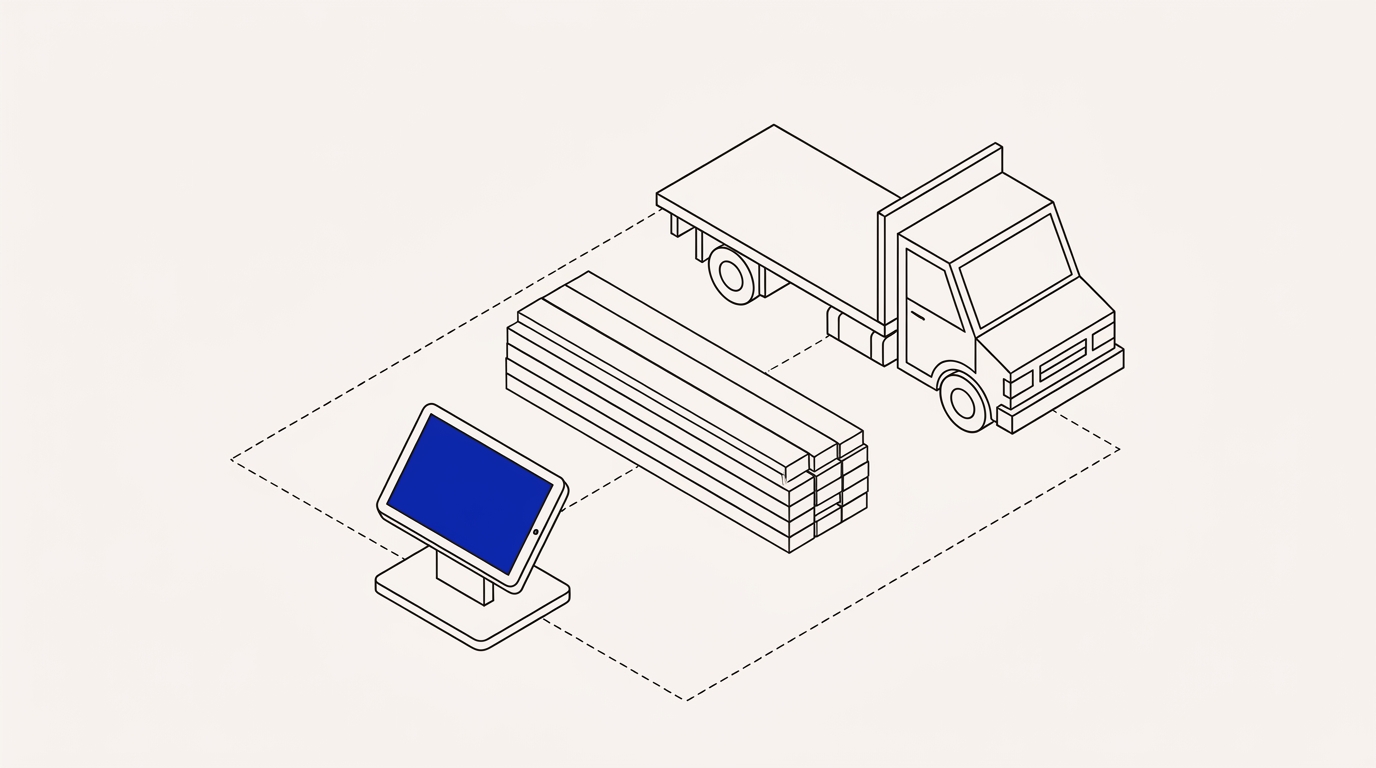
Walk into a garden center in late winter and you will find three or four people sitting around a running hose with a pile of pots, moving tomato plants out of three gallon containers and into five gallon containers one at a time, because a plant that has been drinking your water since November is worth more in a bigger pot than it was in a smaller one. The same afternoon is happening at a feed store where somebody is filling and tying fifty bags of a house blend before the weekend rush, and at a lumber yard where a shed is going up out front to sit there until a customer backs a trailer to it. None of those stores would describe what it is doing as manufacturing, and none of them wants manufacturing software, yet all three have the identical bookkeeping problem: several products went in, one different product came out, and the cost has to travel with it.
Royce Christopher, our Director of Strategic Growth, walked the Rundoo team through this on September 16, 2026, and he opened with the part most software vendors save for the fine print. Rundoo is not manufacturing software and it is not grow software, so a business that needs yield tracking, batch genealogy, or seed to sale should buy the thing built for that, and we would rather say so on the first call than on the third. What Rundoo does handle, and handles cleanly, is combining parts into a new part, carrying the full cost of goods across to it, and leaving you room to mark the result up for the time your crew spent making it. The mechanism is a purchase order that balances to zero.
Which jobs this covers, and which ones it does not
The tell is in how the work gets described. An owner who says "we build this out of that" is describing simple assembly and will be well served by everything below, while an owner who reaches for yield, batch, seed to sale, or made to order is describing a different problem that wants different software. Three shapes of the job come up constantly in independent supply stores:
- Growing on. A perennial that graduates from a one gallon to a three gallon over a season, or the tomatoes below moving from three gallon to five, where the plant gains value while it sits in your yard and the old container goes back on the rack for reuse.
- Pre-bagging. Feed, fertilizer, deer corn, and birdseed portioned or blended ahead of the weekend, which is the grain elevator version of the same move and the one farm and feed stores run most often.
- Light assembly. A shed built to resell, a hose cut and fitted to length, a custom extension cord made up on the bench, any product that leaves the store as one item after arriving as several.
What ties all three together is quantity built ahead of demand, and that is the condition worth testing before you adopt any of this. Ten plants repotted in an afternoon, fifty bags filled before a Saturday, or six sheds standing out front all earn back the few minutes of bookkeeping below, while one of anything made up at the counter for one customer never will.
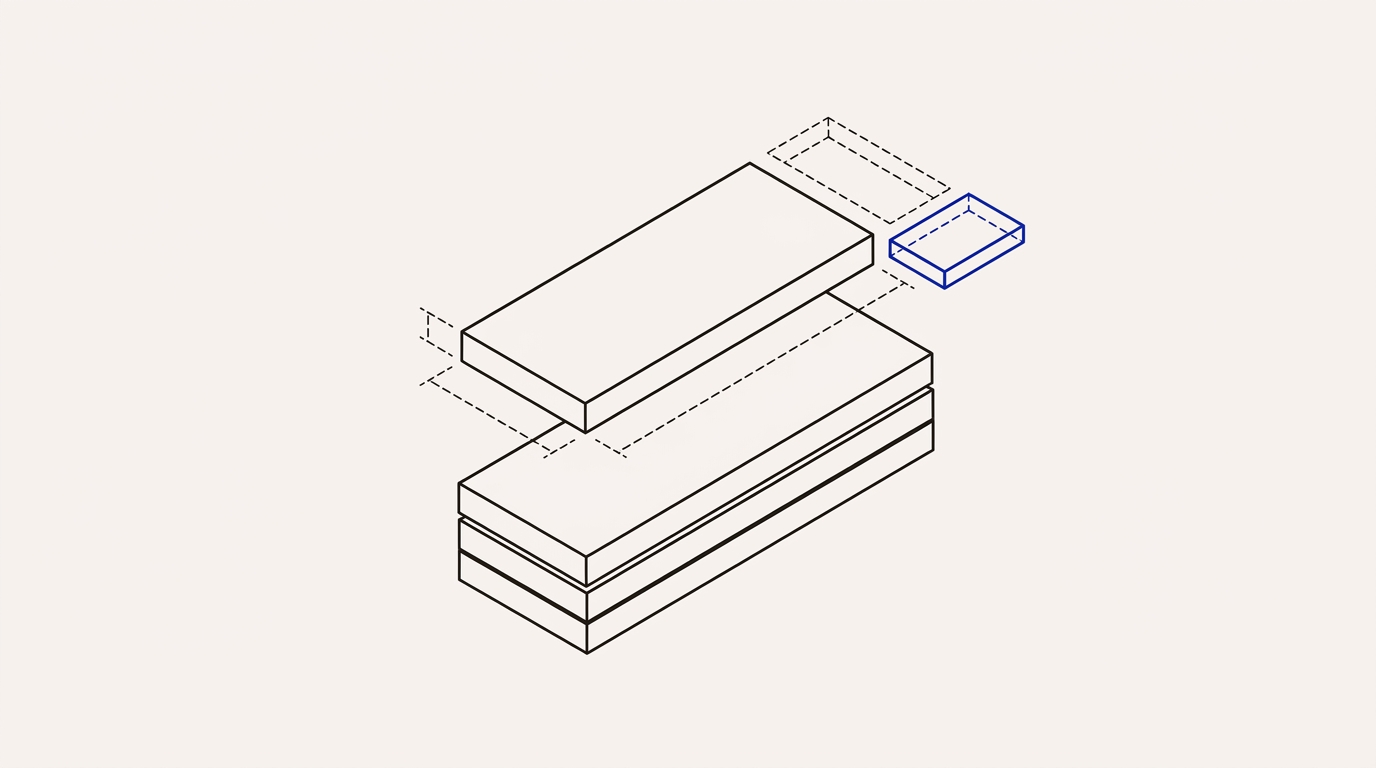
It is worth naming the thing this is not, because the words get swapped around and the two behave nothing alike. A kit bundles existing products together at the register, so the components stay components right up until somebody checks out. Simple assembly builds a genuinely new product that goes on the shelf with its own count and its own cost, and it can sit there for a week or for two seasons before it sells. A repotted five gallon tomato is not a bundle of a pot and some soil, it is a bigger plant.
The one rule: the order has to balance to zero
The whole thing happens on the Orders screen, the same place you raise and receive purchase orders, which sounds like an odd home for it until you look at what a purchase order does, because it is the one screen in the store that moves several products and their costs in a single confirmed motion. You are not buying anything from anybody here, though, so no money enters or leaves the business and the value only shifts between products, which means every plus and every minus on that order has to cancel out. If the order lands anywhere other than zero, your cost of goods, your inventory valuation, and your general ledger all drift at the same moment and in the same direction, and that kind of drift stays quiet until the year end reconciliation, which is the worst possible time to meet it.
One setup step pays for itself immediately: create a vendor for this work, named something plain like Plant Grow or Assembly, and run every build through it. You are never going to email that vendor an order, so the only job it has is to make every build you have ever done findable in one filtered list, which matters the first time somebody asks why a five gallon tomato costs what it costs.
A worked example: ten tomatoes moving up a pot size
Ten tomato plants have spent the winter in three gallon pots getting watered, fed, and generally fussed over, and they are going into five gallon pots with fresh potting soil and a shot of fertilizer. Four products come out of inventory, two go back in, and the second of those two is the one stores forget: the ten empty three gallon pots are perfectly good containers that will hold the next round of smaller plants, so they belong back on the shelf rather than in a pile behind the greenhouse.
Step one: take the components out
Start the order against your build vendor and list everything the batch consumes, each one as a negative quantity, because a negative line on a purchase order relieves inventory the same way a positive line receives it.
| Line | Quantity | What it is |
|---|---|---|
| 3 gallon tomato plant | -10 | The plants you have been growing on all winter. |
| Potting soil | -5 | Five bags to bring ten five gallon pots up to the rim. |
| Fertilizer | -1 | One ten pound bag, spread across the whole batch. |
| 5 gallon pot | -10 | The containers the plants are moving into. |
In Royce's demo that came to $159.28, and that subtotal is the number you now have to balance back to, so write it down before you touch anything else.
Step two: put the finished product and the reclaimed pots back in
The empty three gallon pots go on first, ten of them at their carrying cost, which in this example runs two dollars apiece and knocks the running balance down to $139.28. Put them in as their own used-pot product rather than the new one, since a pot that has been through a season is worth what a used pot is worth and your counts should say so.
Everything still outstanding has to land on the finished plants, so add ten five gallon tomato plants and divide the remaining $139.28 across them, which is $13.928 each. Enter it to the third decimal if the cost field will take it, and if it will not, round to $13.93 and trim a single line by the odd couple of cents until the order reads zero, because zero is the entire point of the exercise and a rounding error is still an error.
Step three: receive it, then go look at the product
Hitting receive does all of it in one motion: ten three gallon plants, five bags of soil, one bag of fertilizer, and ten five gallon pots leave inventory, ten empty three gallon pots come back into it, and ten five gallon tomato plants appear carrying the full cost of the batch. Open the finished product afterward and check two numbers, the quantity on hand and the valuation, because if both moved the way you expected then the build did what you meant it to do, and if either one looks strange you want to find that out this afternoon rather than in April.
The markup is how you get paid for the afternoon
That $13.93 is cost, not price. Rundoo does not track labor, so nothing in the system knows that four people spent an afternoon on their knees with a hose, and the only place that work can show up is in the spread between what the batch cost you and what you sell it for. Set the retail on the five gallon plant above $13.93 by enough to cover the hands, the water, the winter, and the two plants that will not make it, and that spread is the value you added. Pricing rules, margin targets, and cost changes all live together on the same screen, so the mechanics are covered on our page about managing pricing and purchasing. The margin, like the tomatoes, has to be grown on purpose.
Some of them are going to die
Plants die, bags split, and pots crack, and any method that cannot absorb that is a method for a spreadsheet rather than a store. A garden center is the only kind of store where the shrink is something the inventory does to itself, and there are two straight ways to handle it that both keep the general ledger whole.
- Roll the loss into the survivors. Say two of the ten do not make it. Put eight finished plants on the positive side instead of ten and spread the same $139.28 across them, which comes to $17.41 each. The batch still balances to zero, and the eight plants that lived carry the cost of the two that did not, which is a fair description of what happened out on the bench.
- Write them off before you build. Cycle count the two dead plants out as shrink first, then run the order with the eight that survived on both sides of it. The order still lands on zero, the loss sits in your shrink number at what the small plants cost rather than what the big ones would have, and the sequence matters because building ten finished plants out of eight living ones puts stock on your shelf that is not standing in the yard.
Neither one is wrong. The first keeps per-unit margin accurate because the survivors carry the whole batch, the second keeps a running record of how much of the bench you lose in a season, and the trouble only starts when a store alternates between them, so pick the one that matches how you review the business and stay with it. Either way the full cost stays accounted for and nothing leaks. If you want the wider view of counting living inventory that grows, shrinks, and arrives in seasonal waves, we went deep on tracking nursery plants by variety and size, and the same rhythm runs through Country Gardens Nursery in Heber City, Utah.
Where this stops working
Made to order gets clunky quickly, and it is better to hear that here than to discover it at the counter. A custom blend mixed and bagged while a customer waits would mean building a zero balance order for every single bag, which is a lot of keystrokes to sell one sack of feed, and that job belongs to a kit or a bill of materials rather than to this. The same goes for anything that needs yield tracking or seed to sale, which are specialized problems that want software built for them, and pretending otherwise would only cost you a season before you found out.
Older platforms such as Counterpoint and Epicor Eagle do include a bill of materials workflow that is tidier than this for the narrow job of building one product out of several, and we would rather say so than have you discover it in a demo. The trade is the rest of the system, because a dedicated build screen does not help much when the point of sale, the charge accounts, the purchasing, and the accounting sitting underneath it were all designed around a server in the back office. Where Rundoo earns the comparison is everywhere else, which is the fair way to draw the line, and our Epicor Eagle switching guide covers what that migration looks like in practice.
A short checklist before your first build
- Create the finished product and any reclaimed container as their own products first, since you cannot put a five gallon tomato or a used three gallon pot on an order that does not know they exist.
- Set up the dedicated build vendor once, then use it for every batch forever.
- Write the components and quantities down at the bench while the work is happening, because reconstructing a batch from memory a week later is how good numbers go soft.
- Keep the subtotal from the negative lines in front of you. That is the number you balance to.
- Confirm the order reads zero before you receive it, not after.
- Open the finished product and check that the quantity on hand and the valuation both moved the way you expected.
The first build takes twenty minutes and a calculator, the fourth takes about five, and by the tenth it is part of truck day. Whether you are growing perennials up a pot size at a garden center, pre-bagging a house blend at a farm and feed store, or standing sheds out front at a lumber yard, the accounting underneath is the same and it stays in balance for the same reason. Bring us your messiest build, the one with eleven components and a container that comes back, and we will walk it through Rundoo on your own numbers when you book a demo.