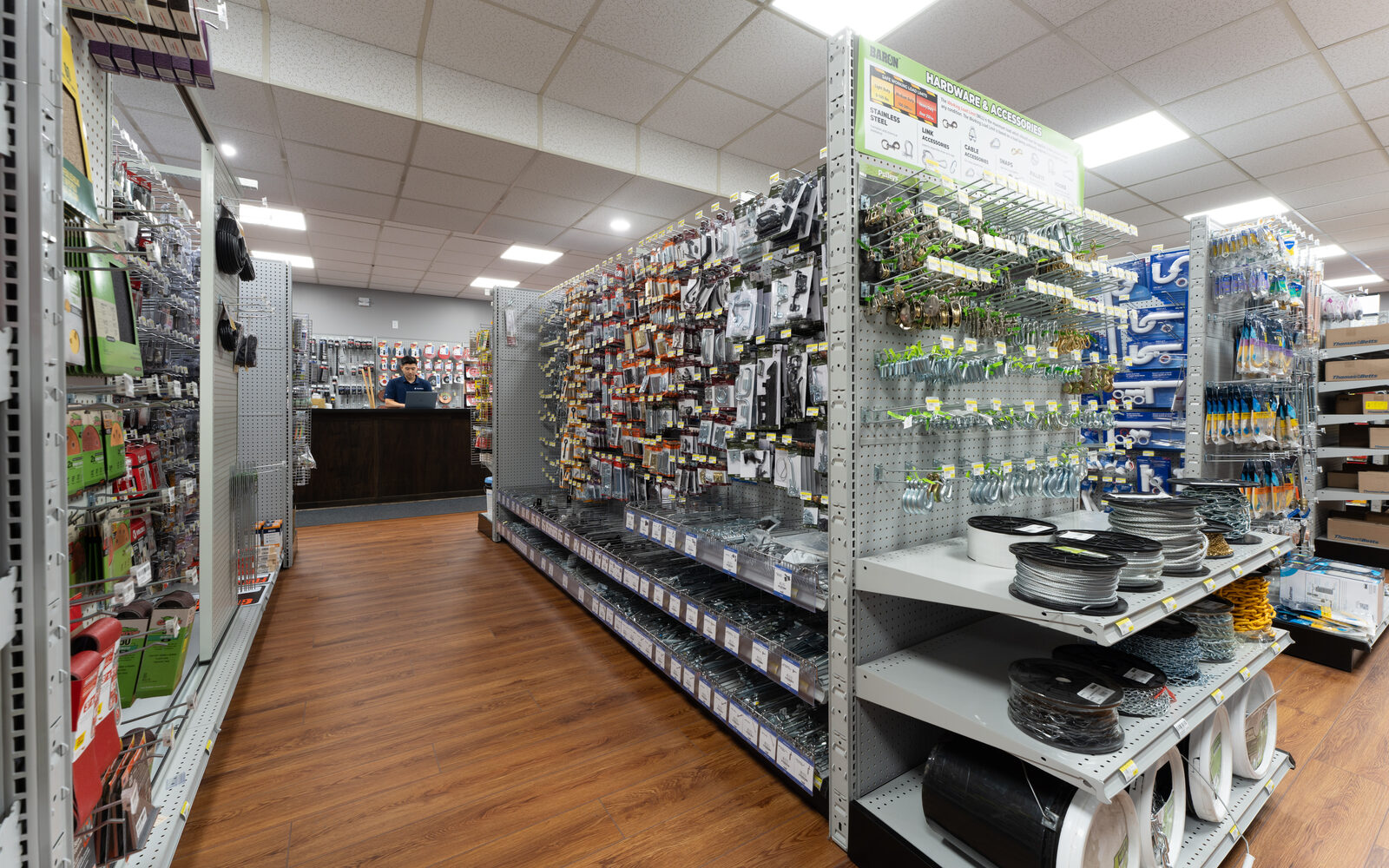
On one side of the street there's a hardware store with a 3% line at the bottom of every card receipt, printed plain as day. On the other side there's a paint store where every shelf tag reads "cash price," and paying with a card costs a little more. Both owners are sure the other one is doing it wrong, and both will tell you so, at length, if you get them started at the counter.
Here's the funny part: depending on the state they're in, either one of them could be right. Cash discounts, surcharges and dual pricing all chase the same goal, which is keeping card acceptance costs from cutting into your margin, but they're built differently, they follow different rules, and they fit different kinds of stores. If a processor has been pitching you a "cash discount program," or you noticed the fee line on a competitor's receipt and wondered whether you should add one, this is the article to read before you change a single tag. And because the legal picture depends heavily on your state, keep our state-by-state surcharge law page open in another tab the whole way through.
Three models, one goal
All three models move card costs toward the customer who creates them. They differ on one deceptively simple question: what does the price on the shelf actually mean? Get that answer wrong and the whole structure wobbles, because the card networks and several states define each model by where the number on the tag sits relative to what the customer pays.
| Model | What the shelf price is | Where the rules come from | The catch |
|---|---|---|---|
| Surcharge | The cash price. A fee gets added at checkout when someone pays by credit card. | Card network rules layered over state law. Visa caps the fee at the lower of your merchant discount rate for that card or 3% (in effect since April 15, 2023). Mastercard's absolute cap is 4%, but never above your cost. | Credit cards only, never debit or prepaid, even a debit card run as credit. You disclose at the store entrance, at the point of sale, and as a separate line on the receipt, and you notify your acquirer 30 days before you start. |
| Cash discount | The card price. Paying cash earns a discount off it. | Visa allows it as a discount offer, and some states write it into statute. Connecticut says the listed price must be the credit card price and the customer must see the notice before the sale. | Posted prices must be the card price alone, or the card and cash prices side by side. Post the lower price and add a fee at the register, and Visa says it "may be treated as a surcharge," which pulls every surcharge rule down on you. |
| Dual pricing | Both. Every item shows a card price and a cash price. | State guidance. New York's Department of State lists "Clearly display BOTH the Credit Card and the Cash Price" as a legal approach. | Tag discipline. Every tag, every item, every time, and a re-tag when costs move. Miss one and you've recreated the cash-discount trap: a low posted price with a fee appearing at the register. |
These aren't suggestions. Visa runs a yearly mystery-shopping program, and the acquirer of a merchant caught surcharging improperly can be fined $1,000 on the spot, a cost that tends to roll downhill to the store. Whether you can run a surcharge at all, and at what percentage, depends on your state, so check the state table before you price anything.
What a processor means by "cash discount program"
If a processor calls to sell you a cash discount program, the pitch usually sounds like this: your posted prices go up by a set percentage, customers who pay cash see a "discount" at the register, the processor supplies the signage and the receipt language, and your card costs disappear into the program. Sometimes that's a legitimate structure. Sometimes it's a surcharge wearing a discount's name tag, and the difference matters because the legal obligations are completely different.
Before you sign anything, ask five questions. First, who is the merchant of record for the fee, you or the processor? Second, is the posted price really the card price on every tag in the store, because if the shelf shows the low price and the register adds a fee, Visa treats that as a surcharge no matter what the brochure calls it. Third, what exactly does the receipt say, and does it show the fee or the discount as its own line? Fourth, is debit excluded, since neither a surcharge nor a disguised one can touch a debit or prepaid card? Fifth, what happens to the program if the processor relationship ends, because you don't want to discover that the signage, the pricing structure and the receipt logic all belonged to a company you no longer work with, leaving you to re-tag the store on a weekend.
A good processor will answer all five without blinking. A vague answer on any of them is your cue to slow down.
The supply-store twist: your contractors do not pay with a card at the counter
Everything written about surcharges and cash discounts assumes a retail store where every customer pays at the register. Your store doesn't work that way. A large share of contractor volume in hardware, paint, farm and feed and lumber runs on charge accounts, not on a card at the counter. The pro pulls up, loads material against the account, maybe with a PO on the ticket so it bills to the right job, and drives off. No card changes hands, so no surcharge or discount touches that sale at all.
What that means in practice: a surcharge at the register lands mostly on walk-in retail tickets, the homeowner buying a gallon of eggshell and a roller kit on a Saturday. The real card cost in a supply store sits somewhere else entirely, in how your contractors pay their statements at the end of the month. When a contractor pays a big balance by card, you absorb the acceptance cost on the largest tickets you run. When that same customer pays the same statement by bank transfer, the ACH payment carries no card cost at all.
So the biggest lever for a store with big contractor balances isn't the sign on the door. It's the payment method on the statement. If you're weighing any of these models partly to recover card costs, read our piece on house accounts, statements, aging and finance charges alongside this one, and if you run a paint store, our guide to contractor charge accounts covers the account side in detail. You may find that nudging statement payments toward bank transfer does more for your margin than any fee at the register, with none of the disclosure requirements and none of the risk of annoying the walk-in crowd.
Questions to answer before you pick your operating model
Neither model is "right." The right one is whichever survives these six questions in your store, in your state, with your staff.
1. What does your state allow?
This one can end the conversation before it starts. Connecticut, Massachusetts and Maine currently prohibit surcharges outright, and Visa lists Puerto Rico alongside them. Colorado caps surcharges at 2%. Oklahoma has allowed them since November 1, 2025, capped at the lesser of 2% or your cost. New Jersey caps at actual cost and requires the amount on your signs, New York requires you to post the highest total price including the surcharge, Minnesota caps at 5%, and California is unsettled. Cash discounts remain allowed in the prohibition states. The details shift, so rather than memorize this paragraph, bookmark the state-by-state page and check it before you act.
2. Who actually pays with a card at your counter?
Pull yesterday's sales report and split it two ways: card-at-the-counter sales versus charge-account sales. If most of your card volume is walk-in retail, a surcharge or cash discount addresses real money. If most of your card cost comes from contractors paying statements by card, a register fee barely touches it, and your energy is better spent on how those statements get paid.
3. Can you keep every tag honest?
Dual pricing only works if every item shows both prices, every time, including the endcap you rebuilt last night and the cull lumber pile out back. When vendor costs move, both numbers on every tag have to move. If your team already keeps tags current as a point of pride, dual pricing is honest and clear. If tags are a chronic weak spot, a surcharge (a sign and a receipt line, no re-tagging) or nothing at all will serve you better.
4. Can your staff spot a debit card?
The debit rule is where good stores get fined. A debit card run as credit is still debit, and neither a surcharge nor a disguised one may touch it or a prepaid card. Your cashiers have to catch it at the tender screen, every time, including during a Saturday rush when there's a line to the door. If your team is small and seasoned, that's a training conversation. If you run seasonal help, it's a recurring risk you need to weigh.
5. What does your processor contract say?
Some processors bundle a "cash discount program" into their pricing, and some contracts make it awkward to run any model but theirs. Know who the merchant of record is for any fee, what the receipt language says, and what happens to your signage and pricing if you ever switch processors. The five questions from the earlier section apply here too.
6. Can you exempt the customers you've promised no fee?
Sooner or later you'll want to spare someone. Maybe it's the contractor who has bought from you for twenty years, or the customer you quoted a price before the fee existed. Whatever model you run, you need a clean way to waive it on a single sale or for a specific customer without your cashier improvising. If your current system can't exempt one customer or one transaction gracefully, that limits your options.
A decision table
Same goal, different stores. Here's how the choice tends to shake out for the situations we see most.
| Your situation | The model that fits | Why |
|---|---|---|
| Walk-in heavy store in a state with a cap (Colorado's 2%, Minnesota's 5%) | Surcharge, set at or below the cap | Most of your card volume is at the register, so the fee reaches the cost it targets. A sign at the door and a receipt line cover disclosure, and no re-tagging is required. |
| Contractor-heavy store in a prohibition state (Connecticut, Massachusetts, Maine) | Cash discount on retail if you want one, plus a push to move statement payments to ACH | Surcharging is off the table, but cash discounts are allowed in these states as long as the posted price is the card price or both prices show. The bigger win is bank payments on statements, which carry no card cost at all. |
| Store in New York or Colorado with genuine tag discipline | Dual pricing | New York's rule that you post the highest total price is satisfied cleanly by showing both prices, and the state's own guidance blesses it. Where a surcharge cap is tight, two posted prices put the choice with the customer instead of a fee line. |
| Store whose processor is pushing a program | Whichever model you'd pick on your own, on your own terms | Run the five questions first. If the program posts the low price and adds at the register, it's a surcharge in a costume and must follow surcharge law in your state. |
How each model runs in Rundoo
Rundoo runs in 500+ independent stores across the US and Canada, so we've seen every version of this decision. Here's what the product actually does, including what it doesn't.
For surcharging, Rundoo gives you a single company-wide card surcharge percentage, set in Admin > Communications > Card payment surcharge, from 0% (off) up to 4%. Because it's one percentage for the whole company, you set it at or below your own lowest cap: your cost of acceptance, the Visa cap, and your state's cap where one applies. The fee applies only to sales paid with the Card tender, and on a split tender it applies only to the card portion. It prints as its own "Card fee (N%)" line on the sale and the receipt, which handles the receipt-line disclosure for you. Cash, check and charge-account sales never see it, so your contractors buying on their accounts aren't touched at the register.
Two controls handle the human side. A cashier can uncheck the fee on a single sale, and a customer record can be set exempt from the surcharge by default, which answers question six above. One thing Rundoo does not do is detect debit cards, so when a customer pays with debit or prepaid, the cashier unchecks the fee. That's a training point, and it's worth saying out loud at a staff meeting before you turn the fee on. If your state doesn't tax the surcharge, sales tax on it can be switched off. On the reporting side, the Summary dashboard has a Card surcharge tile showing total surcharges collected for the period, so you can see what the fee actually recovered. There is no report of waived surcharges, so if you want to track what your cashiers unchecked, you'll want a store habit for that rather than a screen.
For cash discount and dual pricing, Rundoo has no built-in mode, and we won't pretend otherwise. Stores that want to reward cash apply a manual discount at checkout (Add discount, by percent or dollars), or build paired price tiers. One store built a pair of contractor tiers, one with the card cost built into the price and one as a cash price, and moved customers between them to comply with its state's rules. That works, but it's a workaround rather than a feature, and it means maintaining two prices.
The Customer app ties this back to the supply-store twist. A customer paying an invoice or statement by card in the app sees the same card fee as at the counter. Paying by bank (ACH) carries no surcharge at all, and statement autopay is available, which is exactly the nudge toward bank payments that the math above argues for. If you're still weighing the full cost picture of a POS change, our breakdown of POS system cost is worth a read.