The PaintCare fee is a per-container charge on house paint, primers, stains, sealers, and clear coatings sold in states with a PaintCare paint stewardship program, paid to PaintCare by paint manufacturers and passed through the wholesale and retail price to the customer. Depending on the state and the container size it runs from $0.30 to $2.75 per container, and PaintCare is clear that it is not a tax, not a deposit, and does not go to the state.
PaintCare currently operates programs in twelve states and the District of Columbia: California, Colorado, Connecticut, the District of Columbia, Illinois, Maine, Maryland, Minnesota, New York, Oregon, Rhode Island, Vermont, and Washington. If your store is in one of them, this fee rides along with every gallon you sell.
How the money flows
The fee starts with the manufacturer, who pays it to PaintCare, and from there it is added to the wholesale price. Your vendor passes it along on your invoice, you pass it along in the sale price, and the customer at the register is the last stop on the line, which means you see it twice: once on the vendor side when you buy and once on the sales side when you sell.
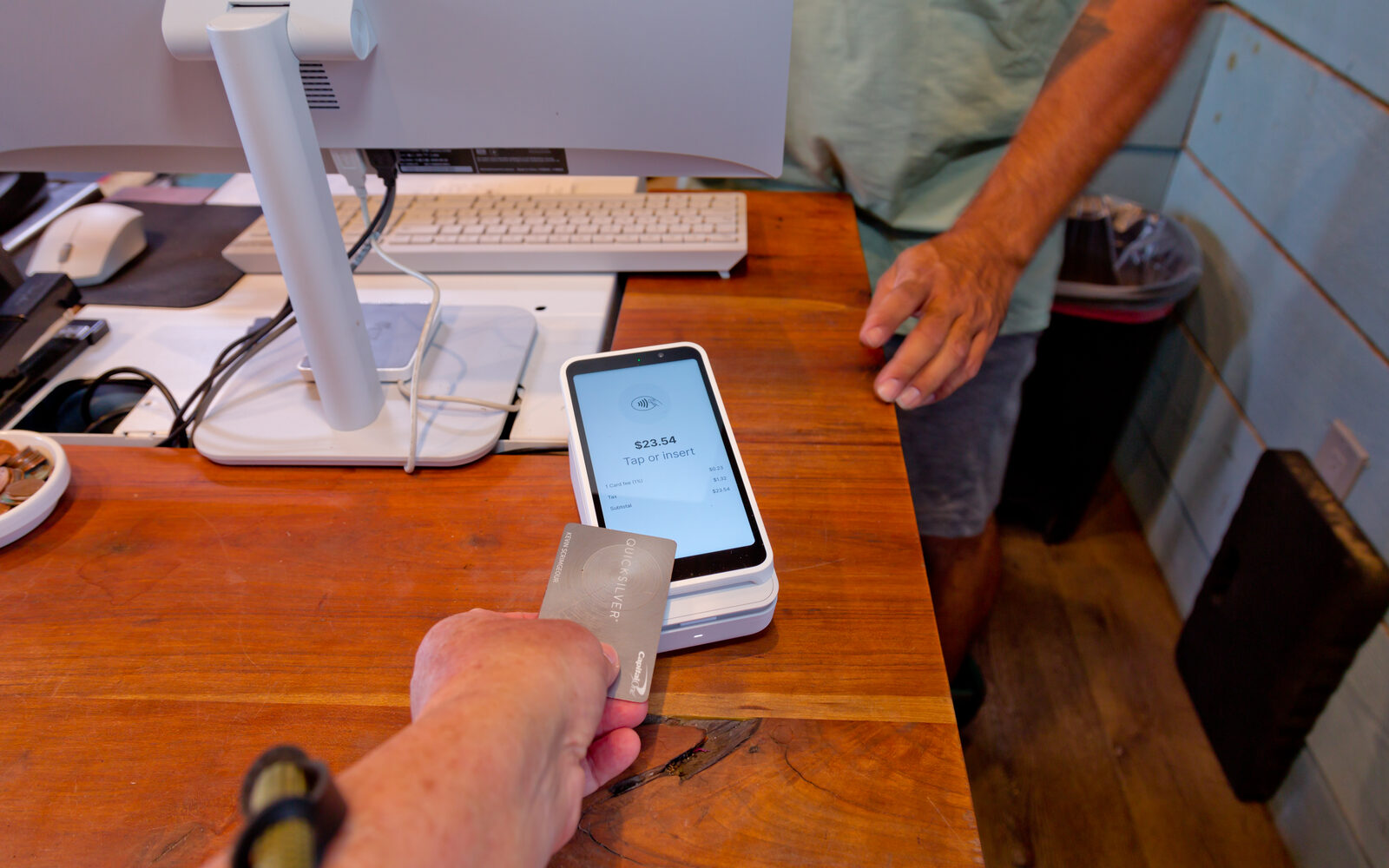
PaintCare notes that customers may see a line item on receipts or invoices for each container, so expect the occasional contractor to ask what the extra $0.95 is. The short answer is that it pays for the program that takes back leftover paint, and few customers will argue over a quarter, even if plenty will ask about one.
Which products carry the fee
The fee applies to what the stewardship laws call architectural coatings, which PaintCare describes as house paint, primers, stains, sealers, and clear coatings such as shellac and varnish. The counter moment to watch is the clear-coating sale, because a customer grabbing a quart of shellac doesn't think of it as paint, and neither does your newest cashier, but the fee applies all the same. When you are unsure whether a SKU is covered, check PaintCare's product guidance for your state rather than guessing.
The PaintCare fee by state
Fees are charged per container, by container size, and anything a half pint or smaller carries no fee. The table reflects the amounts on PaintCare's fee page as of October 27, 2026, including the increases that took effect in Connecticut and Washington on January 1, 2026, and in Colorado on April 1, 2026.
| State | Larger than ½ pint, smaller than 1 gallon | 1 to 2 gallons | Larger than 2 gallons, up to 5 gallons |
|---|---|---|---|
| California | $0.30 | $0.65 | $1.50 |
| Colorado | $0.50 | $1.15 | $2.25 |
| Connecticut | $0.50 | $1.15 | $2.25 |
| District of Columbia | $0.30 | $0.70 | $1.60 |
| Illinois | $0.45 | $0.95 | $1.95 |
| Maine | $0.50 | $1.10 | $2.00 |
| Maryland | $0.50 | $1.15 | $2.25 |
| Minnesota | $0.49 | $0.99 | $1.99 |
| New York | $0.45 | $0.95 | $1.95 |
| Oregon | $0.45 | $0.95 | $1.95 |
| Rhode Island | $0.35 | $0.75 | $1.60 |
| Vermont | $0.65 | $1.35 | $2.45 |
| Washington | $0.65 | $1.45 | $2.75 |
A worked example makes the register math concrete. In Illinois, a gallon of paint at $64.99 carries a $0.95 fee, a quart carries $0.45, and a 5-gallon pail carries $1.95, so a contractor order of ten gallons and two 5-gallon pails carries $9.50 in fees on the gallons plus $3.90 on the pails, $13.40 in all. That is not a number that changes anyone's day, but it is a number your system has to get right on every line of every sale.
California's increase in 2027
California stores get one more date for the calendar. CalRecycle has approved an increase effective May 1, 2027, taking the fee to $0.45 for containers larger than a half pint and smaller than a gallon, $0.95 for 1 to 2 gallons, and $1.95 for containers larger than 2 gallons up to 5 gallons, while a half pint or smaller stays at $0.00. When the date gets close, update your price files before the first sale of the morning rather than after the first confused customer of the afternoon.
What a retailer has to do
PaintCare's guidance for retailers comes down to a handful of concrete rules. You pass the fee on in the sale price of covered products. You may not sell architectural paint products that are not registered, so check PaintCare's Registered Brand and Registered Manufacturer lists for your state whenever you bring on a new vendor or a new line. Online sellers have to pass the fee on too, so your web store doesn't get a pass.
A few states add more. In Colorado, Oregon, Vermont, and Washington, the laws require retailers to provide customer information about the program at the time of purchase, online sales included. In California and Minnesota, retailers must keep required records for three years, which is one more reason to set the fee up cleanly in your system from day one. And in any PaintCare state you can volunteer your store as a drop-off site for leftover paint if you want to.
The sticker-price question deserves its own paragraph, because it trips people up. PaintCare's page on pricing laws says the paint stewardship laws "are silent on whether the PaintCare Fee should be incorporated into the sticker price," but regulators "in some states may view their state's laws as requiring retailers to incorporate the PaintCare Fee" into it, "regardless of whether a retailer chooses to break the PaintCare Fee out separately on purchase receipts." Minnesota also has a provision effective January 1, 2025, covering advertised prices that do not include all mandatory fees or surcharges. PaintCare encourages retailers to get guidance from qualified legal counsel and cannot offer legal advice itself, and neither can a guide on the internet.
Setting the fee up at the register
A clean setup is one fee item per container size for your state, attached to each covered SKU, so when the quart rings the $0.45 follows it, and when the 5-gallon pail rings the $1.95 follows it, without anyone keying it by hand. Whether the shelf tag shows the paint price alone or the all-in price is the sticker-price decision from the section above, so settle that with your counsel first and set your labels to match, knowing you can still break the fee out on the receipt either way.
The bookkeeping side matters as much as the receipt side. The fee you pay on the vendor invoice and the fee you collect at the register are a pass-through, money that comes in and goes back out. If it is buried inside item cost and item price, your sales and your cost of goods sold both look bigger than they are, and your margin percentages drift a little in a way that is hard to spot. Many stores track the fee as its own item mapped to its own account, so the two sides can be compared each month and a mismatch gets caught while it is still small. Confirm the account mapping with your accountant, and if you want the underlying math, our guides on the gross margin formula and the cost of goods sold formula show how a stray line moves your percentages.
Then there is sales tax. PaintCare's California page says the fee is subject to state sales tax there, citing a 2013 California Board of Equalization letter. Everywhere else, check with your own state's revenue department, because a California answer does not travel, and a wrong tax setting repeats itself on every gallon until someone notices.
Canada: the eco fee version
North of the border, the same idea runs under a different name and a different organization. Product Care Association, a not-for-profit stewardship association, operates paint programs in eight provinces: British Columbia, Saskatchewan, Manitoba, Ontario, New Brunswick, Prince Edward Island, Nova Scotia, and Newfoundland and Labrador. The program fees there are environmental handling fees, the "eco fee" a Canadian customer sees, and since amounts vary by province, check productcare.org for current figures rather than trusting anyone's summary, ours included.
If you are weighing what to run a paint store on, Rundoo is a Benjamin Moore preferred system, and our paint store POS page and the guide to what POS Benjamin Moore dealers use are good places to start, along with our look at paint store POS and color matching.