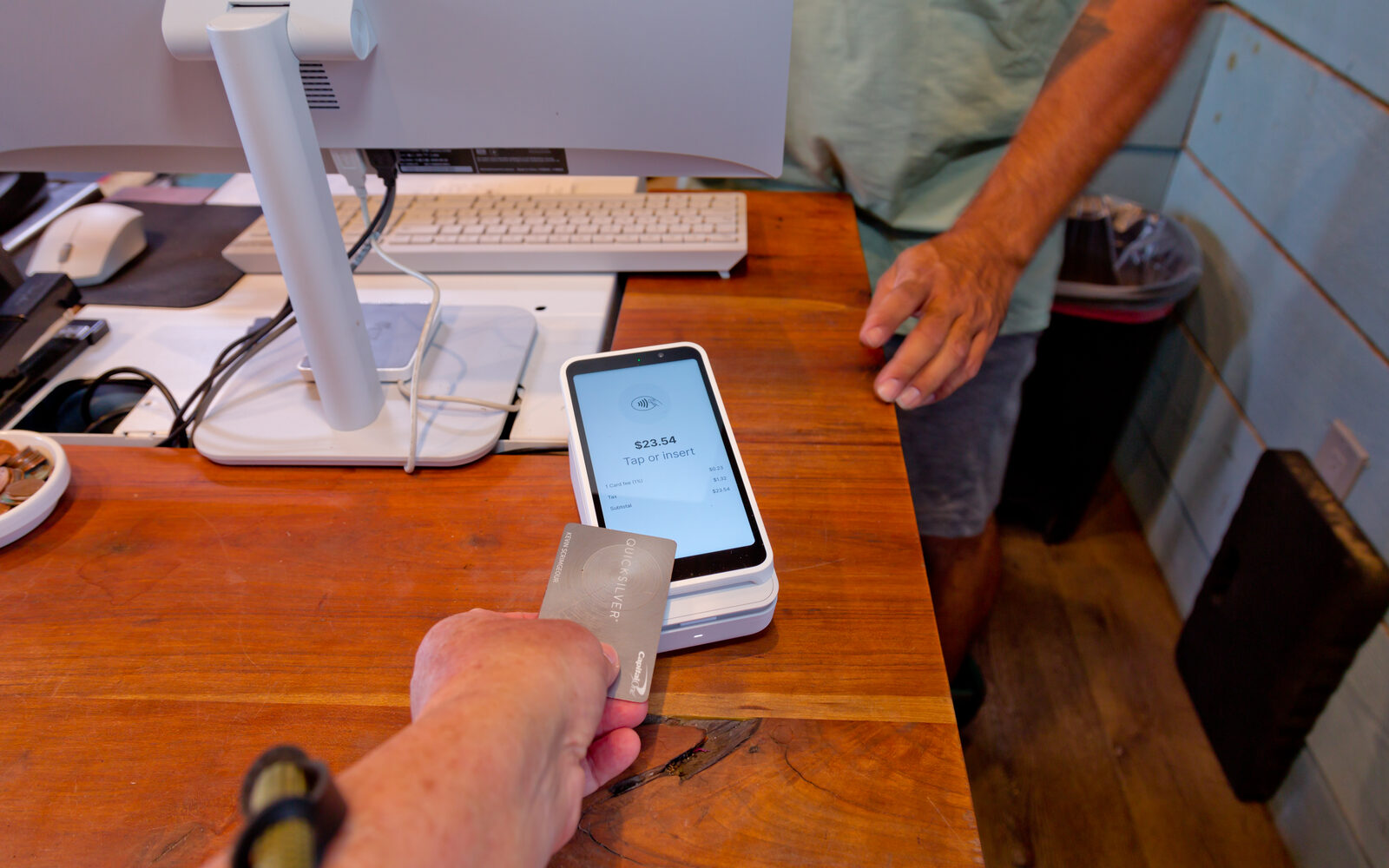
With the penny out of production, stores round the final cash total to the nearest five cents: totals ending in 1 or 2 cents round down to the 0, 3 or 4 round up to the 5, 6 or 7 round down to the 5, and 8 or 9 round up to the next 10. Rounding applies to the after-tax total on cash payments only, never to card, debit, check, or charge account sales.
Say a contractor sets a $12.40 box of deck screws on your counter. At a 7% sales tax (used here only as an example rate), the tax comes to $0.87 and the total to $13.27. The total ends in 7, so it rounds down to $13.25, and that's what he hands you in bills and coins. If the total had come to $13.28, he'd pay $13.30. Small change, small stakes, but it has to be done the same way every time.
Why you're rounding now
On November 12, 2025, U.S. Treasurer Brandon Beach struck the final circulating one-cent coin at the U.S. Mint's Philadelphia facility, according to the Mint's announcement. The coins already out there remain legal tender and keep their value, and the Treasury's penny FAQ (December 23, 2025) says retailers should keep accepting pennies and giving penny change while they circulate. As the coins drift out of drawers and into jars on dressers, though, making exact change gets harder, and that's where rounding comes in.
Canada has been here before. The Royal Canadian Mint stopped circulating pennies on February 4, 2013, and the Department of Finance's July 2012 announcement set out the approach: when pennies aren't available, round cash transactions to the nearest five cents in a fair and transparent manner, and leave debit, credit, and cheques alone. The US Treasury's guidance lands in the same place, so American stores get to borrow a playbook their northern neighbors have been running for more than a decade. Call it common cents.
The rounding rule, cent by cent
"Round to the nearest nickel" sounds vague until you write it down. Here's the whole rule for every possible ending:
| Cash total ends in | Round | Example |
|---|---|---|
| 1 or 2 cents | Down to the 0 | $21.81 is paid as $21.80 |
| 3 or 4 cents | Up to the 5 | $21.83 is paid as $21.85 |
| 6 or 7 cents | Down to the 5 | $21.86 is paid as $21.85 |
| 8 or 9 cents | Up to the next 10 | $21.88 is paid as $21.90 |
| 0 or 5 cents | No change | $21.85 is paid as $21.85 |
The Treasury asks for rounding that is fair, consistent, and transparent, and this symmetric rule is what that looks like at the register. Half the endings round down and half round up, so over a month of cash tickets the pennies given and the pennies kept tend to come close to washing out. "Always round up" might look like found money, but it's hard to call fair, and your regulars can do this math in their heads.
Worked examples from the counter
The most important mechanical point is that you round the whole ticket total, once, after tax. You never round each line, and you never round the subtotal before tax. At the same example 7% rate:
| Sale | Tax | Exact total | Cash paid | Difference |
|---|---|---|---|---|
| $12.40 box of deck screws | $0.87 | $13.27 | $13.25 | 2 cents down |
| $54.99 gallon of paint | $3.85 | $58.84 | $58.85 | 1 cent up |
| $389.00 chainsaw | $27.23 | $416.23 | $416.25 | 2 cents up |
The difference is never more than two cents in either direction, on any ticket. Nobody argues over two cents on a $416 saw, but the same habit matters on the small tickets, where the customer who buys screws every Friday will notice if it only ever goes one way.
Round after tax, on the final total only
Both governments are clear on the order of operations. The Treasury FAQ says rounding should take place only after all duties, fees, and taxes are calculated, and that rounding cash transactions should not change the amount of sales tax the customer pays. Canada's Budget 2012 guidance said the same about GST/HST: the tax is calculated to the cent and added to the price, and only the final cash total is rounded.
So the sequence at your register goes like this: ring the items, apply any contractor pricing or price levels, calculate sales tax to the exact cent, and then, only if the customer is paying cash, round that final number to the nearest nickel. The tax line on the receipt stays exact, and the rounding shows up as its own visible adjustment to the cash total rather than a change to the price or the tax.
Cash only, never card, debit, check, or charge account
This is the rule with no wiggle room. The Treasury recommends rounding be applied only to cash payments, with non-cash payments priced and processed to the exact cent, and Canada's guidance said the same for debit, credit, and cheques.
For a supply store, that includes charge accounts. When a contractor charges a load of lumber to his account and settles up on the monthly statement, nothing on that invoice gets rounded, because he pays it by check, card, or ACH to the exact cent. The same goes for a debit tap at the counter, since electronic payments can always make exact change. If you're weighing price differences by payment type more broadly, that's a separate conversation, covered in the guides to cash discount vs. surcharge and credit card surcharge laws by state.
Tell customers what you're doing
The guidance from both countries keeps landing on the same word: transparent. A small sign at the register ("Cash totals are rounded to the nearest five cents") and a receipt that shows the rounding as its own line give the customer the exact total, the adjustment, and the amount paid. Your regulars will ask about it once and then go back to talking about the weather, because what bothers people is a surprise, not a penny.
What states have said about sales tax
Sales tax is where owners get nervous, because "we rounded" is not a line item the revenue department accepts. As summarized by Forvis Mazars in January 2026, four states issued guidance in late 2025:
| State | Guidance | What it says |
|---|---|---|
| Michigan | Notice, December 8, 2025 | Base sales or use tax on the listed price to the nearest cent regardless of rounding. Show the rounding amount separately on the receipt, and keep records of your method. |
| Texas | STAR 202512001M, December 1, 2025 | Calculate sales tax on the sales price. Rounding happens after tax. |
| Florida | TIP 25A01-18, December 19, 2025 | Tax is computed to the nearest penny regardless of the rounding method. The retailer may choose a method if it discloses it to the customer. |
| Utah | Guidance, November 10, 2025 | Calculate and remit tax regardless of rounding. Disclose the rounding method clearly and conspicuously. Applies only to cash. |
Read across the rows and the theme is consistent: the tax is calculated and remitted on the exact amount, and the nickel rounding lives entirely on the cash side of the sale. If your state isn't on the list, check its revenue department's site before you start.
Keeping the books and the drawer straight
Rounding creates tiny gains and losses, and your books need a place to put them. The clean approach is a dedicated cash rounding account in your chart of accounts: when you round down, the pennies you gave up post as a small expense, and when you round up, the pennies you kept post as a small gain. With the symmetric rule, that account should hover near zero over a decent stretch. If it doesn't, something is off, such as a cashier who rounds everything down for the regulars or a register applying the rule to card sales. If your point of sale posts to your accounting software, check where rounding lands, and the guide to a POS that syncs with QuickBooks Online covers how daily sales typically post.
Rounding also changes what "balanced" means for the till. If the system expects $13.27 from that box of screws and the customer handed over $13.25, a count that ignores rounding shows the drawer two cents short, and across a busy Saturday those pennies add up to a variance that has nothing to do with sticky fingers. Count the drawer against the rounded cash totals, with the rounding adjustments listed, so expected cash matches what went into the till. The guide to the end-of-day cash drawer closeout covers the full count.
Where the law stands in the US
Rounding in the US rests on guidance for now. The Treasury FAQ is non-binding, though it's the closest thing to an official playbook. On the legislative side, H.R. 10167, the Common Cents Act, passed the House by voice vote on September 14, 2026 and the Senate by unanimous consent on September 28, 2026, sending it to the President, according to the ABA Banking Journal. As reported, it would allow (not require) cash transactions to be rounded up or down to the nearest five cents when exact change isn't available, and it says checks, credit cards, and other noncash payments aren't subject to rounding. We could not confirm it had been signed as of late October 2026, so check congress.gov for its current status before relying on it.
Do stores have to round? No. Rounding is a permitted way to handle a penny shortage rather than a mandate, and pennies remain legal tender you should keep accepting while they circulate. What every piece of guidance asks, in effect, is that if you round, you do it fairly, consistently, after tax, on cash only, and in the open.
How Rundoo handles cash rounding
In Rundoo, cash rounding is set once per location under Admin > Locations > the store > Cash Drawers > Cash Rounding, where you pick a strategy: round up, round down, or round to the nearest nickel (repeat it for each store you run, and we'd point you to nearest for the fairness reasons above). It only touches cash sales, so card, check, and charge account totals are never rounded. The total shows unrounded until the cashier picks Cash, and then a Cash Rounding line appears above the Sale Total so the cashier and the customer both see the adjustment. Behind the scenes, rounded amounts post to a Cash Rounding expense account in the chart of accounts, as a loss when you round down, a gain when you round up, or the net when you round to nearest. Stores north of the border can read more about Rundoo in Canada.