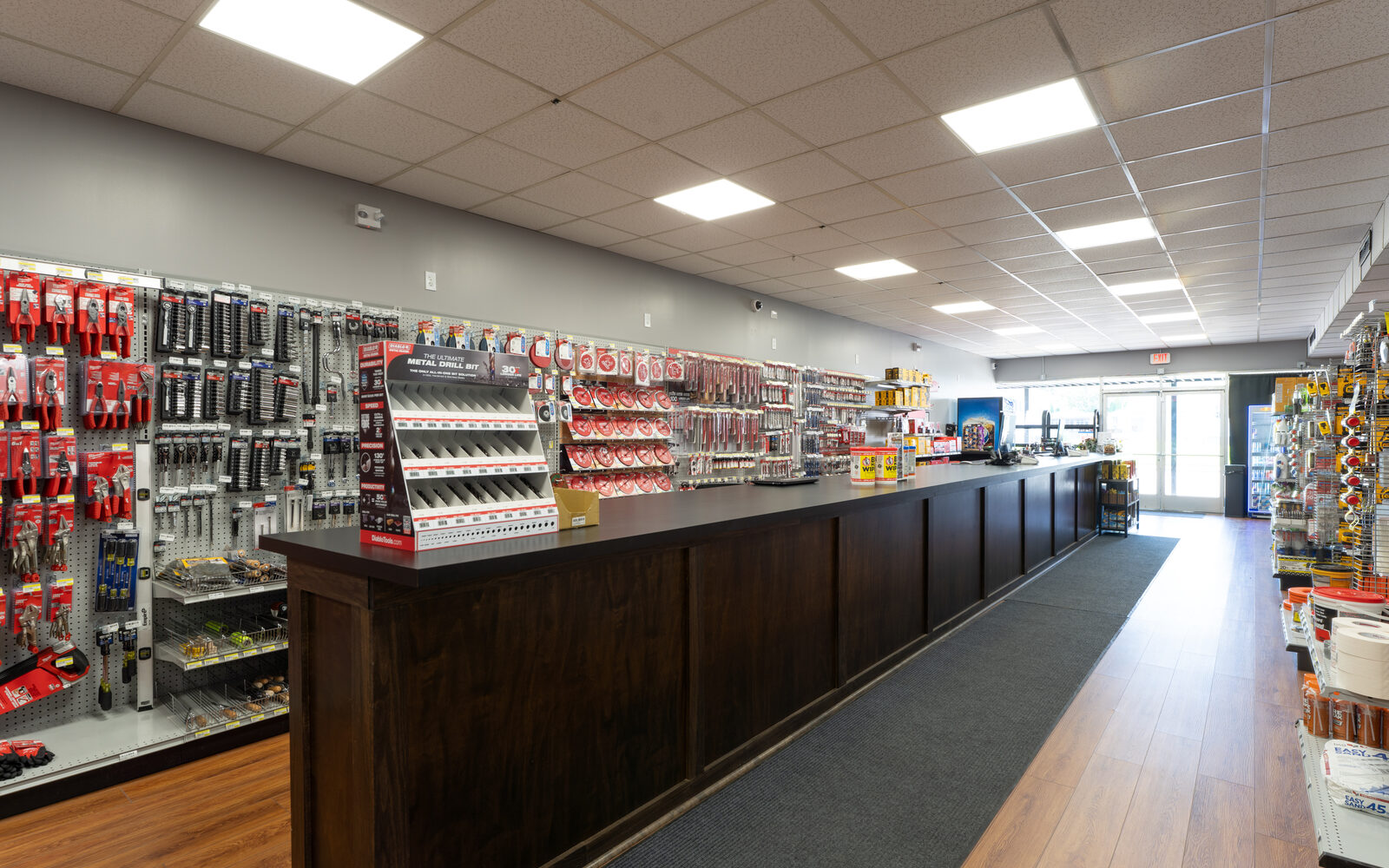
Paint sundries are everything a painter needs to do the job besides the paint itself: brushes, roller covers and frames, trays, tape, paper and plastic, drop cloths, caulk, patch, sandpaper, scrapers, extension poles, ladders, safety supplies, and cleanup products. If it goes home with the gallon but isn't the gallon, it's a sundry.
The category is broad enough that every vendor and manufacturer slices it a little differently. Cloverdale Paint's sundries line covers application equipment, preparation tools, masking tapes, and drop cloths, plus professional brushes and rollers, ladders, safety supplies, and tools. Diamond Vogel groups theirs into four buckets: brushes; tape, paper, and plastic; drop cloths in canvas or vinyl backed; and frames. However you carve it up, the idea is the same: sundries are the project around the paint.
Here's a working breakdown you can use to sanity-check your own departments:
| Category | Examples |
|---|---|
| Application | Brushes, roller covers, roller frames, trays and liners, sprayer tips, extension poles |
| Prep | Scrapers, putty knives, sandpaper, patching compound, spackle, wire brushes |
| Masking | Painter's tape, masking paper, plastic sheeting, dispensers |
| Protection | Drop cloths (canvas, vinyl backed, paper), floor paper, corner guards |
| Sealants | Caulk, caulk guns, wood filler, glazing |
| Access | Ladders, step stools, scaffold planks |
| Safety and cleanup | Respirators, gloves, rags, brush cleaner, paint thinner, bucket grids |
Why sundries carry the store
The gallon is the one item in your store that every customer already knows the price of. A contractor can tell you what three competitors charge for the same paint without looking it up, and a homeowner can check the gallon price on their phone while standing in your tint area. So you price the gallon sharp, sometimes uncomfortably sharp, because you have to.
Few customers comparison-shop a 3/8-inch roller cover, and nobody drives across town because your painter's tape is forty cents more than the other guy's. That gives you room to set your own prices on sundries, and room to run a good-better-best spread on brushes and covers so the customer picks their own price point instead of you picking it for them. It is a common paint pricing pattern: competitive on the gallon everyone knows, healthy margin on everything that goes with it. We walk through the broader version of that approach in our guide to retail pricing strategies.
The practical consequence is simple. Every gallon that walks out the door without a roller cover, a roll of tape, and a brush attached to it is margin you left sitting on the counter. The gallon gets them in the store, and the sundries help pay the rent.
A worked example with real arithmetic
Margin is (price minus cost) divided by price, and if that formula ever feels slippery, our margin vs. markup guide untangles it. Here's an illustrative basket using small, round numbers. These are made-up figures for demonstration, not benchmarks:
| Item | Cost | Price | Margin |
|---|---|---|---|
| Gallon of paint | $32.00 | $52.00 | 38.5% |
| Roller cover | $4.20 | $8.99 | 53.3% |
| Painter's tape | $3.10 | $6.49 | 52.2% |
| 2.5-inch angled brush | $7.00 | $14.99 | 53.3% |
Sell the gallon alone and you make $20.00 on a $52.00 ticket, a 38.5% margin. Attach the cover, tape, and brush and the ticket becomes $82.47 against $46.30 in cost, which works out to $36.17 in gross profit and a blended margin of 43.9%. Same customer, same trip, same five minutes at the counter. The only difference is whether someone asked what they were painting.
That's the whole argument for sundries in one table. You don't need the attach to happen on every ticket, but the more tickets it happens on, the less your week depends on winning a price fight over gallons.
How to price sundries
Run good-better-best on the high-visibility items, brushes and roller covers especially. A customer who balks at a $15 angled brush will often happily buy the $9 one, and a contractor who cares about finish quality will reach for the top shelf without being asked. Three price points let the customer make the decision, and they keep you from losing a sale to a price objection on an item nobody was price-shopping anyway.
Keep shelf prices clean and consistent. Sundries are bought on convenience and trust, not on pennies, so pick a price ending you like and stick with it rather than chasing a competitor's oddball price on a tray liner. Save your sharpest pencil for the gallons.
Contractors are the exception, and they buy sundries differently than homeowners do. A painting crew goes through roller covers by the case, and they expect a case price that reflects it. Handle the case as an alternate price on the each rather than as a separate SKU, and don't assume the case price is twelve times the each price, because it usually isn't. The mechanics of stocking by the case and selling by the each (or by the case, when the right customer asks) are covered in our guide to units of measure. For the contractor side of the pricing itself, tiers and job pricing, see our guide to customer price levels and contractor pricing.
How to stock sundries without drowning in SKUs
Most sundries order by the case and sell by the each. Caulk, roller covers, tape, and a long list of other items arrive in case quantities, so your purchase order to the vendor says cases while your shelf and your tickets say eaches. Get the conversion right in your system (whatever pack size the vendor ships) or your on-hand counts will lie to you from the first truck day forward.
Watch inventory turns by size, not only by category. Brush departments are where dead SKUs go to retire: you'll turn the 2-inch and 2.5-inch angled brushes constantly while the 4-inch wall brush in the same line gathers dust for a year. Set minimum and maximum quantities on the movers so they never hit zero on a Saturday, and be honest about the slow sizes. A brush that hasn't sold in two seasons isn't inventory, it's a decoration.
Order depth on the attach items matters more than order breadth. You'd rather be deep in the three roller cover naps everyone buys and thin on the exotic stuff than the reverse, because the attach sale dies the moment the common item is out of stock. Nobody waits two days for a roller cover. They buy it wherever they stop for gas.
Merchandising: where sundries sell
Sundries sell when they're standing next to the decision, so put the attach items in the tint area and on the path to the register. When a customer is waiting on a mix, they're a captive audience with a paint project in their head and nothing to do for two minutes. That's when the roller covers, tape, and tray liners at arm's reach do their work. A contractor waiting on five gallons of white will grab a 9-inch cover and a roll of tape off a well-placed display without anyone saying a word.
Build the project checklist into your counter routine. "What are you painting?" is the most profitable question in a paint store, because the answer tells you exactly what to suggest next: walls mean covers, trays, and tape; trim means an angled brush and a finer tape; bare drywall means primer, patch, and sandpaper. You're not upselling, you're saving them a second trip, and both things are true at once.
Give contractors their own grab-and-go wall. The pro who's in at 6:45 in the morning doesn't want to browse, they want the covers, the tape, the caulk, and the rags in one spot between the door and the counter, priced for their account, so they can grab, pay, and make the job by seven.
Then measure the attach, because what gets measured gets merchandised. Two simple numbers tell you most of what you need: sundry dollars per paint dollar (how much sundry revenue you generate for every dollar of paint you sell) and the percentage of paint tickets that include at least one sundry. Track them monthly. When either one dips, the fix is usually on the sales floor, not in the pricing file.
One adjacent note: if mistints are piling up in the back room, they're a margin conversation too, and we've got a guide on moving mistint paint for that.
How Rundoo helps with sundry pricing
In Rundoo, you can recalculate margins by department, vendor, product, or tag, and set new prices by a dollar amount, a target margin, or a percentage discount, so tightening up a brush category doesn't mean a weekend with a spreadsheet. Contractor accounts carry their terms, price tiers, and job-specific pricing with them, and every tier, custom price, and job price is evaluated together so the best price for that customer lands in the cart on its own. Dooey, Rundoo's AI assistant, can send you a daily text or email with the most important thing happening in the business; one dealer got flagged on unusually low-margin sales before the week got away from them. More on how Rundoo works for paint stores is on our paint store page.