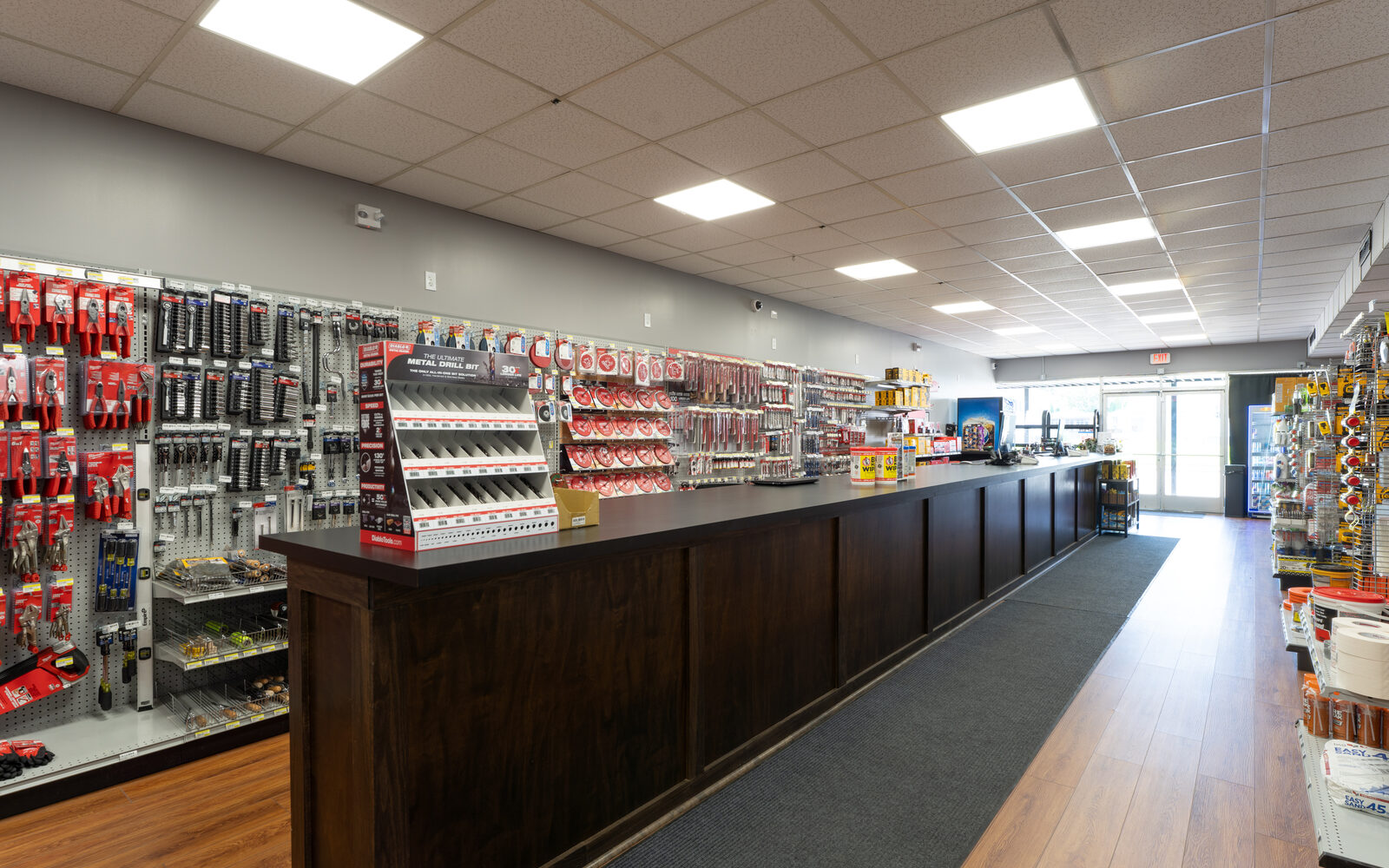
The main retail pricing strategies are cost-plus, keystone, suggested retail, competitive pricing on the items customers price-check, charm pricing, good-better-best, and clearance markdowns, and an independent hardware, paint, lumber, farm and feed, or garden store does best running cost-plus as its base and adjusting by department. Cost-plus does the bulk of the work because it turns every cost on a purchase order into a price with one formula, competitive pricing keeps the gallon of paint and the 2x4 stud in line with the market, and clearance math turns buying mistakes back into cash before they take root on the shelf.
The main strategies at a glance
| Strategy | What it is | Where it fits in a supply store | The watch-out |
|---|---|---|---|
| Cost-plus | Cost plus a percentage of cost | The default across most of the store | Markup is not margin: cost plus 30 is a 23.1% margin |
| Keystone | Doubling your cost | A starting point on items with no suggested retail | Many hardware, paint, and lumber categories won't carry it |
| Suggested retail | The price your vendor or buying group publishes | Getting a new line priced and on the shelf fast | Hands your margin decision to someone else |
| Competitive | Pricing sharp on known items | The gallon of paint, the feed bag, the stud, the salt | Those items carry thin margin by design |
| Charm | Endings like .99 or .97 | A rounding rule across computed prices | A convention, not a law of nature |
| Good-better-best | Three price points in a category | Brushes, roller covers, garden hoses | Needs a real spread between the tiers |
| Bundles | A kit priced as one line | Paint project kits, starter sets | The kit has to beat the sum of its parts |
| Clearance | A percentage off to move stock | Seasonal endcaps, dead stock | Know your cost before you pick the discount |
Cost-plus pricing: the base coat
Cost-plus pricing is markup pricing: you take what an item costs you and add a percentage of that cost on top. The formula is the one your grandfather used, and it still works.
Price = cost × (1 + markup)
A $12.40 box of screws at cost plus 30 sells for $16.12, because $12.40 × 1.30 = $16.12. Here is where stores get tripped up: that 30% markup works out to a 23.1% margin, because margin divides by the selling price and markup divides by cost. If you would rather target the margin you report on, flip the formula around.
Price = cost ÷ (1 − margin)
The same box of screws priced to a 38% margin comes out to $20.00, because $12.40 ÷ 0.62 = $20.00. Same item, same shelf, two legitimate ways to get there, as long as you know which number you are steering by.
Two things before you start multiplying. First, run the math off landed cost, meaning the item's total cost once freight and fees are counted in, because a cost that ignores the freight bill was never your real cost, and the landed cost guide walks through it. Second, keep markup and margin straight, since mix-ups here are how a store thinks it is earning 30% and earns 23%. The margin vs markup guide has the conversion table, and the gross margin formula guide covers the reporting side.
Keystone pricing: double it and see
Keystone is the oldest shortcut in retail: double your cost and put it on the shelf. That is a 100% markup and a 50% margin, and it is a fine starting point on items that arrive with no suggested retail and no obvious market price. Plenty of hardware, paint, and lumber categories won't carry a 50% margin, though, so treat keystone as a first draft rather than a policy, and see the margin vs markup guide for the deep dive.
Suggested retail: someone else did the math
Vendors and buying groups publish suggested retails on their lines, and following them is the fastest way to get a new line priced, labeled, and out front. You stay in line with the market, the price arrives with the shipment instead of a spreadsheet session, and nobody at the counter has to explain an odd number. The trade-off is built into the name, since you are letting someone who has never paid your rent decide your margin, so suggested retail works well as a default on lines you haven't studied yet and deserves a second look once you know what the line costs you to carry.
Competitive pricing on the items customers price-check
Every store has a handful of items whose prices everybody knows: a gallon of a popular paint line, a bag of a common feed, a 2x4 stud, a 50-lb bag of salt when the forecast turns. Common practice is to price those sharp, because they are the prices customers carry around in their heads and compare without meaning to, and to make it back on the hundreds of items nobody price-checks, such as fasteners, fittings, sandpaper, tape, and accessories. A contractor can quote the price of a stud from memory, but nobody walks in knowing what a PEX crimp ring should cost, and that is where the margin lives.
Charm pricing: the .99 question
Charm pricing means ending prices in .99 or .97, charging $19.99 instead of $20.00. It is a convention, not a law of nature, and we are not going to pretend a penny works magic. Where it earns its keep in a supply store is as a rounding rule: if every computed price rounds to .99, your cost-plus formula produces clean, consistent endings across the store without anyone editing prices one at a time. Some stores reserve a distinct ending, .97 or .88, to signal clearance to staff, so anyone walking the aisle can tell at a glance whether an item has already been marked down.
Good-better-best, and the kit
Three price points in a category anchor the middle: a value brush, a mid-grade brush, and a premium brush give the customer a frame of reference and make the middle option an easy choice, and the same move works on roller covers and garden hoses. The cousin of good-better-best is the bundle, where you price a kit as one line instead of selling the parts separately. A paint project kit with a tray, roller frame, cover, and tape at a single price saves the customer a decision, moves four SKUs at once, and gives your staff one thing to suggest instead of a scavenger hunt.
Clearance and markdown math
Clearance is where pricing strategy meets the stuff that didn't sell, and the math matters more here than anywhere, because the goal is recovering cash rather than protecting a margin on paper. Work it from cost, not from the old retail:
| Price | Margin | |
|---|---|---|
| Full retail | $24.99 | 44.0% |
| 30% off | $17.49 | 20.0% |
| Your cost | $14.00 |
At 30% off, the item still clears its $14.00 cost with a 20.0% margin. The markdown recovers cash you already spent, frees the shelf for something that turns, and beats watching the item sit through another inventory count. The dead stock guide covers how to find the inventory that stopped turning before it finds you.
One operational note: a price change that never reaches the shelf means the shelf and the register disagree, and that is an awkward conversation at the counter. Whatever clearance cadence you set, the labels have to follow the same day.
Putting it together: a pricing policy by department
The mix is the strategy. Here is one way a supply store might lay it out:
| Department | Base strategy | Where you adjust |
|---|---|---|
| Paint | Suggested retail or a margin target | Competitive on the gallon everyone knows, good-better-best on brushes and sundries |
| Fasteners and fittings | Cost-plus to a margin target | Quantity breaks for contractors buying by the box |
| Lumber | Competitive on studs and commodity boards | Margin on specialty items, clearance on culls |
| Farm and feed | Competitive on the common bags | Margin on animal health, hardware, and accessories |
| Lawn and garden | Good-better-best on tools and hoses | A clearance cadence on seasonal endcaps |
One more layer sits on top of all of this, because your contractors don't pay the shelf price. Price tiers and custom pricing by customer or job keep the counter price fair for walk-ins while giving your charge account regulars the number they have earned, and the guide to tiered pricing and price levels for contractors covers how to structure them without turning the counter into a negotiation.
How Rundoo handles pricing
In Rundoo, every product carries a Price Strategy: Dollar, where you type the price; Margin, where the price is computed from cost at a margin you choose; or Discount, a percent off Tier 1. There is no separate markup strategy, so a store that thinks in cost plus 10% enters the equivalent margin, 9.1%, and gets the same shelf price. Price rounding to .99 is available, quantity breaks can run by discount or by margin, and the strategy can change by department, vendor, product, or tag, so paint can follow a different rule than fasteners.
When prices change, Products > Print labels offers "Print N labels with price changes" since the last print, which is how the shelf keeps pace with the register. Dooey, Rundoo's AI assistant, can also run a routine that flags margin drops after cost changes and texts you a price-change alert, so a cost increase on a purchase order doesn't cut into your margin for a month before someone catches it. There is more on the pricing and purchasing page.
Whatever mix you choose, write it down as a policy by department, so the person pricing a new line on truck day makes the same call you would have made.