FIFO, LIFO, and weighted average cost are the three common ways to value retail inventory: FIFO (first in, first out) assumes the first units you bought are the first ones you sold, LIFO (last in, first out) assumes the most recent units sell first, and weighted average cost blends every receipt into a single average cost per unit, where new average = (on-hand units × old average + received units × received cost) ÷ total units. All three are rules for splitting the same pile of money between cost of goods sold and ending inventory, and the one you pick changes your reported profit, your tax bill, and the inventory number on your balance sheet.
What surprises a lot of store owners the first time it comes up with their accountant is that the method is an assumption about how costs flow rather than a description of your warehouse, so you can sell feed off the top of the newest pallet because that's where the forklift can reach and still run FIFO on the books. What IRS Publication 538 asks is that your method conform to generally accepted accounting principles for similar businesses and that you apply it consistently from year to year.
The three methods, in counter language
FIFO: first in, first out
FIFO assumes the items you purchased or produced first are the first items you sold. Your oldest cost gets expensed first, and your ending inventory carries your newest costs. When vendor prices are climbing, that means older, cheaper costs hit your cost of goods sold, so COGS comes in low, reported profit comes in high, and so does the tax on it. The tradeoff is that your balance sheet shows inventory at close to current replacement cost, which is a truer picture of what the shelves are worth.
FIFO also lines up with how you rotate most of what you sell: paint gets rotated so old gallons move first, feed gets rotated because nobody wants to explain moldy layer pellets to a customer with thirty hens, and seasonal goods get cleared before the next truck day, which makes FIFO an easy method to explain to anyone who walks the aisles.
LIFO: last in, first out
LIFO assumes the items of inventory you purchased or produced last are sold or removed from inventory first. Your newest, most expensive costs hit COGS immediately, and your ending inventory keeps old, cheap layers of cost frozen on the books, sometimes for decades. When costs rise, LIFO gives you the highest COGS, the lowest taxable profit, and the lowest tax bill of the three methods.
The catch is the paperwork. Electing LIFO for tax means filing Form 970 (Application To Use LIFO Inventory Method) with your timely filed return for the first year you use it, and the LIFO conformity rule in 26 U.S.C. § 472(c) says you can only use LIFO for taxes if you also use it on the statements you give to owners, partners, and your bank. If your lender wants to see FIFO statements, LIFO is off the table. And as a picture of the shelf, LIFO is a fiction for anything perishable or rotated, which is why it rarely matches how a feed counter or a paint wall moves.
Weighted average cost: the blend
Weighted average cost recalculates a single unit cost every time inventory comes in the door. Take the value of what's on hand, add the value of what you newly received, and divide by the new total units. A perpetual (moving) average updates on every receipt; a periodic weighted average computes once at the end of the period. A moving average is the natural fit for a POS that updates cost on every receipt, because it suits a store with thousands of SKUs and constant re-receipts where tracking cost layers per unit would be a full-time job nobody applied for.
Average cost lands between FIFO and LIFO on COGS, profit, and tax. It smooths out price swings, which matters when your vendor's cost on a gallon of paint moves a dollar between purchase orders and you'd rather not think about which gallon is which.
There's also a fourth option worth naming: specific identification, where you track the actual cost of each individual item. It fits big serialized goods such as a zero-turn mower, a generator, a log splitter with a serial number on the frame. It does not fit a bin of 5/16 washers, unless you have considerably more free time than most store owners we've met.
The same 70 bags of feed, three ways
Here's a worked example with numbers you'd see at a farm and feed store. You start the month with 40 bags of 50 lb layer feed on hand at $15.00 a bag. Mid-month, a purchase order arrives: 60 more bags at $16.50, because corn did what corn does. You sell 70 bags. Total cost of goods available is $1,590 under every method; the only question is how it splits between COGS and ending inventory.
| FIFO | LIFO | Weighted average | |
|---|---|---|---|
| COGS math | 40 × $15.00 + 30 × $16.50 | 60 × $16.50 + 10 × $15.00 | 70 × $15.90 |
| COGS | $1,095 | $1,140 | $1,113 |
| Ending inventory | 30 × $16.50 = $495 | 30 × $15.00 = $450 | 30 × $15.90 = $477 |
| Total accounted for | $1,590 | $1,590 | $1,590 |
The weighted average comes from blending the receipts: (40 × $15.00 + 60 × $16.50) ÷ 100 bags = $15.90 per bag. With costs rising, LIFO shows the highest COGS and the lowest taxable profit, FIFO shows the lowest COGS and the highest ending inventory value, and average cost sits in between. A $45 swing in COGS on one pallet of feed is small, but multiply that pattern across every SKU in the store and every receipt for twelve months, and the method choice moves real money at tax time.
One thing to keep straight while you look at that table: none of these methods changes what you paid the vendor or what the customer paid you. They change when the cost hits your books. If you want the full picture of what each bag cost you, freight included, your cost basis under Pub 538 is the invoice price minus discounts plus transportation and other charges to acquire the goods, which is the landed cost idea we walk through in our landed cost guide.
The retail inventory method: estimating cost from retail
Some stores, especially ones with thousands of small items priced at retail, use the retail inventory method instead of tracking costs per unit. Pub 538 describes it plainly, saying you estimate your closing inventory at cost by taking the retail value of goods on hand and reducing it to cost using an average markup percentage. The IRS's own example runs like this: $42,000 of closing inventory at retail, with a 25% average markup, converts to $31,500 at cost. Resellers who use the retail method can figure their tax on that basis.
The retail method depends on two habits. First, your markup records have to be honest, which means understanding the difference between margin and markup cold; if that pair ever trips you up, margin vs. markup for a hardware store sorts it out with counter-friendly math. Second, you still have to count the store. The retail method estimates the cost of what you have, but it can't tell you what you have. That's what the annual count and regular cycle counts are for, and our physical inventory count guide covers how to run one.
Pub 538 also allows a "lower of cost or market" approach, where you compare each item's cost with its market value and carry the lower figure. That's the conservative cousin of the methods above, and it is the rule that speaks to the dusty end of the shelf, the cull lumber rack, and last year's endcap that never quite cleared.
Which method fits your store
There's no universal right answer, but a few questions narrow it down fast:
| Your situation | Method that usually fits |
|---|---|
| Typical hardware, paint, garden, or feed store, costs rising slowly | FIFO, which matches how you rotate stock |
| Thousands of SKUs, constant re-receipts, POS tracks cost automatically | Moving weighted average |
| Big ticket serialized equipment (mowers, generators, compressors) | Specific identification for those items |
| Rising costs, large non-perishable inventory, no outside lender needing FIFO statements | LIFO may lower taxes, but only with your CPA's sign-off |
| High SKU count priced at retail, hard to track per-unit cost | Retail inventory method |
| Small business under the gross-receipts test in Pub 538 | You may be excused from keeping inventories under the usual rules at all; ask your CPA |
Two hard rules apply no matter which row you're in. First, consistency: your method has to be consistent from year to year, so talk to your CPA before changing methods, since a change in accounting method typically requires IRS approval. Second, conformity: whatever you choose has to conform to generally accepted accounting principles for businesses like yours. This is a once-a-quarter conversation with your accountant, not a decision to make alone at the counter on a Tuesday.
If you're in Canada, one more wrinkle: the Canada Revenue Agency's archived Interpretation Bulletin IT-473R says the last in, first out method and the base stock method are not accepted for income tax purposes. FIFO and average cost are the common choices north of the border, and the retail inventory method is generally acceptable where conditions are met, including using it only where there are many different commodities for resale. So if you run a lumber yard in Alberta, LIFO is a non-starter rather than a tax planning lever.
How the method shows up in your day-to-day numbers
Your valuation method is more than a year-end tax decision, because it quietly feeds every inventory metric you watch. Inventory value on your balance sheet, cost of goods sold on your P&L, gross margin by department, and the turns calculations that tell you whether that pallet of fasteners is earning its shelf space all trace back to the cost basis you chose. If you're working on improving inventory turnover and GMROI, make sure you know which method is underneath the numbers, because comparing turns calculated on average cost against a peer running LIFO is apples to oranges.
The same goes for your books. Whatever method you run in your POS needs to land in QuickBooks or your general ledger as the same numbers rather than a re-keyed summary somebody typed in at 9 p.m. If re-keying invoices into accounting is currently part of your week, what a POS that syncs with QuickBooks Online looks like is worth a read.
How Rundoo handles it
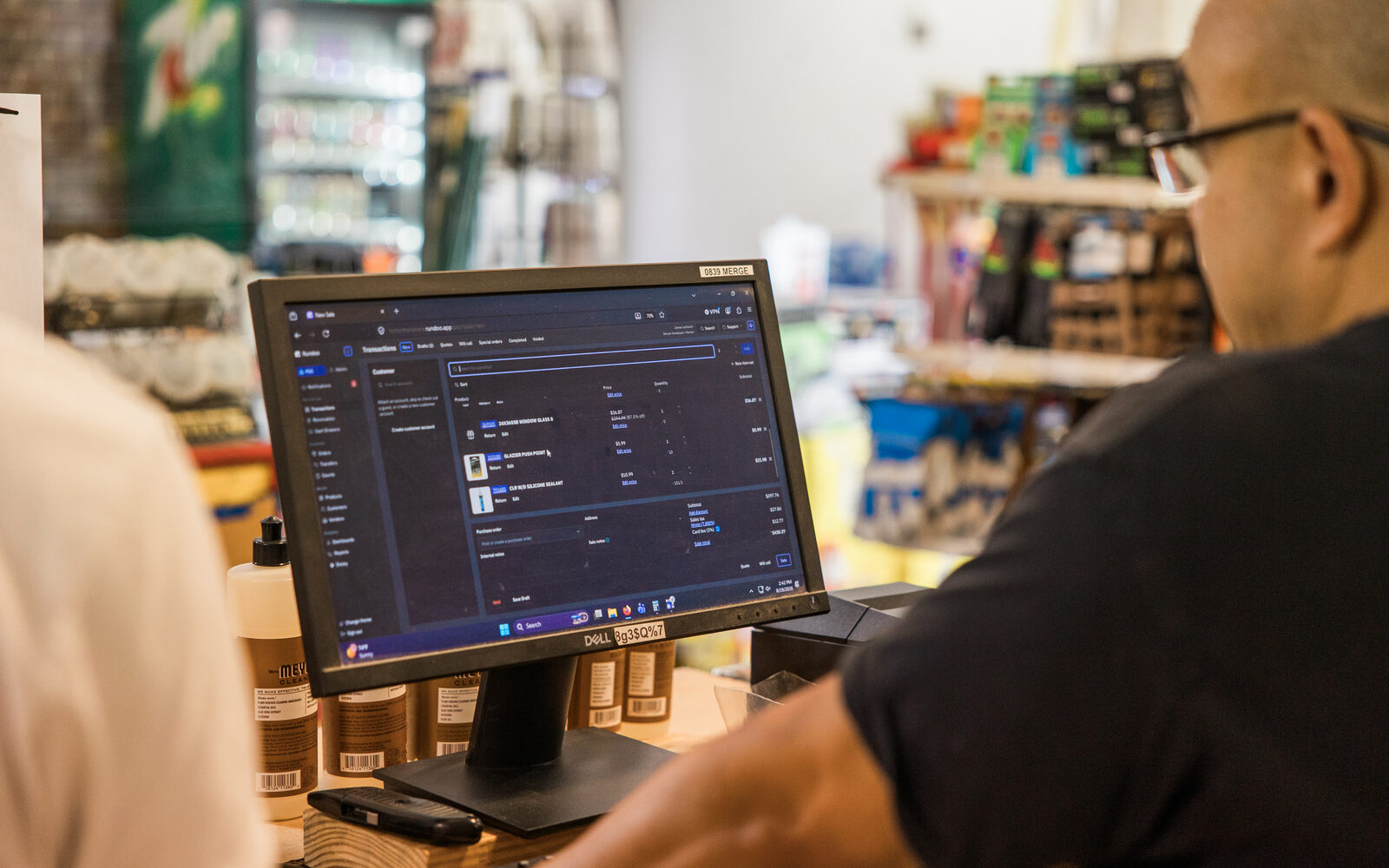
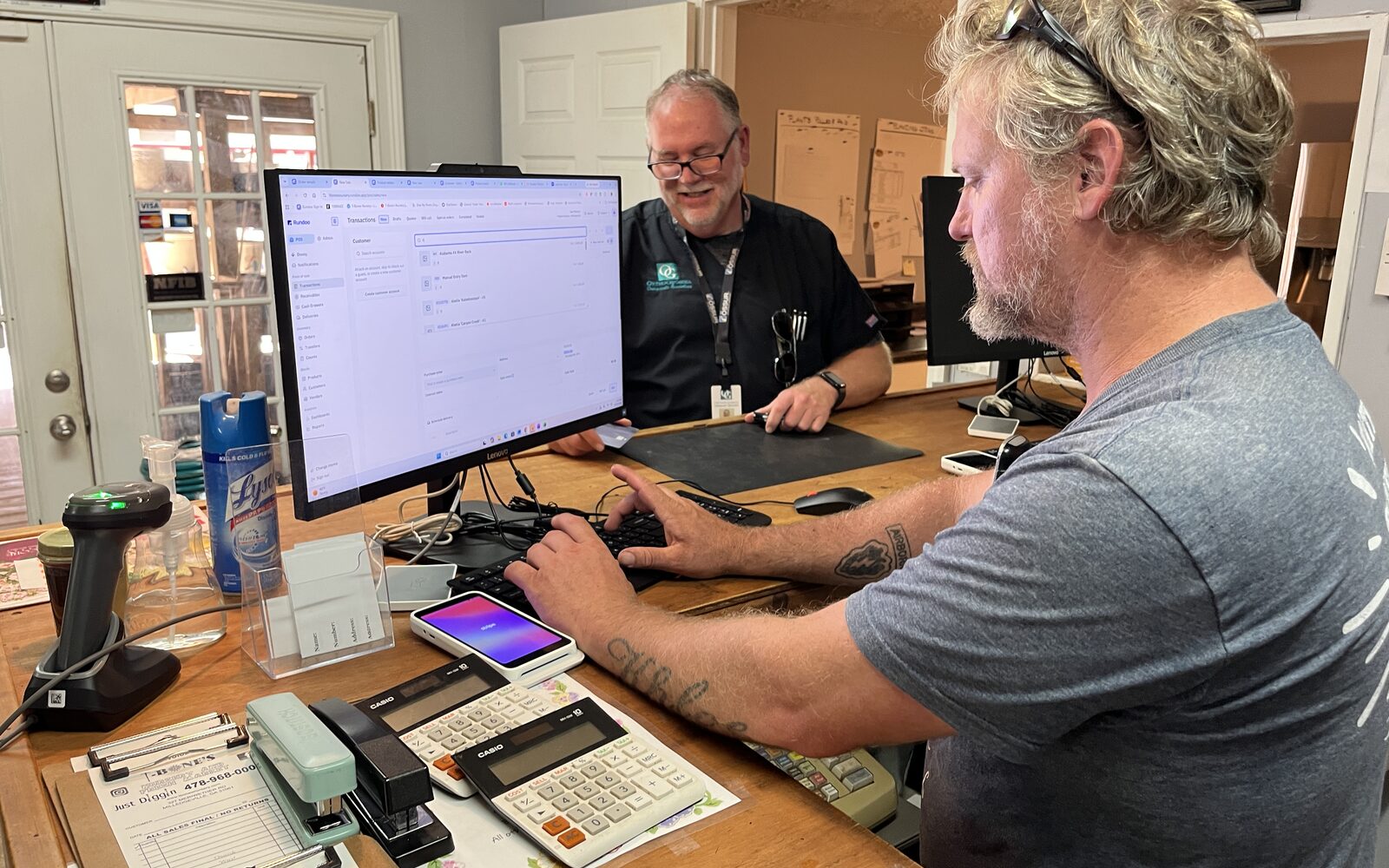
Rundoo keeps two costs per product: receiving updates Average cost (what the units on the shelf cost you), and on-hand value is that average cost times on hand, while Standard cost drives margin-based price tiers and doesn't move on a receipt. When you add freight on a received purchase order, the landed cost gets distributed by quantity or by subtotal and flows into average cost, so the freight-in piece of your cost basis from Pub 538 shows up in COGS when the items sell instead of getting absorbed into a fuzzy expense line somewhere. Each product's detail page shows units sold, margin, and stock turns above its transaction history, and the Inventory dataset in custom reports gives you on hand, on-hand value, annual turns, last sale date, and annual units sold, grouped by location, department, or vendor and exportable as a CSV for your accountant. When count day comes, completing a Full or Cycle count posts a journal entry for the dollar variance to an inventory-variance expense account, which keeps your books and your shelves telling the same story. Your CPA gets clean numbers, and you get to keep your evenings.