Closing out a cash drawer comes down to five steps: count every bill and coin in the till, pull your Z report (or end-of-day report) to see what cash the system expects, compare what you counted against that number, record the difference as over or short, and seal the deposit after setting aside tomorrow's starting bank. Once the routine is set, it is one of the cheapest forms of shrink control a store has, and the rest of this guide covers each piece, from the expected cash formula and a sample cash count sheet to X versus Z reports and what to do when the drawer does not balance.
Start with the starting bank
Every drawer should open the day with a fixed starting bank, also called a float. A common setup is $200 in mixed bills and coins, with a few twenties, some tens and fives, a stack of singles, and enough rolled coin that your cashier can make change for the first contractor paying cash for a $12.40 box of deck screws at 7 a.m.
Two things matter about the starting bank. It stays the same every day, so any change in the drawer total reflects the day's activity and nothing else, and it gets counted at open as well as at close. If the bank was $10 light when the drawer opened and nobody catches it until 6 p.m., you will spend twenty minutes hunting a shortage that happened before the first customer walked in.
The expected cash formula
Before you can say whether a drawer is over or short, you need to know what it should hold.
Expected cash = starting bank + cash sales + cash received on account − cash refunds − paid-outs
Cash sales are the obvious part. Cash received on account is the contractor who stops in and hands you $250 toward his house account balance, which puts cash in the drawer without being a sale. Cash refunds come out of the drawer, and so do paid-outs, the small cash expenses taken from the till during the day, like postage for a part going back to a vendor. Every paid-out needs a slip in the drawer, because an undocumented paid-out looks exactly like a shortage at close. If paid-outs are a regular thing at your store, a separate petty cash box keeps them out of the till entirely, and our guide on petty cash for retail stores covers how to run one.
Then:
Over/short = counted cash − expected cash
A positive number means the drawer is over, and a negative number means it is short.
A sample cash count sheet
A cash count sheet is a simple grid with every denomination, the quantity counted, and the extended total. Paper works fine, and so does a spreadsheet on the back office computer. Here is a filled-out example from an ordinary weekday with a $200 starting bank, $1,184.50 in cash sales, $250 in cash payments on account, $42.75 in cash refunds, and one $18.00 postage paid-out.
| Denomination | Quantity | Total |
|---|---|---|
| Pennies | 125 | $1.25 |
| Nickels | 60 | $3.00 |
| Dimes | 90 | $9.00 |
| Quarters | 140 | $35.00 |
| Rolled quarters | 1 roll | $10.00 |
| $1 bills | 83 | $83.00 |
| $5 bills | 34 | $170.00 |
| $10 bills | 24 | $240.00 |
| $20 bills | 46 | $920.00 |
| $50 bills | 2 | $100.00 |
| $100 bills | 0 | $0.00 |
| Cash counted | $1,571.25 |
Checks ride in the same deposit bag but stay off the cash count, because a check counted as cash is one of the classic causes of a phantom shortage. Below the denominations, the sheet does the comparison.
| Line | Amount |
|---|---|
| Starting bank | $200.00 |
| Plus cash sales | $1,184.50 |
| Plus cash received on account | $250.00 |
| Less cash refunds | −$42.75 |
| Less paid-outs (postage) | −$18.00 |
| Expected cash in drawer | $1,573.75 |
| Cash counted | $1,571.25 |
| Over/short | −$2.50 |
| Deposit (counted less the $200 bank) | $1,371.25 |
The drawer is $2.50 short, which goes in the log with the cashier's name and the drawer number, and the deposit is what was counted, not what was expected. Add a line for the counter's initials and the verifier's initials, and the sheet is done.
X report versus Z report
An X report is a mid-shift read of the day's running totals. It changes nothing and resets nothing, so you can pull one before a shift change or in the middle of a Saturday rush to see how the day is going without closing anything out. A Z report is the end-of-day read that closes the period, locks the totals, and resets the counters so tomorrow starts at zero. Older registers print these as an "X tape" and a "Z tape" on receipt paper, and plenty of back offices still have a drawer full of curled-up Z tapes to prove it.
On a cloud POS, the Z report's job is done by an end-of-day report or a daily dashboard broken down by tender. The name changed but the job did not, since it is still the number you hold the drawer against. If your system can filter that report by register or by cashier, use the filter, because over and short are most useful when they are tracked per drawer and per person.
Reconcile every tender, not only cash
Cash gets the attention because you can hold it, but the drawer is only one tender, and a real closeout checks each of them.
- Card sales against the card terminal's batch total. Card payouts land in your bank net of processing fees, so the bank deposit will not match gross card sales one to one, and that gap is fees rather than a shortage.
- Checks against the checks physically in the drawer, making sure none of them got counted as cash.
- Charge-account sales against the day's on-account tickets. A charge sale puts no cash in the drawer but should appear on the day's report, while cash a contractor pays toward his balance belongs in the expected cash math. Our guide on house accounts, statements, and aging covers how those payments flow.
- Gift cards and store credit, issued and redeemed, against the day's records.
When every tender reconciles, the books have a fighting chance. How the day then posts to your accounting software is its own topic, and our guide to a POS that syncs with QuickBooks Online walks through what should land in the ledger each night.
Habits that make closeout quick
The stores that close fast are not faster at counting, they have set up the day so the count holds fewer surprises.
Count blind. The closer counts the drawer before seeing the expected number, because a tired person who knows the system expects $1,573.75 will find a way to count $1,573.75.
Use a second set of eyes. A two-person count, or a manager verifying the closer's sheet, catches miscounts and removes any question about how the deposit got sealed.
Pull large bills during the day. When a drawer gets heavy, move the big bills to a drop safe and record it as a cash drop, which is neither a paid-out nor a refund, so the closing math still works.
Seal the deposit bag with a deposit slip. The deposit should equal counted cash minus the starting bank, and the slip should say so, so the bank's number and yours agree without a phone call.
Set a tolerance and log everything. Pick a small tolerance, say a couple of dollars, and investigate anything beyond it. Log the over or short by cashier and drawer every day, and read the log for patterns across weeks rather than reacting to a single day, because one short Tuesday is life while the same drawer coming up short every time the same person closes calls for a conversation.
When the drawer is short, or over
A short drawer almost always traces back to a short list of causes: wrong change during a rush, a cash refund given on a sale that was paid by card, a paid-out with no slip, a ticket voided after the cash was taken, a check counted as cash, or two people working out of one drawer so nobody owns the count. That last one deserves a rule of its own, which is one drawer, one person, one count.
A drawer that comes up over is a problem too, even though it feels like found money. It usually means a customer was shortchanged and will be back, unhappy, or that a sale never got rung, which leaves your inventory and your sales report both wrong.
The pattern that deserves real attention is repeated small shortages paired with voids after the drawer closes, or refunds with no customer at the counter. That is sweethearting, a shrink pattern rather than a counting error, and our guide on retail shrink for hardware and feed stores goes deeper on spotting it. Whatever the cause, record the number accurately every day, and never let a cashier cover a shortage out of pocket or keep an overage, because the log is only useful if it is true.
What a daily sales report should show
The closeout ends with a daily sales report that answers the day at a glance: gross sales, returns, discounts, net sales, sales tax collected, sales by tender, payments received on account, paid-outs, the over or short for each drawer, and sales by department so paint does not blur into lawn and garden. If your current report cannot show tenders separately, fix that first, because every reconciliation step above depends on it.
How Rundoo handles the closeout
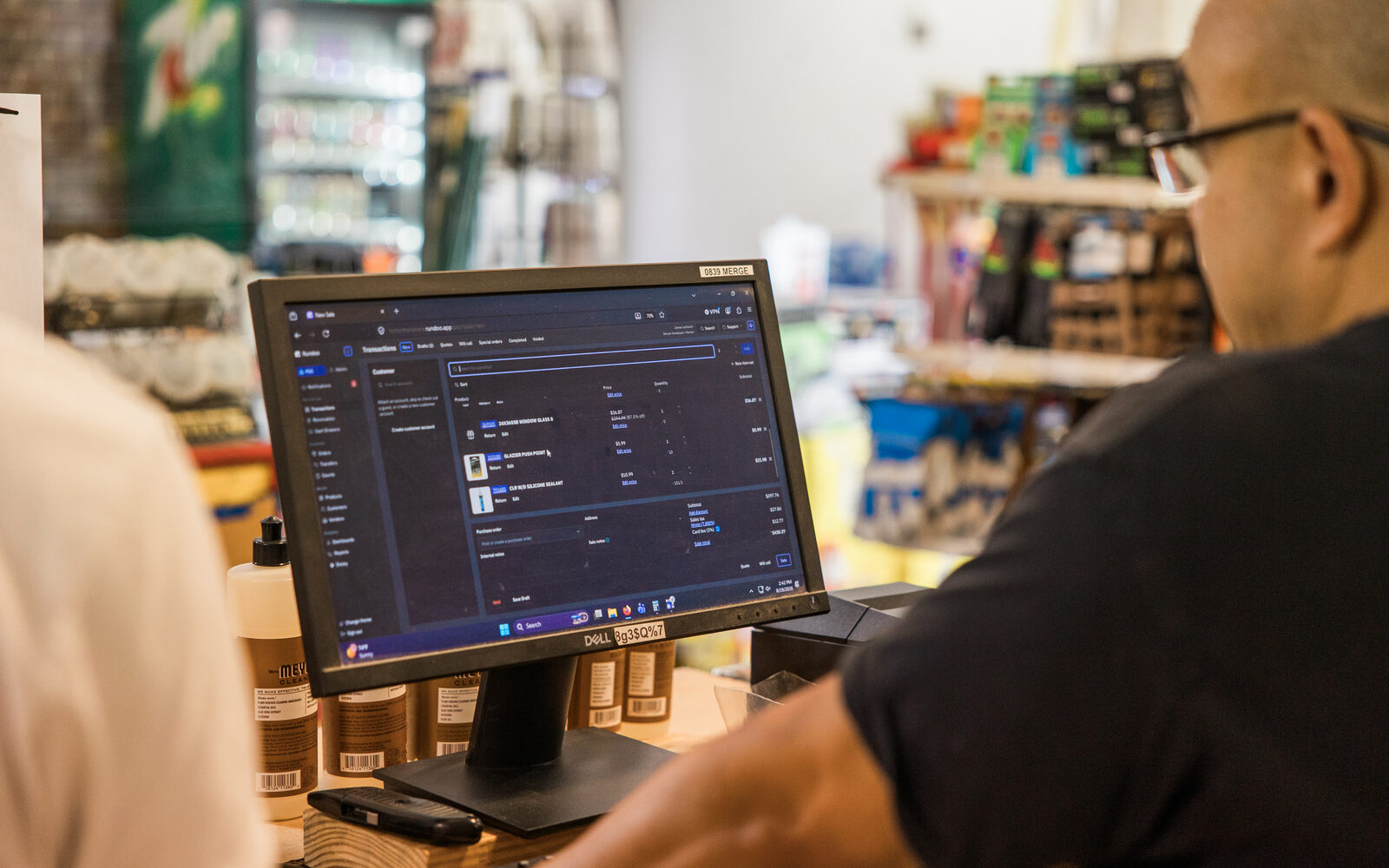
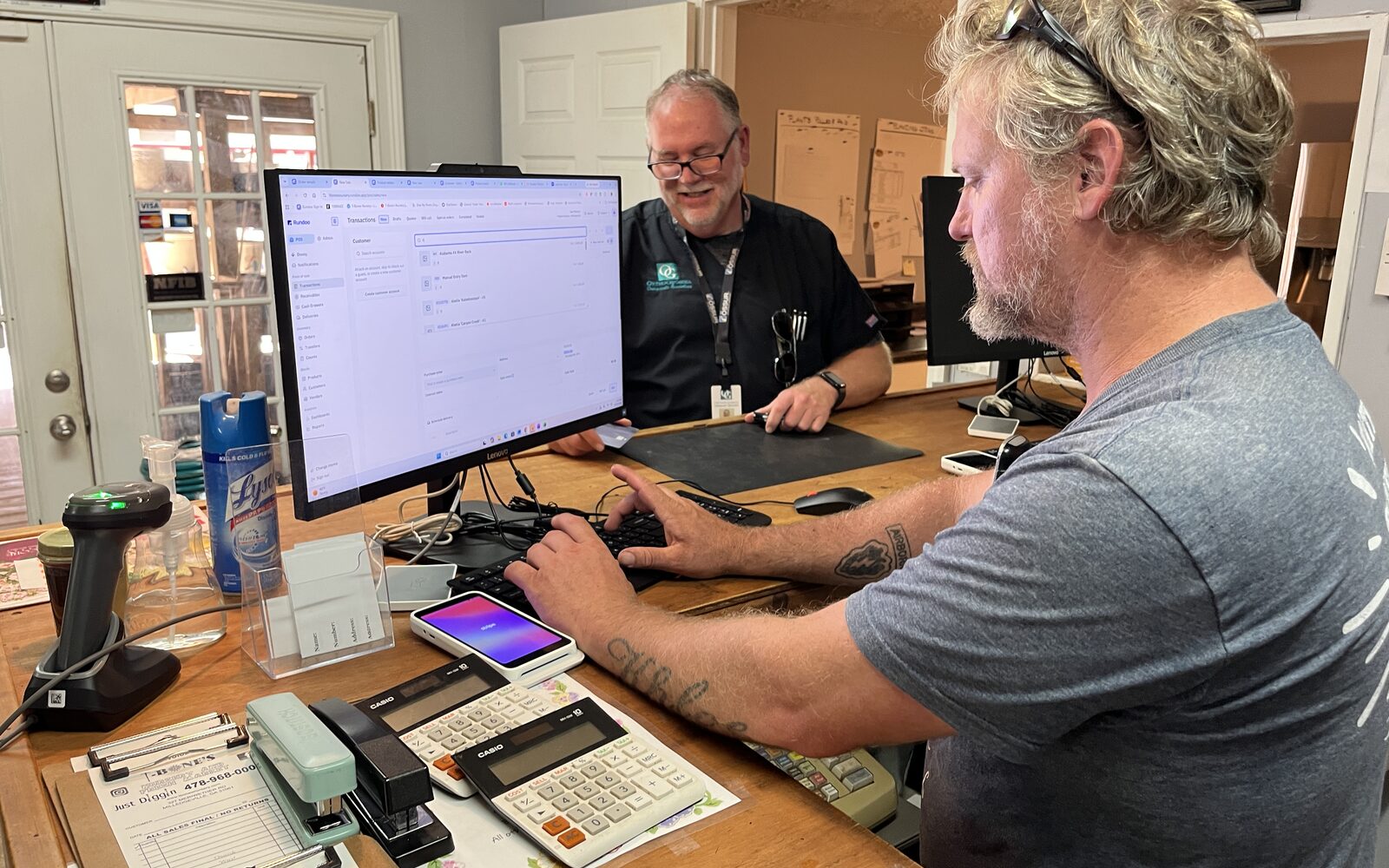
In Rundoo, the Z report's job falls to the end of day view, a daily dashboard showing every tender method alongside sales, returns, deposits, and payments by department, for whatever date range you pick. Its tender methods table lists Card, Cash, Charge account, Check, Write off, ACH, and E-commerce on separate lines, each with sales, returns, deposits, bill payments, adjustments, and a total, so the per-tender reconciliation above lives on one screen. Voids, refunds, and price overrides can require a manager's PIN at the register, closing out the cash drawer is part of Rundoo's core counter training, and for stores on QuickBooks Online, a nightly Sales Journal posts the day's cash, card, and charge-account sales, refunds, sales tax, customer payments, cash-drawer activity, and cost of goods sold. You can see it on the Rundoo POS page.