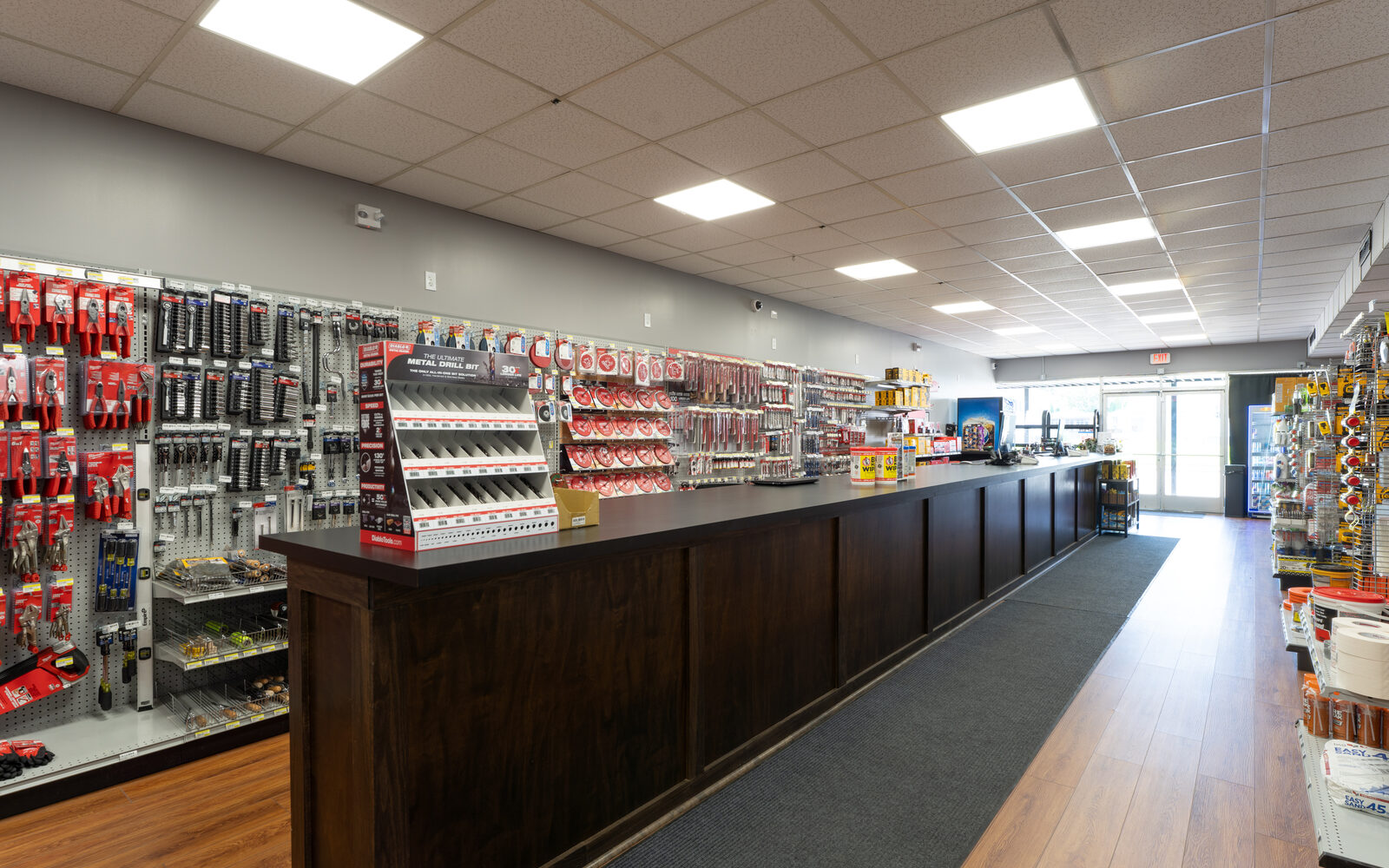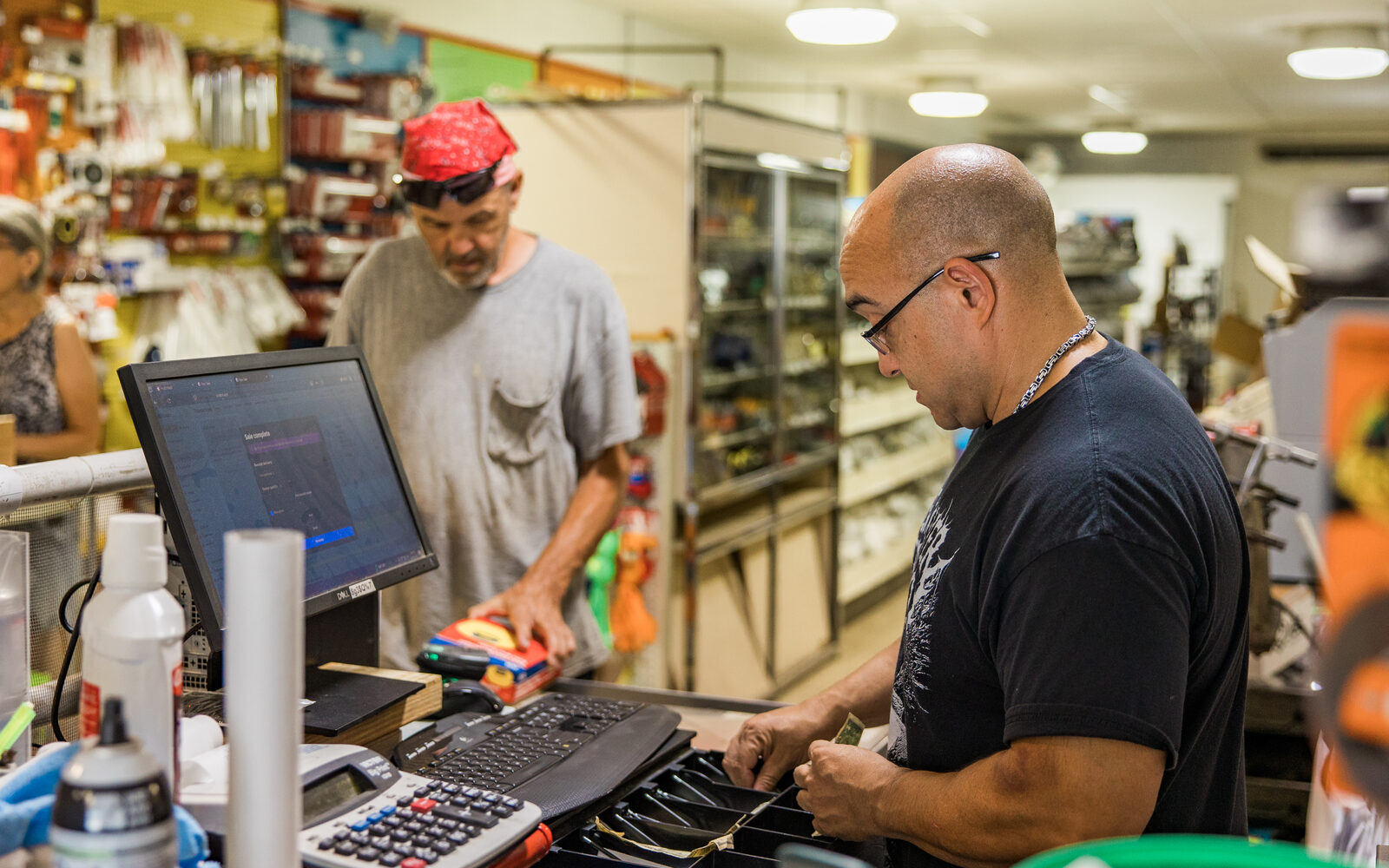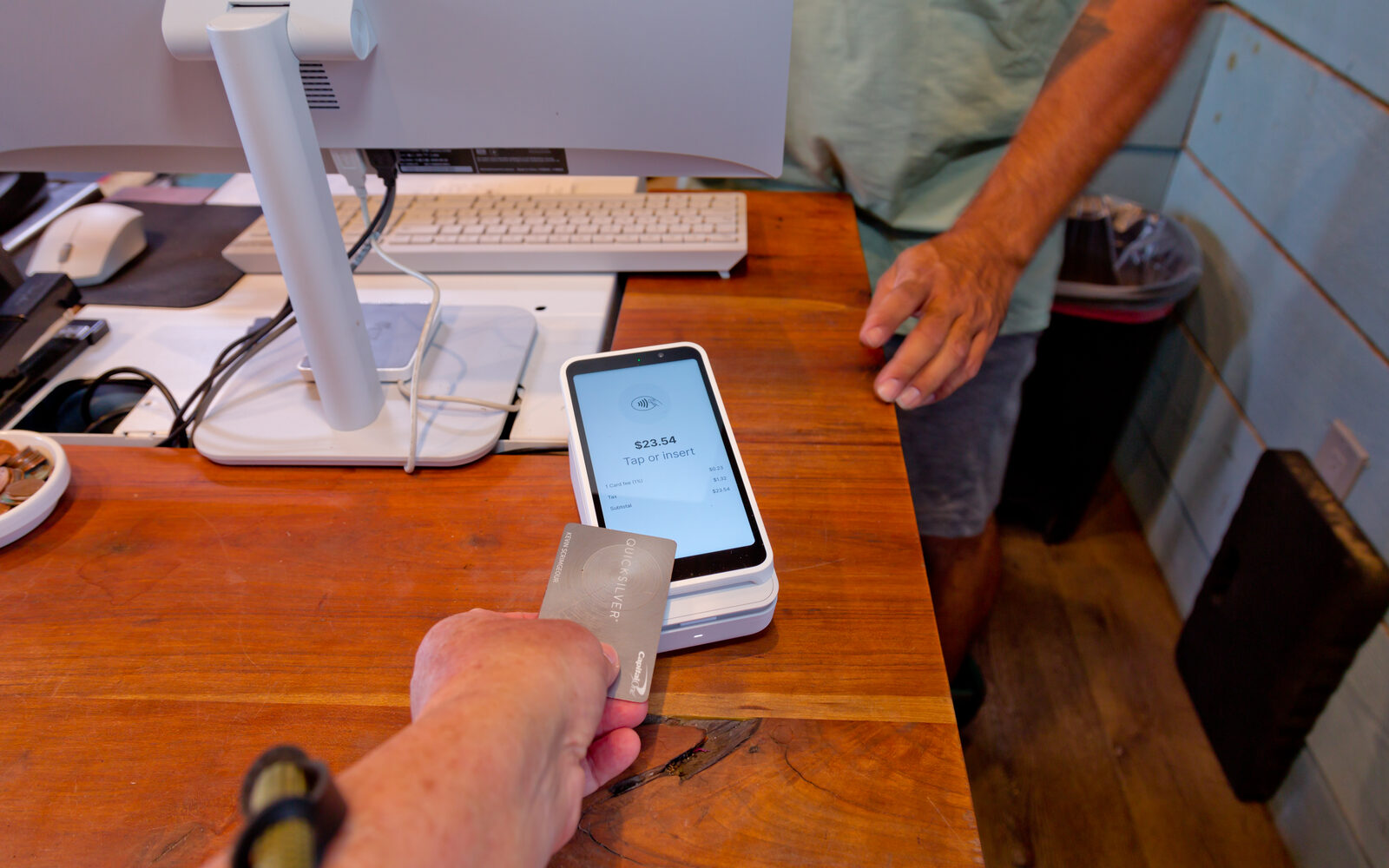
Layaway is a sale the customer pays for in installments before taking the item home: they put money down, you pull the item off the floor and hold it, and they pick it up after the final payment. A special order deposit is money down on an item you never stock and have to order, and in both cases the deposit is money you owe the customer until the sale completes, not money you've made.
How layaway works at the counter
Say a regular comes in mid-September and wants the $389 chainsaw on the endcap, but he'd rather spread the cost across a few paychecks than put it on a card. On layaway, he puts $100 down, you tag the saw with his name and pull it from sellable stock so nobody walks out with it on Saturday, and he comes in every couple of weeks to pay against the balance. He might toss a $12.40 box of deck screws on the counter during one visit and pay for those outright, since layaway is for the big item rather than the whole basket. When the last payment clears, you hand him the saw and the sale is done.
That's the whole shape of it. The customer pays over time, you hold the merchandise, and the handover happens at the end. There's no credit risk in the usual sense because you never let go of the goods, but you do take on storage, record keeping, and the chance the plan falls apart halfway through, which is why the paperwork matters more than the saw.
Layaway vs. special order deposit vs. job deposit
These three get lumped together because they all involve taking money before handing over product, but they're different arrangements and they deserve different paperwork.
| Layaway | Special order deposit | Job deposit on a quote | |
|---|---|---|---|
| The item | Something you stock | Something you never stock | Material on an accepted quote |
| Where it sits | Pulled from the floor and held | Ordered from your vendor | Sold in phases as the job runs |
| When the customer gets it | After the final payment | When it arrives | Phase by phase |
| Biggest risk | Customer stops paying mid-plan | Customer backs out of an item nobody else wants | Scope changes between phases |
A special order, in the trade's sense of the term, is only for an item your store never stocks: a custom door, a gun safe, a specialty coating you don't carry, a pallet of a feed that isn't on your shelf. If it's something you normally carry and you're out, that's a backorder, and it goes on your next purchase order to the vendor. The distinction matters because a special order usually can't go back on the shelf if the customer disappears, and the full breakdown is in the guide to backorder vs. special order.
A job deposit is different again: a contractor accepts a quote for a project that sells in phases, and you take deposits along the way as each phase is pulled and delivered. That has more in common with quoting than with layaway, and the guide to quotes and estimates for contractors covers that side of the counter.
Put the layaway policy in writing
The FTC's layaway tips for shoppers tell customers to ask about the layaway plan and the refund policy, and to get the store's terms in writing. Flip that around and it's advice for you: have the terms written down before the first deposit hits the drawer.
Some states make that a legal requirement. New York's General Business Law § 396-t, for example, defines a layaway plan as a purchase over $50 paid in four or more installments with delivery after full payment, and it requires the merchant to give a written disclosure before accepting any payment. The disclosure has to cover:
- A description of the merchandise
- The total cost, including tax, installation, and delivery or freight
- Any layaway charge, such as a service charge or cancellation fee (and a fee you don't disclose is a fee you can't charge)
- How long the plan runs
- The payment schedule and what happens after a missed payment
- The refund policy on payments made
- Where the merchandise is stored if it isn't at the store, and when it will be removed from inventory or ordered
After the final payment, the merchant has to deliver the merchandise in good condition on demand. New York is one example, and other states and localities have their own rules, so treat it as a useful checklist rather than the last word.
A workable agreement for your counter might read like this:
Layaway agreement. Item: [description and item number]. Total price including tax: [$]. Layaway fee: [$ or "none"]. Deposit paid today: [$]. Remaining balance: [$], payable in [weekly / every two weeks / monthly] payments of at least [$___], with the balance due in full by [date]. The item will be held at [store location] until paid in full. Missed payments: [grace period and what happens next]. Cancellation: [refund terms and any cancellation fee]. Pickup: the item is released on request after the final payment.
Fill in the blanks once, print a stack, and have the customer sign a copy with the first payment.
Deposits are money you owe, not money you made
This is the part that trips up the books. Every layaway payment and every special order deposit is money you're holding for the customer until the sale completes, so it belongs on your books as a liability (customer deposits), not as revenue. You apply it to the sale and recognize the income when the item goes out the door.
That framing keeps you honest in two directions. It stops a fat deposit month from looking like a fat sales month, and it reminds you that if the plan cancels and the payments are refundable, that cash was never yours to spend on a truckload of spring fertilizer. It also keeps deposits separate from charge account activity, which runs the opposite way (product out now, money in later on a monthly statement), and the guide to house account statements, aging, and finance charges covers that side.
When is sales tax due?
In at least some states, tax comes due when the item changes hands, not when each payment lands. Two examples from state guidance:
Indiana. The Department of Revenue's Sales Tax Information Bulletin #78 (November 2022) treats initial and interim layaway payments as deposits, not retail sales, so they aren't taxed when made. On final payment and transfer, the retailer collects sales tax on the entire amount and reports the whole sale in that period. A separately stated layaway fee is not taxable, while a fee that isn't separately stated is. The bulletin's own example is a $500 bicycle with a $100 deposit and a $50 separately stated fee, paid $100 a month and picked up in December: the sale is reported in December with $500 taxable, or $550 if the fee wasn't stated separately. Run the same logic on the chainsaw, and a $389 saw with a separately stated $10 layaway fee would report as $389 taxable at pickup, or $399 if the fee was folded into the price.
Washington. The Department of Revenue's layaway guidance says you don't recognize the transaction as a sale until the customer receives the item, and on delivery you report B&O tax and collect retail sales tax. If the customer forfeits the deposit, you report it under the service and other activities B&O classification and collect no retail sales tax, because there was no sale.
Rules vary by state and province, so take away the shape of the thing: payments along the way are deposits, the taxable moment is usually the handover, and the tax treatment of a fee can hinge on whether it's listed separately on the receipt.
Forfeits and cancellations
Sooner or later someone puts a gun safe on layaway in April and stops answering the phone by June. Your written policy decides whether that's an awkward week or an awkward month.
Decide in advance what happens when a payment is missed, how long you'll hold the item past the due date, whether payments are refundable on cancellation, and whether you charge a cancellation fee. If you're in a state like New York, remember that a fee you didn't disclose up front is a fee you can't charge. And if a deposit ends up forfeited rather than refunded, check how your state wants it reported, since Washington's treatment (no retail sales tax, reported under a different classification) shows a forfeit isn't always handled like a completed sale.
Cancellation terms on special orders deserve the same care, because a custom door can't go back on the shelf for the next customer. A common approach is a larger or non-refundable deposit on special orders, stated in writing at the time of the order, with a posted restocking policy for everything else, which the guide to return policies, store credit, and restocking fees walks through.
The counter process, payment by payment
The day-to-day mechanics stay easy as long as they're consistent. When the plan starts, tag the item with the customer's name, the start date, and the due date, then pull it from sellable stock and move it to the holding area so it can't wander out during a Saturday rush. Every payment gets its own receipt showing the date, the amount, and the remaining balance, and the signed agreement records each payment as it comes in. At the final payment, ring the completed sale with tax applied under your state's rules, apply the deposits, hand over the item, and close the plan out. For a special order, put the vendor, the item details, and the expected arrival date on the deposit receipt, so whoever is at the counter when the truck shows up knows exactly whose door it is.
Where Rundoo fits
Rundoo covers the deposit and special order side of this. Quotes turn into one sale or several, with deposits along the way, which is the phased-job pattern common in lumber and building materials. Special orders live on the customer record, so the counter sees the request when the item lands, and quotes, held drafts, will-calls, and special orders run in the same flow as a regular sale rather than on a separate screen. Every sale, return, and special order also updates inventory the moment it happens.