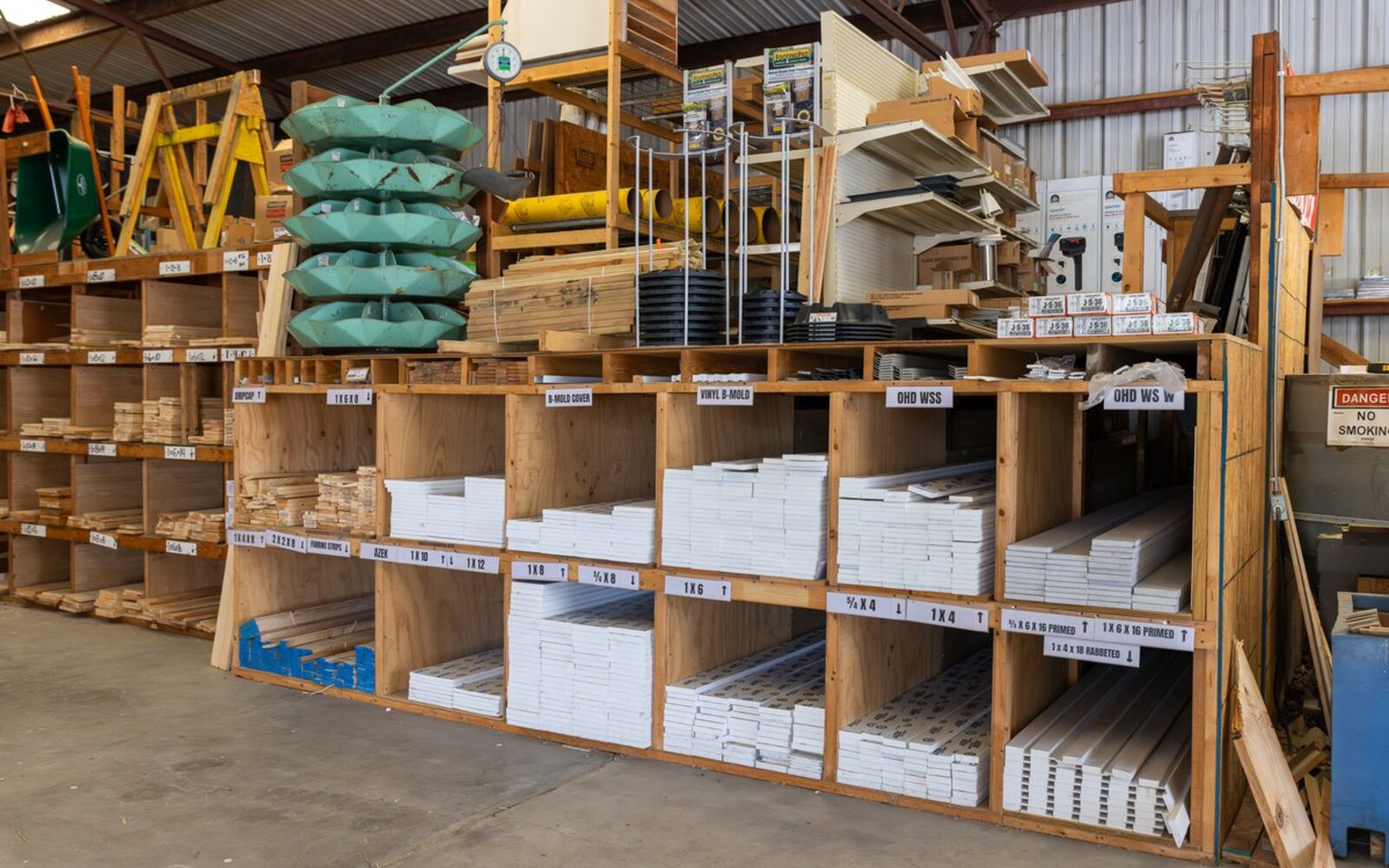
A landscape supply yard sells bulk stone, soil, sand, and mulch by the ton or the cubic yard, plus bagged goods, pavers, wall block, and often plants, mostly to landscapers and contractors who buy on account. The business comes down to three things: moving enough volume in a short season, running delivery well, and keeping the scale, the pile, and the invoice in agreement.
Is a landscape supply yard profitable?
It can be, but there is no single number worth handing you, because profitability depends on your material mix, your local competition, how much delivery you run, and how tightly you manage inventory and receivables. What we can tell you is which numbers decide it, and an existing yard already has most of them: gross margin per material (what you pay the quarry or vendor against what you charge), delivery cost per load (truck, fuel, driver hours), and how fast your contractor accounts pay. If you are weighing a yard purchase or a startup, ask for those three for any yard you are looking at, and if you already run one, they are the report to read every month during the season. The rest of this guide walks through where each of them gets made or lost.
What a yard sells, and why each category is its own inventory problem
Bulk material is the core of the business: topsoil, sand, gravel, crushed stone, and mulch in open piles or bins, loaded by the bucket and sold by the ton or the yard. It cannot sit on a shelf with a barcode, it changes weight with the weather, and the only way to know what you have is to measure the pile. Bagged goods such as mulch, soil, fertilizer, and grass seed behave like normal retail inventory with SKUs and shelf space, but they tie up cash in a way the pile does not, and a torn bag is a loss the pile never gives you.
Hardscape is a different animal again: pavers, retaining wall block, and flagstone sell by the square foot, the piece, or the pallet, with a lot of value on each pallet and some breakage in handling. Plants, if you carry them, are the only inventory in the yard that can die on you, which is why yards with a nursery side treat it as its own little business with its own watering, spacing, and markdown rhythm, and our guide to nursery inventory by variety and size covers that side. Most yards run some blend of all four, and the blend decides what your software, your yard layout, and your staff need to handle.
Seasonality runs the calendar
Spring brings the busiest weeks of the year, when landscapers are mobilizing crews, homeowners are staring at their beds, and the counter, the loader, and the phones all run hot at once. Summer settles into project work and reorders, fall brings a second wave of mulch, soil, and cleanup material, and winter in the north means the yard either goes quiet or turns to snow, ice melt, and contractors staging spring jobs.
That shape drives everything else. Most of the year's cash arrives in a few busy months, so owners plan their buying from vendors and quarries ahead of the season and watch receivables hard in the fall, because money owed to you in November is money you may be chasing until March. Staffing follows the same curve: seasonal counter help and extra drivers in the spring, a leaner crew in winter, and everyone cross-trained, because the person loading buckets at seven in the morning may be the one checking out a contractor at noon.
Units of measure: tons, yards, buckets, bags, and pallets
A landscape yard is one of the few places that quotes in one unit and sells in another within the same conversation. A homeowner calls for "three yards of mulch," a landscaper orders "two buckets of 57s," the quarry bills you by the ton, and your scale reads in pounds. The volume math is simple: a cubic yard is 27 cubic feet, and Texas AgriLife Extension's shortcut is square feet times depth in inches, divided by 324, so one yard covers 108 square feet at 3 inches deep. Our mulch and topsoil calculator and gravel calculator do this math for your customers.
The weight side is where yards earn their keep, because there is no universal tons-per-yard factor. Kokosing's aggregates business publishes 1.5 tons per cubic yard for sands, while Stone Center, an Ohio stone yard, lists sand at 1.10 to 1.25 tons. Say a contractor orders 10 cubic yards of sand: at Stone Center's range that is 11 to 12.5 tons, and at 1.5 it is 15 tons, a spread of 2.5 to 4 tons on one ordinary load, and whichever factor is wrong for your sand is either shorting the customer or giving material away. Moisture, gradation, and compaction push the real number around, which is why your own scale ticket, gross minus tare, settles every argument. Many yards quote in yards because that is how customers think and bill by the ton off the scale, and the factor you quote with is a business decision worth revisiting each season. Our guide to tons to cubic yards lays out the published factors by material and source.
Delivery: where the margin on a load gets decided
Most bulk material leaves the yard in a dump truck, and delivery is either a profit center or a money pit depending on how it runs. The operational questions are minimum loads (a single yard of mulch an hour away is a trip that loses money without a fee), delivery fees by zone or distance, fuel surcharges when diesel moves, routing so the truck does not cross town twice, and proof of delivery so "nobody dropped that stone" does not become a weekly argument. Our guide to delivery fees and fuel surcharges covers the fee structures. On the paperwork side, many states require a delivery ticket on bulk sales: North Carolina's G.S. 81A-26, for example, requires one showing the seller and buyer, the date, the quantity delivered, and the material on bulk sales over $20 when the seller determines the quantity.
Contractor accounts are the backbone of the book
Landscapers and contractors buy on house accounts, often at a price level below walk-in retail and sometimes with special pricing on a specific job. Each sale carries a job reference, each account gets a monthly statement, and the aging report shows who is drifting past terms. The habit that separates relaxed yards from stressed ones is collecting before the off-season: a landscaper who pays slowly in October may be short on work and cash by January, so the time to work the aging report is September, not February. Credit limits, finance charges on overdue balances, and clear terms up front let you extend credit to a growing landscape company without becoming its bank. Our guides to house accounts, statements, aging, and finance charges and to price levels and contractor pricing cover the mechanics.
Shrink in the pile: where bulk yards quietly lose money
A retail store counts shrink in scanned units, while a bulk yard's shrink is fuzzier and only shows up when you measure the pile. Rain is the obvious one: it adds water weight to sand and stone, so you may be selling water at gravel prices or buying it, and it washes fines out of the pile. The loader bucket is the next culprit, because "a bucket" is a habit rather than a measurement, and an operator who heaps every bucket 10% over is giving away a load for every ten sold. A stale tons-per-yard factor does the same damage in slow motion, quoting one conversion while the scale says another. And then there are the scale tickets that never became invoices: a regular pulls in, gets loaded, waves at the office, and the ticket sits in a tray until nobody remembers which account it belonged to.
The countermeasure is measuring the piles on a schedule, with a measuring wheel or a survey, and reconciling what the piles say against what the books say, the same discipline as a cycle count in a hardware store, done with a loader and a tape instead of a barcode scanner. Our guide to scale tickets for bulk material yards covers ticket discipline, tare weights, and the daily reconciliation that catches an unbilled load before month end. The pile always tells the truth eventually, in a way that is expensive to hear.
Starting a landscape supply yard: the operational checklist
If you are starting from scratch, these are the decisions that shape the business. We will not put dollar figures on them, because costs vary enormously by region and scale, but the checklist holds anywhere in the US or Canada.
- Site and zoning. You need room for piles, bins, truck turnaround, customer parking, and a scale, with zoning that permits outdoor bulk storage and heavy truck traffic. Check local zoning before you fall in love with a parcel.
- Weights and measures. If you sell by weight, your scale is a regulated device. Utah's rules show the pattern: the model needs an NTEP Certificate of Conformance, it must be checked before it is used for transactions even when brand new, and it is placed in service by a state official or a registered service technician and then inspected and labeled. Wisconsin requires commercial scales of 5,000 pounds capacity or more to be tested at least annually. Call your own state's weights and measures office early.
- Scale and loader. The scale is the cash register for bulk, and the loader is the machine every sale passes through, so plan for its upkeep as carefully as its purchase.
- Vendors and quarries. Your cost is set at the quarry gate, so relationships with the quarries, sand and gravel pits, and mulch producers within an economical haul shape your margins.
- Material mix. Start with what local landscapers buy (a few gravels, a couple of sands, topsoil, two or three mulches) rather than stocking twenty products nobody asked for.
- Delivery fleet. Owning trucks or hiring hauling is a trade between cash and control, and minimum loads plus delivery fees make either model work.
- Accounts policy. Who gets a house account, at what credit limit, on what terms, with what finance charges. Write it down before the first contractor asks.
- Software. Covered in the next section, and far easier to set up before opening day than to change in the middle of a season.
Software a landscape yard needs
The counter POS has to handle decimal quantities and several units of measure on one ticket, because 1.75 yards of mulch, four bags of fertilizer, and a pallet of pavers all check out together, and decimals should be a setting on each product so nobody can sell 1.75 hammers. Beyond the counter, the system needs charge accounts with price levels, jobs, monthly statements, and aging; delivery scheduling with driver stop lists and proof of delivery; and inventory that treats a pile as a pile. Scale-house software is a separate category: the systems that read the scale indicator, store tares, and print tickets are their own world, and a counter POS, ours included, does not replace them. The common setup is a legal-for-trade scale system at the gate and a POS at the counter, with the day's weights moving from one to the other.
Where Rundoo fits
Rundoo is the AI-first POS for independent supply stores, and in a yard it handles the counter end of everything above. Landscaper pricing tiers are set once and applied on every line, and bulk sells in any unit of measure you set up, with partial amounts allowed, so 1.75 yards of mulch rings as 1.75 yards. House accounts carry credit limits, finance charges, and statements customers can pay online or from the app, and each landscaper job on one account gets its own statement. You schedule the delivery from the sale, drivers see their stops in the Staff App and collect a signature and photos at the drop, customers get a text or email when the delivery is scheduled, on its way, and delivered, and Dooey, Rundoo's AI assistant, can build the delivery and put the stops in drive order. Sales, payments, and receivables post to QuickBooks Online or Desktop. Two limits worth stating plainly: Rundoo does not connect to a scale, and it has no offline mode, so you run a separate scale system and need internet at the counter. The rest is on our garden center POS page.