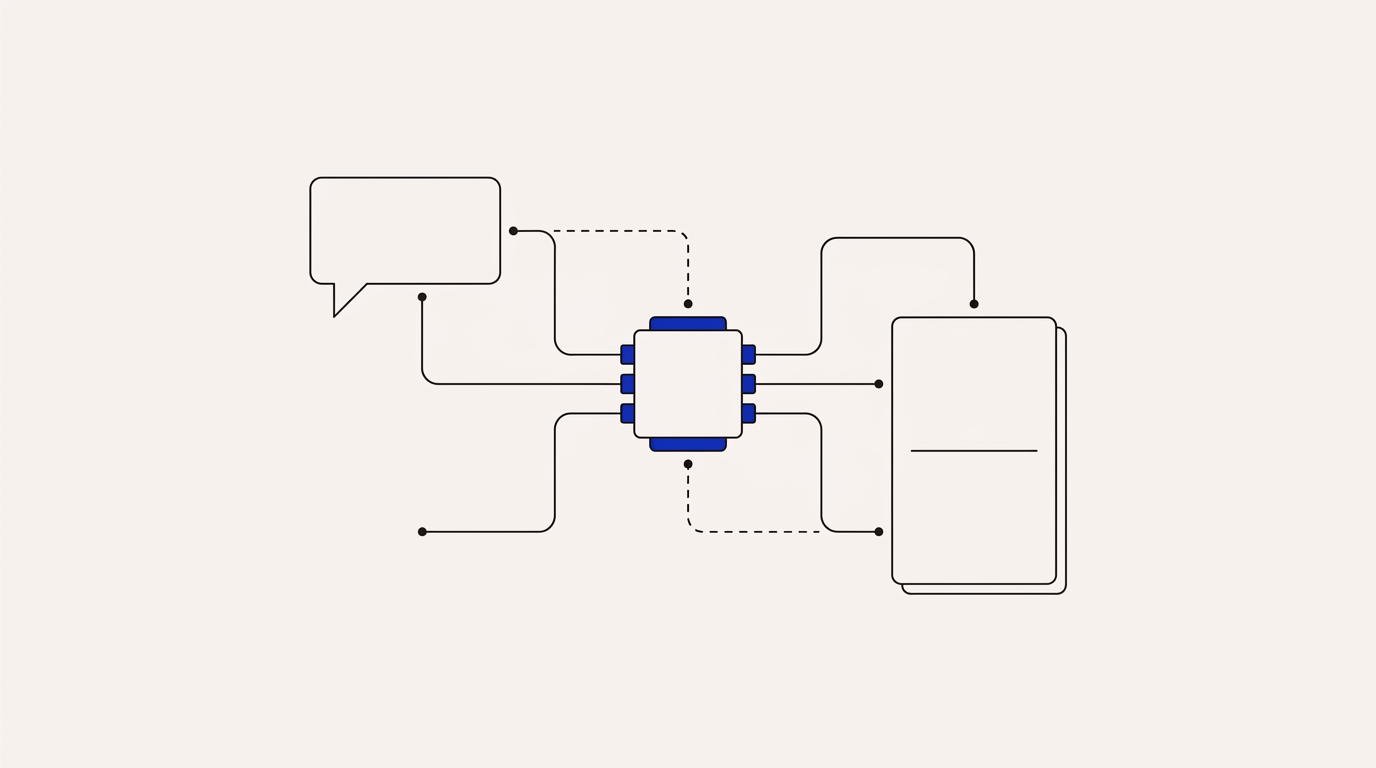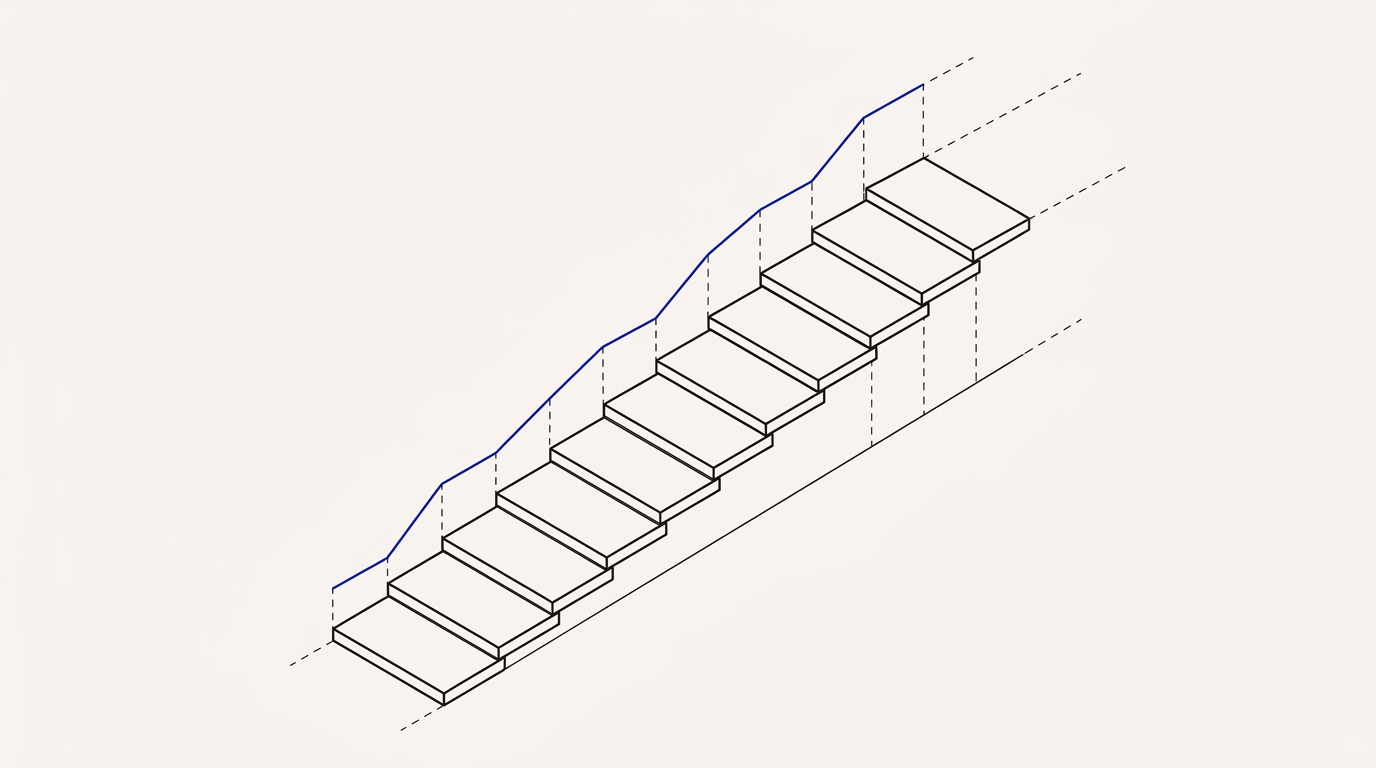
When we transformed to AI-first back in the fall, the pitch crystallized into three rungs: Analyze, Act, Automate. Triple-A, the same letters you'd flag down for a jump-start on the side of the road, except this version is the one keeping the stockroom in shape and the orders going out at two in the morning. Owners liked the acronym because it gave them a way to talk about AI that didn't involve the word "agentic," which most of them are happy to leave to the conference circuit.
The framework itself is laid out on our AI product page, and the longer version of why we adopted it lives in Nick's earlier essay on the transformation. This piece is a field report. After six months of demos, kickoffs, training calls, and conversation threads with store owners who are partway up the ladder, we wanted to write down what we have actually seen happen, not the version that fits neatly on a slide.
Almost everyone starts at Analyze, and most of them stay there longer than they expect
Of every client live on Rundoo, roughly four out of five log into Rundoo AI in a given week to ask a question they would have previously chased through a report or, more honestly, not chased at all. The questions cluster around the same three buckets we tend to repeat back to owners on demos:
- Relationships. Which contractor have I not seen this month, who owes me money, who buys a lot of Benjamin Moore.
- Pricing. Which SKUs am I selling below the home center across town, where am I leaving margin on the table.
- Inventory. What should I cycle count today, what's quietly gone to zero on hand without anyone noticing.
The daily AI summary lands in every owner's inbox automatically, which is what gets the muscle started. Jason, a paint store owner we wrote about in a separate piece, found a custom price that had quietly been costing him $4,200 in margin because the summary surfaced it in two sentences. That is the kind of moment that turns Analyze from a feature into a habit, and once an owner has had one, they start asking questions they would never have phrased to a database:
"Why are my Saturday transactions smaller this month than last?"
"Which of my crew is selling more sundries per ticket?"
"Which colors moved this spring that didn't move last spring?"
None of those questions would survive the trip to a traditional reports menu, because the friction kills them before they get asked.
Analyze is also where the most value compounds, because every question an owner or a rep asks is a rep building fluency with the system and with this new way of running the store. The point to get full value out of the rung you are on while the team learns what to ask, how to phrase it, and which answers to trust. Analyze pays for itself, and it pays again every time someone on the floor learns to ask a question they would have skipped a year ago.
Act is where trust gets tested
The second rung is where the conversation shifts from "tell me about my store" to "go change something in my store." That word change matters, because the moment AI is allowed to write data instead of just read it, owners start asking the questions you actually want them to ask. Will it round the price correctly? Will it apply the price change to the right customer, or to everyone? Will it generate a purchase order that respects my vendor minimums and case multiples?
Those questions are not paranoia, they are the right questions. A careful owner at a paint dealer in Connecticut, where every gallon of paint carries a state recovery fee, asked whether Rundoo AI could attach that fee as a related SKU at the time of every sale rather than rolling it into the cost of each can. The answer is yes, and the way you do it is by asking AI to take that action once you have built the trust that it understands what you are asking. Owners arrive at Act when they have asked the question version of the same workflow ten times and have started to trust the answer.
This is also where the language shifts on the sales floor. We have heard reps coach owners through the difference between "what should this be priced at" (Analyze) and "go set this to $19.99" (Act), and the moment when an owner first taps the second button, with their actual data, on their actual store, tends to be quiet. There is no fireworks. The price changes. The receipt prints. The trust accrues a little bit, and the next request is easier.
Automate is small but loud
Roughly one in ten of our clients has now stood up at least one agent that runs without them, and the ones who have done it become evangelists almost immediately. Drake's Paint in Medford runs a Benjamin Moore ordering agent every morning at two, scoped to buy in quantities of four and to estimate two days of forward demand. Dan Drake reviews the drafted order with his coffee, approves it, and the truck day takes care of itself. Other clients are wiring up cycle-count agents on the same pattern. The prompt picks thirty items every morning based on a mix of high velocity, high value, anything sitting at negative on hand, and anything showing a suspicious sales decline, then drops the list into the inbox of whichever staff member is opening that day.
Most of the agents in the wild fall into a handful of shapes. Nightly purchase order drafts against a single vendor. Cycle counts prioritized against the gaps inventory teams worry about anyway. Daily summaries customized beyond the default, often to flag a specific account or a specific category. A few outreach agents that read the AR aging and queue up emails to slow-paying customers without sending them. The pattern is that owners only build agents for the work they have already done by hand enough times to know what good output looks like, which is the right order of operations. You do not automate something you cannot evaluate.
The constraint on getting to Automate is the prompt. The first version of an Orgill ordering agent will produce a nonsensical draft if all you tell it is "build me an Orgill order." The owners who succeed are the ones who treat the agent like a new hire and write down what they actually want it to consider: vendor minimums, case multiples, location splits, the supplier's order cadence, the parts of the store that move on truck days. That iteration loop takes a couple of weeks. Once it lands, it tends to run for months untouched.
What buying-group partners are asking about
The AAA story has also been the centerpiece of our conversations with buying groups, paint suppliers and store owners. A handful of them have asked the same question, which is roughly: what does an agent cost to run, and do you have to charge customers for it. The answer is that we have no plans to meter agents right now. The next question, almost always, is whether the buying group's own catalogs and pricing files can be wired into an agent so a store owner can ask a question across vendors. That work is in progress with several of them. It is one of the reasons the Automate rung will keep getting wider through 2026.
What we would tell an owner deciding where to start
If you are evaluating Rundoo, or evaluating any AI in your store, the practical advice is the same advice we give on every kickoff call. Start at Analyze and stay there until questions feel natural. Do not skip to agents because someone at a conference said you should. Read your daily AI summary every morning for two weeks before you do anything else. When you find yourself asking the same question more than twice a week, that is the candidate for Act. When you find yourself asking AI to take the same action more than twice a week, that is the candidate for Automate.
The acronym does the work because it gives owners, partners and dealers a vocabulary for where they are and where they are going. Owners who used to say "I don't know what AI is supposed to do for me" now say "I'm pretty solid on Analyze, I'm starting to dabble in Act, and I want to talk about Automate next quarter." That is a much better conversation, and it is the one we hoped the transformation would unlock.
If you want to see what your own ladder might look like, our practical three-week guide walks through the habits that get owners to the first rung, and the AllPro client story shows what the top of the ladder looks like in a real paint store. And if you want a walkthrough on your own data, we are happy to show you. Before you ring it, before you order it, before you price it, ask Rundoo AI.