On day 1, change nothing.

Ten minutes into their first morning on Rundoo, a client called us in a panic. They had decided to treat the go-live as a fresh start and restructured their pricing the night before. The registers were running, the customers were lining up, and almost nothing on the screen matched what the staff had in their heads. They wanted to revert.
We got them back to their prior pricing within the hour, and the rest of the day went smoothly, but the moment stuck with us. Switching a point of sale already pushes a team to the edge of its capacity. New screens, new shortcuts, new muscle memory at the counter, new ways to look up a customer, new questions from the back office. Pile a pricing overhaul on top, and no one at the counter can tell whether the system is wrong, the prices are wrong, or they themselves just fat-fingered a key. Every small friction becomes a diagnostic puzzle.
That experience is the reason we now open every go-live conversation with the same advice: on day 1, change nothing.
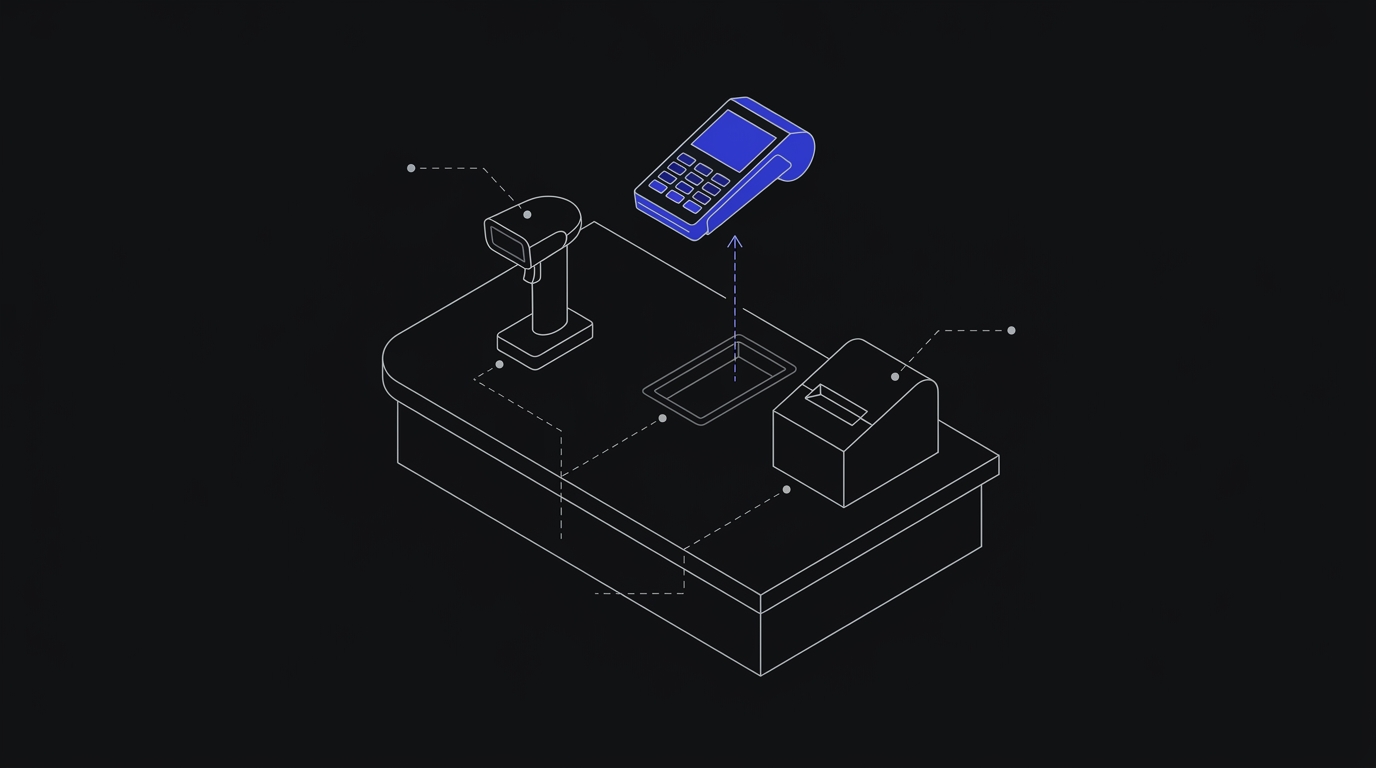
You're switching to improve. Day 1 is not the day to improve.
It sounds backward. If you're replacing your POS, the whole point is to run the business better. You picked Rundoo because you want tighter margins, cleaner data, an AI layer on top of your reports, an app in your customers' pockets. You are paying for those things, so of course you want them on day 1.
But the day you flip registers is not the day any of that actually lands. It is the day when your staff is learning which button opens a tender, when your customers are watching to see if the new system makes the line slower, when your own attention is stretched across a dozen small surprises nobody could have planned for. One new variable on top of that is manageable. Five new variables turn every hiccup into a puzzle: is the system broken, is the price wrong, did we mis-map a category, or did the cashier hit the wrong key? You cannot tell, because too many things changed at once.
Bring it over exactly as it was.
This is why Switch, our migration process, is built around fidelity. We move your products, customers, pricing, vendors, account balances, gift cards, loyalty history, and AR across exactly as they live in your old system. If you want to restructure your pricing matrix or clean up a tangled category tree, that work belongs in your old system, ideally the week before we cut over. We mirror it the night of, and your team walks in the next morning to a Rundoo that reflects the business they already know.
That continuity is what lets day 1 be about the new system alone, not the new system plus a list of well-intentioned improvements that nobody quite remembers agreeing to at 6 in the morning.
"But I'm paying for Rundoo now."
The pushback we hear most often is a fair one. You signed up for the features. You want them today, not next quarter. Why would you sit on a system with capabilities you are already paying for?
The answer is that nothing is being deferred, only sequenced. Every feature you bought is still coming. You just want each one to land on a day when you can actually tell whether it is working. A new pricing model introduced on day 1 is invisible, because you cannot separate its effect from the effect of switching systems at all. That same pricing model introduced in week 3 is a clear, measurable change, with a baseline on either side of it. You did pay for features, but what you actually want is the outcomes those features produce, and outcomes require a stable enough system to observe them in the first place.
Day 2 onward.
Once you are live and steady, the queue opens up. In the first few weeks, most of our clients start rolling out changes one at a time:
- Invite their top contractor customers onto the Rundoo app
- Set an AI agent to auto-tag inbound receiving
- Move their general ledger onto Rundoo and retire the spreadsheet-and-QuickBooks routine
- Build a first marketing campaign from the contact list the system already has
- Revisit the pricing project that was smart to skip on day 1
Each of these is a meaningful win on its own, and each is large enough to deserve its own week, its own staff conversation, and its own before-and-after read. Stack them all on top of the go-live and they blur together into one indistinguishable change. Stagger them, and each one compounds. The business you were trying to build when you switched is still the business you are trying to build. It just gets there faster when you change one thing at a time.
If you want to see what the staggered version of this looks like in numbers, our analysis of ROI after switching is measuring the total of those changes, not any one of them.
On day 1, change nothing. On day 2, you can start.
Find out what Rundoo can do for your business
Learn how Rundoo can help you save time, money and hassle running your business.
Book a demo